Representative James Jefferson Britt
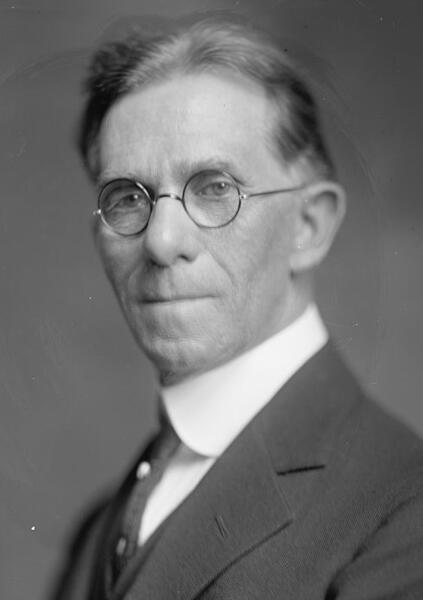
Here you will find contact information for Representative James Jefferson Britt, including email address, phone number, and mailing address.
| Name | James Jefferson Britt |
| Position | Representative |
| State | North Carolina |
| District | 10 |
| Party | Republican |
| Status | Former Representative |
| Term Start | December 6, 1915 |
| Term End | March 3, 1919 |
| Terms Served | 2 |
| Born | March 4, 1861 |
| Gender | Male |
| Bioguide ID | B000846 |
About Representative James Jefferson Britt
James Jefferson Britt (March 4, 1861 – December 26, 1939) was an American educator, lawyer, and Republican politician who served as a United States Representative from North Carolina during a significant period in American history. Born near Johnson City, Tennessee, in what is now Unicoi County, on March 4, 1861, he spent his early years in the mountain region straddling the Tennessee–North Carolina border. He attended the common schools and also studied under private tutors, receiving the kind of mixed formal and individualized instruction typical of rural Southern communities in the late nineteenth century.
Britt’s early professional life was devoted to education in western North Carolina. From 1886 to 1893 he served as principal of Burnsville Academy in Burnsville, North Carolina. He then became superintendent of public schools in Mitchell County from 1894 to 1896, overseeing the administration and development of local public education. Simultaneously, he was headmaster of Bowman Academy in Bakersville, North Carolina, from 1895 to 1896, further cementing his reputation as an educator and school administrator in the region.
Transitioning from education to public service and the law, Britt served as deputy collector of internal revenue at Asheville, North Carolina, from 1896 to 1899. He studied law at the University of North Carolina at Chapel Hill and, after completing his legal studies, was admitted to the bar in 1900. He commenced the practice of law in Asheville, building a legal career that would underpin his later political work. A committed Republican, he was a delegate to the 1904 Republican National Convention and in 1906 was an unsuccessful candidate for election to the Sixtieth Congress. Nonetheless, he remained active in federal legal service, working as a special assistant United States attorney in 1906 and 1907.
Britt’s political and legal career advanced at both the state and federal levels in the years that followed. He served as a member of the North Carolina Senate from 1909 to 1911, representing his party in a state long dominated by Democrats. During this period he also held several federal legal and administrative posts: he served as special counsel to the Post Office Department from July 1, 1909, to December 1, 1910, and as special assistant to the Attorney General from July 13, 1910, to December 1, 1910. On December 1, 1910, President William Howard Taft appointed him Third Assistant Postmaster General, a position he held until March 17, 1913, giving him substantial experience in federal administration and postal affairs.
Britt was elected as a Republican to the Sixty-fourth Congress, serving as a Representative from North Carolina from March 4, 1915, to March 3, 1917. His service in Congress occurred during a significant period in American history, on the eve of the nation’s entry into World War I. As a member of the House of Representatives, he participated in the legislative process and represented the interests of his North Carolina constituents, contributing to debates and decisions in a closely watched national legislature. A member of the Republican Party, he took part in the democratic process at a time when partisan balances in Congress were especially consequential.
The 1916 election to the Sixty-fifth Congress became one of the most closely contested races of its era. Initially, Britt lost to Democrat Zebulon Weaver by only eight votes. He contested the election, arguing that approximately ninety ballots, in which voters had submitted a party ballot but failed to mark the box on it, should not have been counted. The majority of the House committee reviewing the contest rejected his argument, but when competing resolutions were brought before the full House, the chamber adopted the minority report and declared that Britt had in fact been elected. In an unusually narrow decision—reflecting the extremely close partisan division in the Sixty-fifth Congress, where the Democratic coalition held only a two-seat majority at the end—the House voted 185 to 183 to seat him. Because the contest consumed nearly the entire term, Britt was sworn in only for the final days of the Sixty-fifth Congress, serving from March 1, 1919, to March 3, 1919. Although his successful contest ultimately seated him in Congress for this brief period, he was not in office at the time of his 1918 re-election bid and lost his race for the Sixty-sixth Congress.
After his congressional service, Britt resumed the practice of law in Asheville, North Carolina. He continued to play a role in federal enforcement policy as chief counsel for the Bureau of Prohibition in the Treasury Department from 1922 to 1932, a decade that encompassed much of the national Prohibition era. In 1926 he sought judicial office as a candidate for chief justice of the North Carolina Supreme Court but was unsuccessful. Following his federal service, he again returned to private legal practice in 1933, maintaining his professional base in Asheville.
James Jefferson Britt died in Asheville, North Carolina, on December 26, 1939. He was interred in Riverside Cemetery in Asheville. His career spanned education, law, state and federal office, and significant participation in the legislative process during a transformative period in American political history, and he remains noted in the records of the United States Congress as a Republican Representative from North Carolina who served in both the Sixty-fourth and Sixty-fifth Congresses.