Senator James Brown
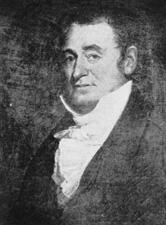
Here you will find contact information for Senator James Brown, including email address, phone number, and mailing address.
| Name | James Brown |
| Position | Senator |
| State | Louisiana |
| Party | Republican |
| Status | Former Representative |
| Term Start | May 24, 1813 |
| Term End | December 31, 1823 |
| Terms Served | 2 |
| Born | September 11, 1766 |
| Gender | Male |
| Bioguide ID | B000921 |
About Senator James Brown
James Brown was born James Joseph Brown on May 3, 1933, in a small wooden shack in Barnwell, South Carolina, to Susie Behling (1916–2004), a 16-year-old of mixed African-American and Asian ancestry, and Joseph Gardner Brown (1912–1993), who was of African-American and Native-American descent. His name was intended to be Joseph James Brown, but the given and middle names were reversed on his birth certificate. The Brown family lived in deep poverty in Elko, South Carolina, before moving, when James was about four or five years old, to Augusta, Georgia. There they first stayed in one of his aunts’ brothels and later in a house shared with another aunt. His parents’ marriage was contentious and abusive, and his mother eventually left the family and moved to New York. As a child in Augusta during the early 1940s, Brown began singing in talent shows, winning a contest at Augusta’s Lenox Theater in 1944 with the ballad “So Long.” He performed buck dances for change to entertain troops from nearby Camp Gordon as their convoys crossed a canal bridge near his aunt’s home, where he first heard blues musician Howlin’ Wolf. During this period he learned to play piano, guitar, and harmonica and was inspired to become an entertainer after hearing Louis Jordan’s “Caldonia.” In his teen years he briefly pursued boxing.
Brown’s formal education was limited and interrupted by poverty and legal troubles. At age 16 he was convicted of robbery and sent to a juvenile detention center in Toccoa, Georgia. While incarcerated he formed a gospel quartet with four cellmates, including Johnny Terry, and earned the nickname “Music Box” for his constant singing. He met singer Bobby Byrd when their baseball teams played outside the detention center; Byrd and his family later helped secure Brown’s early release. Brown was paroled on June 14, 1952, under a work sponsorship arranged by Toccoa businessman S. C. Lawson, who promised to employ him for two years and was impressed by his work ethic. After his release, Brown joined the Ever-Ready Gospel Singers, a group that included Byrd’s sister Sarah, and continued to develop his musical skills in the gospel tradition, effectively substituting musical apprenticeship and performance experience for conventional schooling.
By the mid-1950s, Brown’s career shifted decisively toward rhythm and blues. In 1954 he joined Bobby Byrd’s evolving group, which had moved from the Gospel Starlighters to the Avons and then to the Flames. Alongside Byrd, Sylvester Keels, Doyle Oglesby, Fred Pulliam, Nash Knox, and guitarist Nafloyd Scott (later joined by his brother Baroy), Brown rotated between lead vocals, drums, and piano. Managed first by Berry Trimier, the group built a reputation as a powerful live act around college campuses in Georgia and South Carolina and eventually renamed itself the Famous Flames. In 1955, after Little Richard encouraged them to contact his manager Clint Brantley in Macon, Georgia, they recorded a demo of “Please, Please, Please,” a Brown composition inspired by words Little Richard had written on a napkin. Signed to King Records’ Federal subsidiary in Cincinnati, Ohio, they released “Please, Please, Please” in March 1956; it became their first R&B hit and sold more than a million copies. Though follow-up singles initially faltered, Brown took greater control of his career, replacing Brantley with Ben Bart as manager in 1957 and, by 1958, scoring another major success with “Try Me,” which reached No. 1 on the R&B chart in early 1959.
Over the next decade, Brown emerged as one of the most influential figures in American popular music. He debuted at the Apollo Theater in New York City on April 24, 1959, and in 1962 financed the live recording that became Live at the Apollo, released in June 1963; the album reached No. 2 on the Top LPs chart, sold over a million copies, and remained on the charts for 14 months. Working both with the Famous Flames and his own band (often billed as the James Brown Band or James Brown Orchestra), he released a string of hits including “Bewildered,” “I’ll Go Crazy,” “Think,” and the instrumental “Night Train.” In the mid-1960s, after contractual disputes with King Records and a brief association with Smash Records, he solidified his commercial dominance with “Papa’s Got a Brand New Bag” (1965), his first Top 10 pop hit and first Grammy-winning record, followed by “I Got You (I Feel Good)” and “It’s a Man’s Man’s Man’s World.” By 1967–1969, with songs such as “Cold Sweat,” “Give It Up or Turnit a Loose,” “Licking Stick – Licking Stick,” “I Got the Feelin’,” “Mother Popcorn,” and “Funky Drummer,” he moved from a blues- and gospel-based R&B style to a stripped-down, rhythmically interlocking approach that defined funk. His vocals, often delivered as rhythmic declamation rather than conventional melody, and his emphasis on “the One” (the downbeat) became foundational for funk and a major influence on the emerging techniques of hip-hop and rap.
Brown’s band during this period drew heavily on jazz-trained musicians and became renowned for its precision and complexity. Under the leadership of figures such as trumpeter Lewis Hamlin and saxophonist/keyboardist Alfred “Pee Wee” Ellis, and with key contributions from guitarist Jimmy Nolen, saxophonist Maceo Parker, trombonist Fred Wesley, drummers John “Jabo” Starks, Clyde Stubblefield, and Melvin Parker, and longtime associate Bobby Byrd, Brown fused the drive of R&B with the rhythmic sophistication of jazz. He expanded his business interests by purchasing radio stations, including WRDW in Augusta and WJBE in Knoxville, Tennessee, and by launching labels such as Try Me and People Records. In 1970 he reorganized his backing ensemble as the J.B.’s, incorporating musicians like Bootsy and Phelps “Catfish” Collins, and further consolidated the funk sound with “Get Up (I Feel Like Being a) Sex Machine” and later “The Payback” (1974). At the same time, he became a prominent voice of social commentary with works such as “Say It Loud – I’m Black and I’m Proud” (1968), and he engaged in national politics, notably supporting President Richard Nixon’s 1972 reelection campaign, a stance that contributed to a decline in his U.S. audience and record sales in the mid-1970s.
James Brown also had a distinct, though entirely separate, namesake whose public service unfolded in a different century and arena. James Brown served as a Senator from Louisiana in the United States Congress from 1813 to 1823. A member of the Republican Party of his era, he completed two terms in the United States Senate, participating in the legislative process during a formative period in the nation’s history. Serving in Washington, D.C., he represented the interests of his Louisiana constituents at a time when the young republic was consolidating its institutions in the years surrounding and following the War of 1812. In that capacity, Senator Brown took part in debates and votes that helped shape federal policy and contributed to the evolving balance between state and national authority. His decade in the Senate placed him among the early generation of lawmakers who worked to define the role of Congress in the expanding United States.
In his later life, the musician James Brown remained a tireless performer and a widely recognized cultural icon. Despite tax problems, business reversals, and a prison term in the late 1980s for aggravated assault and related offenses, he returned to recording with albums such as Love Over-Due (1991), Universal James (1993), I’m Back (1998), and The Next Step (2002), and continued to tour extensively with large, tightly drilled bands under the banner of the James Brown Revue. He appeared in films including The Blues Brothers (1980), Rocky IV (1985), and The Tuxedo (2002), and in television projects such as the PBS American Masters documentary James Brown: Soul Survivor (2003). His 1986 autobiography, James Brown: The Godfather of Soul, and his 2005 memoir, I Feel Good: A Memoir of a Life of Soul, reflected on his career and influence. Over more than five decades he recorded 17 singles that reached No. 1 on the Billboard R&B charts and amassed more entries on the Billboard Hot 100 than any other artist who never reached No. 1 there. He was among the first ten inductees into the Rock and Roll Hall of Fame on January 23, 1986, and was later honored by the Rhythm & Blues Music Hall of Fame, the Songwriters Hall of Fame, and other institutions; Rolling Stone ranked him seventh among the 100 Greatest Artists of All Time. Brown continued performing into 2006, including a major U.S. appearance in San Francisco on August 20, 2006, and a televised performance at the UK Music Hall of Fame induction ceremony in November 2006. He died in Atlanta, Georgia, on December 25, 2006, from complications of pneumonia, leaving a legacy as the central progenitor of funk and one of the most sampled and influential musicians in modern popular music.