Representative James Yancy Callahan
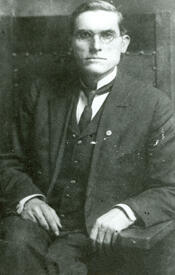
Here you will find contact information for Representative James Yancy Callahan, including email address, phone number, and mailing address.
| Name | James Yancy Callahan |
| Position | Representative |
| State | Oklahoma |
| District | -1 |
| Party | Free Silver |
| Status | Former Representative |
| Term Start | March 15, 1897 |
| Term End | March 3, 1899 |
| Terms Served | 1 |
| Born | December 19, 1852 |
| Gender | Male |
| Bioguide ID | C000053 |
About Representative James Yancy Callahan
James Yancy Callahan (December 19, 1852 – May 3, 1935) was an American politician and clergyman who became a prominent territorial leader and a Delegate to the United States House of Representatives from Oklahoma Territory. He was born near Salem, Dent County, Missouri, on December 19, 1852, and was reared on the farm where he was born. Educated in the common schools, he spent his early years engaged in agricultural work, gaining firsthand experience of rural life in the post–Civil War Midwest. On February 19, 1872, he married Margaret Asbreen Mitchell; together they had eleven children: Agnes Elmer, Mary Magadelene, Rufus Omar, Anna Ida, Florence Palestine, Alvin Kenneth, Lillie Effie, Orville Palmer, Lacey Edith, Eunice Minnie, and Eris Carleton.
Callahan’s formal education was limited to the common schools of Dent County, but he continued to develop himself through religious and civic involvement. In 1880 he entered the ministry of the Methodist Episcopal Church, combining his pastoral duties with his ongoing work in agriculture. His early adult life thus blended farming, religious service, and later business pursuits, reflecting the multifaceted responsibilities common to rural leaders of his era.
In addition to his ministerial work, Callahan engaged in sawmilling and mining, broadening his experience in both agriculture and industry. In 1885 he moved west to Stanton County, Kansas, where he continued his agricultural pursuits and quickly became active in local government. In 1886 he was elected register of deeds for Stanton County, Kansas, and was reelected in 1888. He served in that office until December 1889, when he resigned and returned to Dent County, Missouri. Seeking new opportunities on the expanding frontier, he moved again in 1892, this time to Kingfisher County in Oklahoma Territory, settling near the town of Kingfisher and resuming agricultural work.
Callahan’s political career reached its height in Oklahoma Territory. In 1896 he was nominated for the position of Congressional Delegate from Oklahoma Territory and ran on the Free Silver Party ticket, a third-party movement advocating the free coinage of silver as a remedy for economic distress among farmers and working people. He was elected by a plurality of fewer than 1,500 votes to the 55th United States Congress. Serving from March 4, 1897, to March 3, 1899, he participated in the legislative process during a significant period in American history, representing the interests of his territorial constituents in Washington, D.C. Although often described as a Representative from Oklahoma, his official capacity was as a non-voting Delegate from the Oklahoma Territory. A member of the Free Silver Party, he is notable as the only third-party politician to represent Oklahoma at the federal level. He was not a candidate for renomination in 1898, thus concluding his single term in Congress after one full term of service.
During his tenure in the House of Representatives, Callahan took part in the democratic process at a time when issues of monetary policy, western development, and territorial governance were central to national debate. As a Delegate, he worked to advance the concerns of Oklahoma Territory residents, particularly those related to land, settlement, and economic opportunity, and contributed to the broader legislative discussions of the late 1890s. His service from 1897 to 1899 placed him among the early federal advocates for the region that would become the State of Oklahoma in 1907.
After leaving Congress, Callahan remained in Oklahoma and shifted his focus from elective office to publishing and public commentary. He relocated to Enid, in Garfield County, Oklahoma, where he became the publisher of a newspaper called the Jacksonian. From Enid he continued to influence public opinion and political discourse in the state until January 1, 1913, when he ceased publication of the paper and retired from active business pursuits. His later years were marked by continued religious interest; in 1923 he publicly claimed to have been healed of a chronic ulcer after receiving prayer from the Rev. P. C. Nelson, an Assemblies of God educator, an episode later recounted in Nelson’s 1932 work, “Ex-Congressman Healed and Filled with Spirit.”
Callahan resided in Enid, Oklahoma, for the remainder of his life. He died there on May 3, 1935, at the age of 82 years and 135 days. He was interred at Enid Cemetery in Enid, Garfield County, Oklahoma. His life and career have been documented in sources such as A History of Oklahoma by Joseph B. Thoburn and Isaac M. Holcomb, the Biographical Directory of the United States Congress, and the Encyclopedia of Oklahoma History and Culture, which together record his role as a farmer, minister, county official, territorial Delegate, publisher, and one of the most distinctive third-party figures in Oklahoma’s early political history.