Representative James Capehart
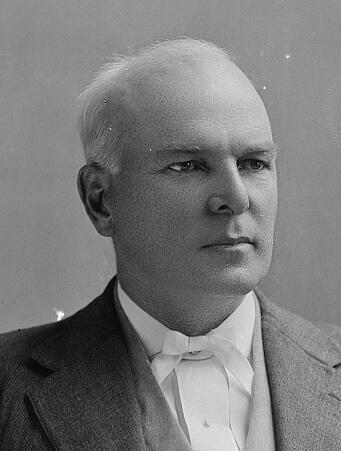
Here you will find contact information for Representative James Capehart, including email address, phone number, and mailing address.
| Name | James Capehart |
| Position | Representative |
| State | West Virginia |
| District | 4 |
| Party | Democratic |
| Status | Former Representative |
| Term Start | December 7, 1891 |
| Term End | March 3, 1895 |
| Terms Served | 2 |
| Born | March 7, 1847 |
| Gender | Male |
| Bioguide ID | C000129 |
About Representative James Capehart
James Capehart (March 7, 1847 – April 28, 1921) was an American businessman and Democratic Party politician from West Virginia who served as a United States Representative from 1891 to 1895. A member of the House of Representatives in the 52nd and 53rd Congresses, he represented the interests of his West Virginia constituents during a significant period in American political and economic history and contributed to the legislative process over two consecutive terms in office.
Capehart was born on March 7, 1847, in Point Pleasant in Mason County, Virginia, an area that later became part of the new state of West Virginia during the Civil War. He was educated in the local public schools before pursuing further studies at Marietta College in Marietta, Ohio. Seeking practical commercial training, he later attended Duff’s Commercial College in Pittsburgh, Pennsylvania. After completing his formal education, he returned to work in his family’s business, serving as a clerk and bookkeeper for his father, experience that helped establish his later career in business and agriculture.
Following his early work in his father’s employ, Capehart developed substantial interests in agriculture and livestock. From 1867 to 1903 he pursued farming and the breeding of livestock, activities that tied him closely to the rural economy of Mason County and the broader region. His business acumen and standing in the community led to his entry into public service at the county level. He served as president of the Mason County Court in 1871 and 1872, and again from 1880 to 1885, presiding over local governmental and judicial affairs during a period of post–Civil War reconstruction and development in West Virginia.
Capehart’s growing prominence in Democratic Party politics was reflected in his selection as a delegate to the Democratic National Convention in 1888. Building on this statewide and national party involvement, he successfully sought election to Congress in 1890. Running as a Democrat, he was elected to the Fifty-second Congress and subsequently re-elected in 1892 to the Fifty-third Congress, serving from March 4, 1891, to March 3, 1895. During these two terms as a Representative from West Virginia, he participated in the deliberations of the House of Representatives at a time marked by debates over tariffs, monetary policy, and economic regulation, and he took part in the democratic process on behalf of his district’s constituents.
After completing his second term, Capehart chose not to run for re-election in the 1894 contest and left Congress at the conclusion of his service in March 1895. He returned to West Virginia and resumed his business pursuits. In 1901 he became president of the Point Pleasant National Bank, a position that placed him at the center of local finance and commercial development. His leadership at the bank reflected both his long-standing experience in business and his continued influence in the civic life of Point Pleasant.
Around 1903, Capehart renewed and expanded his longstanding interest in agriculture by turning to fruit growing in Brevard County, Florida. He relocated to Cocoa, Florida, where he engaged in the cultivation of fruit, integrating his earlier agricultural background with the emerging citrus and fruit industry of the region. He resided in Cocoa for the remainder of his life while maintaining his ties to his native West Virginia.
James Capehart died in Cocoa, Brevard County, Florida, on April 28, 1921. His body was returned to his hometown of Point Pleasant, West Virginia, where he was buried in Lone Oak Cemetery. His career combined local judicial leadership, agricultural enterprise, banking, and two terms in the United States House of Representatives, reflecting the trajectory of a nineteenth-century businessman-politician shaped by the economic and political transformations of his era.