Representative James Robert Claiborne
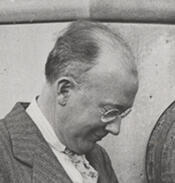
Here you will find contact information for Representative James Robert Claiborne, including email address, phone number, and mailing address.
| Name | James Robert Claiborne |
| Position | Representative |
| State | Missouri |
| District | 12 |
| Party | Democratic |
| Status | Former Representative |
| Term Start | March 9, 1933 |
| Term End | January 3, 1937 |
| Terms Served | 2 |
| Born | June 22, 1882 |
| Gender | Male |
| Bioguide ID | C000402 |
About Representative James Robert Claiborne
James Robert Claiborne (June 22, 1882 – February 16, 1944) was an American lawyer, educator, and Democratic politician from St. Louis, Missouri, who served as a Representative from Missouri in the United States Congress from 1933 to 1937. Over the course of two terms in the U.S. House of Representatives, he participated in the legislative process during a transformative era in American history and represented the interests of his Missouri constituents during the early years of the New Deal.
Claiborne was born on June 22, 1882, in St. Louis, Missouri. He was raised in that city and attended the public schools of St. Louis, receiving his early education in the local system that served as the foundation for his later professional and political life. Remaining closely tied to his native city throughout his career, he emerged from a local background that was typical of many Missouri politicians of his generation, rooted in the civic and commercial life of St. Louis.
After completing his primary and secondary schooling, Claiborne pursued legal studies at the University of Missouri in Columbia. He enrolled in the law department and was graduated in 1907. In the same year, he was admitted to the bar, formally beginning his career in the legal profession. Following his admission, he commenced the practice of law in St. Louis, where he developed a professional reputation and built a practice that would support his later entry into public life.
In addition to his work as a practicing attorney, Claiborne contributed to legal education. He lectured in the law school at St. Louis University for several years, participating in the training of future lawyers and engaging with the academic side of the profession. His dual role as practitioner and lecturer reflected a broader commitment to the law, both as a profession and as an institution central to public affairs in Missouri.
Claiborne’s first major bid for public office came in the 1920s. In 1924 he was an unsuccessful candidate for judge of the circuit court of the eighth judicial district, an effort that demonstrated his ambition to serve in a judicial capacity and brought him into closer contact with the electoral process. Although he did not win that race, the campaign helped establish his name in local and state political circles and laid groundwork for his subsequent congressional career.
A member of the Democratic Party, Claiborne was elected to the U.S. House of Representatives as a Democrat to the Seventy-third and Seventy-fourth Congresses, serving from March 4, 1933, to January 3, 1937. His tenure coincided with a significant period in American history, marked by the Great Depression and the sweeping legislative agenda of President Franklin D. Roosevelt’s New Deal. As a member of the House of Representatives, James Robert Claiborne participated in the democratic process and contributed to the legislative work of Congress during this critical time, representing Missouri and advocating for the interests of his constituents as the federal government expanded its role in economic recovery and social policy.
In 1936 Claiborne sought to continue his service in Congress but was an unsuccessful candidate for renomination, bringing his congressional career to a close after two terms. Following his departure from the House, he returned to St. Louis and resumed the practice of law, remaining active in his profession and in the civic life of his home city. He continued in legal practice there until his death.
James Robert Claiborne died in St. Louis, Missouri, on February 16, 1944. He was interred in Oak Grove Cemetery in St. Louis, where he was laid to rest in the city that had shaped his life, education, legal career, and public service.