Senator James Paul Clarke
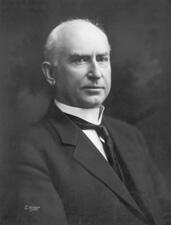
Here you will find contact information for Senator James Paul Clarke, including email address, phone number, and mailing address.
| Name | James Paul Clarke |
| Position | Senator |
| State | Arkansas |
| Party | Democratic |
| Status | Former Representative |
| Term Start | November 9, 1903 |
| Term End | March 3, 1917 |
| Terms Served | 3 |
| Born | August 18, 1854 |
| Gender | Male |
| Bioguide ID | C000463 |
About Senator James Paul Clarke
James Paul Clarke (August 18, 1854 – October 1, 1916) was an American lawyer and Democratic politician from the Arkansas Delta during the Progressive Era who rose from local practice to become Attorney General of Arkansas, the 18th governor of Arkansas, and a United States Senator. Serving in public office over a period of almost 30 years, he blended positions associated with the budding Populist movement, such as advocacy of free silver and railroad regulation, with a strong nationalism and a powerful oratorical style that helped secure his popularity and electoral success in a period of Democratic Party hegemony in the South known as the “Solid South.”
Clarke was born in Yazoo City, Mississippi, in the Mississippi Delta. His father, Walter Clarke, an architect, died when James was seven years old, and he was raised primarily by his mother, Ellen (née White), who came from a prominent planter-class family. He attended public schools and later studied at Tutwilder’s Academy in Greenbrier, Alabama. As a young man he briefly edited a newspaper in Yazoo City, an experience that introduced him to public affairs and political debate. Seeking a professional career, he enrolled at the University of Virginia School of Law, from which he graduated with a law degree in 1878.
After completing his legal education, Clarke was admitted to the bar in 1879. He first settled in the small Arkansas River Valley town of Ozark, Arkansas, where he began practicing law, but soon moved to Helena, Arkansas, in the Arkansas Delta, which became the base of his early legal and political career. On November 10, 1883, he married Sallie (née Moore) Wooten of Moon Lake, Mississippi. She had a son from a previous marriage, Alonzo Stuart “Lonnie” Wooten, and together the couple had two daughters and a son, establishing a family life that paralleled Clarke’s growing prominence in state politics.
Clarke entered elective office eight years into his legal career when he won election in 1886 to the Arkansas House of Representatives as a representative of Phillips County. He took his seat in the 26th Arkansas General Assembly on January 10, 1887, serving alongside R. B. Macon and J. N. Donohoo. After a single term in the House, he advanced to the Arkansas Senate, representing the 14th District, which included Phillips and Lee counties, beginning with the 27th Arkansas General Assembly. Demonstrating early leadership, he was elected President of the Arkansas Senate for the 28th Arkansas General Assembly in 1891. Building on this legislative experience, he was elected Attorney General of Arkansas and served in that statewide office from 1892 to 1894.
In 1894 Clarke was elected the 18th governor of Arkansas and served from 1895 to 1897. As governor, he articulated a vision of the Democratic Party grounded in American nationalism and explicitly tied to the maintenance of white supremacy in the South. In his closing speech of the gubernatorial campaign, he declared that “the people of the South looked to the Democratic party to preserve the white standards of civilization.” His term in office, however, was largely regarded as unsuccessful in terms of legislative accomplishment. Key measures he supported, including legislation to end prizefighting and to establish four-year terms for state officers, failed to pass. After leaving the governorship in 1897, Clarke moved his permanent residence to Little Rock, Arkansas, where he resumed the practice of law and remained an influential figure in state Democratic politics.
Clarke’s national career began with his election to the United States Senate in 1903 as a Democrat from Arkansas. He served in the Senate from March 4, 1903, until his death in 1916, encompassing three terms in office. During this period, which coincided with the Progressive Era and significant national debates over economic regulation, monetary policy, and American expansion, Clarke participated in the legislative process and represented the interests of his Arkansas constituents. He was chosen by his colleagues as President pro tempore of the United States Senate during the Sixty-third and Sixty-fourth Congresses, a position that placed him high in the Senate’s leadership and in the line of presidential succession. His Senate service occurred during a significant period in American history, and he was known for his “silver tongue,” short temper, and willingness to fight, traits that shaped his reputation on the Senate floor.
Clarke died in office on October 1, 1916, in Little Rock, Arkansas, while still serving as a United States Senator. He was interred at Oakland Cemetery in Little Rock. Despite what many contemporaries and later observers regarded as an ineffective tenure as governor, Clarke, together with his successor Daniel Jones, helped mark a transition within the conservative Democratic Party of Arkansas toward a more populist orientation. They responded to the electoral threat of a nascent Populist Party by incorporating selected reform planks—such as support for free silver and railroad regulation—into the Democratic platform, often in tension with the positions of national Democratic leaders. Clarke’s legacy remained visible in the National Statuary Hall Collection at the United States Capitol, where his statue was one of two presented by the State of Arkansas. In 2019, Arkansas decided to replace his statue, and that of Uriah Milton Rose, with statues of Johnny Cash and civil rights leader Daisy Lee Gatson Bates; in Clarke’s case, the reason publicly cited was “his racist beliefs.” His great-great-grandson, State Senator Clarke Tucker, strongly supported the change in a 2018 column, writing that he hoped one of the new statues would honor Daisy Bates or a member of the Little Rock Nine.