Representative James M. Collins
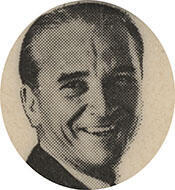
Here you will find contact information for Representative James M. Collins, including email address, phone number, and mailing address.
| Name | James M. Collins |
| Position | Representative |
| State | Texas |
| District | 3 |
| Party | Republican |
| Status | Former Representative |
| Term Start | January 10, 1967 |
| Term End | January 3, 1983 |
| Terms Served | 8 |
| Born | April 29, 1916 |
| Gender | Male |
| Bioguide ID | C000638 |
About Representative James M. Collins
James Mitchell Collins (April 29, 1916 – July 21, 1989) was an American businessman and Republican politician who represented the Third Congressional District of Texas in the United States House of Representatives from 1968 to 1983. A member of the Republican Party, he served eight terms in Congress during a significant period in American history, participating in the legislative process and representing a district then based around Irving in Dallas County.
Collins was born on April 29, 1916, in Hallsville in Harrison County in East Texas. He came from a prominent Texas family; his father, Carr Collins Sr., founded the Fidelity Union Life Insurance Company, and his sister, Ruth Sharp Altshuler, became a well-known civic and philanthropic leader in Dallas. The family later settled in Dallas, where Collins attended public schools and graduated from Woodrow Wilson High School. In recognition of his later accomplishments, he was inducted into the Woodrow Wilson High School Hall of Fame in 1989, the year the Hall of Fame was created to mark the school’s sixtieth anniversary.
After completing his secondary education, Collins attended Southern Methodist University in Dallas, from which he graduated. He subsequently entered the business world, building a career that drew on his family’s background in insurance and commerce. His experience in business and his family’s longstanding engagement in civic affairs helped shape his interest in public service and provided a foundation for his later political career.
Collins first sought election to Congress in 1966, when he ran as the Republican candidate for the newly created 3rd Congressional District in north Dallas. In that race he faced incumbent Democrat Joe R. Pool and lost by a relatively narrow margin, receiving 46 percent of the vote to Pool’s 53 percent. Pool’s death in July 1968 created a vacancy, and Collins again entered the contest in the ensuing special election. In that election he defeated Pool’s widow, Elizabeth Pool, winning more than 60 percent of the vote and securing the seat for the Republican Party at a time when north Dallas was undergoing a strong political shift toward the GOP.
Taking office in 1967 according to congressional records, and then serving continuously from his 1968 special-election victory, Collins represented Texas’s Third Congressional District in the U.S. House of Representatives until 1983. He won a full term in the general election of 1968, receiving 81,696 votes (59.4 percent) to 55,939 votes (40.6 percent) for Democrat Robert H. Hughes. Over the course of his eight terms, he consolidated his political strength in the district, never again facing a contest as close as his initial races. He never dropped below 64 percent of the vote in subsequent elections and ran unopposed in 1978, reflecting both his personal electoral appeal and the broader realignment that made the 3rd District a Republican stronghold that has remained in GOP hands without interruption since his initial victory.
During his congressional service, Collins participated actively in the legislative process and in the broader democratic life of the House, representing the interests of his Dallas-area constituents. He was known as an opponent of desegregation busing, reflecting the contentious debates of the era over civil rights and public education policy. In 1972, his career was marked by controversy when he was implicated in a salary kickback scheme involving his congressional staff, an episode that drew public and media scrutiny during a period of heightened concern about ethics in government.
Collins left Congress at the conclusion of his service in 1983, after eight consecutive terms. In his later years he remained associated with the Dallas area and with the business and civic networks that had shaped his earlier life and career. He died on July 21, 1989, closing a public career that had spanned the transformative political realignment of North Texas and nearly a decade and a half of service in the U.S. House of Representatives.