Representative James Perry Conner
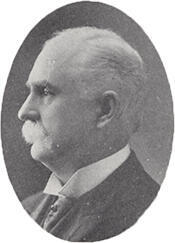
Here you will find contact information for Representative James Perry Conner, including email address, phone number, and mailing address.
| Name | James Perry Conner |
| Position | Representative |
| State | Iowa |
| District | 10 |
| Party | Republican |
| Status | Former Representative |
| Term Start | December 4, 1899 |
| Term End | March 3, 1909 |
| Terms Served | 5 |
| Born | January 27, 1851 |
| Gender | Male |
| Bioguide ID | C000690 |
About Representative James Perry Conner
James Perry Conner (January 27, 1851 – March 19, 1924) was a Republican U.S. Representative from Iowa’s 10th congressional district, serving five terms in the United States House of Representatives from 1899 to 1909, with his formal congressional service recorded from December 4, 1900, to March 3, 1909. A member of the Republican Party, he represented a large northwestern Iowa district during a significant period in American political and economic development, contributing to the legislative process and participating in the democratic representation of his constituents.
Conner was born on January 27, 1851, in Delaware County, Indiana. In his youth he moved west to Iowa, where he pursued higher education. He attended Upper Iowa University in Fayette, Iowa, an institution that served many aspiring professionals in the developing state. He subsequently enrolled in the University of Iowa College of Law, from which he graduated in 1873. That same year he was admitted to the bar, beginning a legal career that would form the foundation of his later judicial and congressional service.
After his admission to the bar, Conner established his law practice in Denison, Iowa, in Crawford County. He quickly became a prominent attorney in the region and entered public service through the legal system. From 1880 to 1884, he served as district attorney of the thirteenth judicial district of Iowa, prosecuting cases and representing the state in criminal matters. His performance in that role led to his election in 1884 as a circuit judge of the thirteenth judicial district. When Iowa reorganized its courts, he was elected in 1886 as a district judge of the sixteenth judicial district, serving in that capacity for over eight years on the bench. His judicial service enhanced his reputation as a careful and experienced lawyer and jurist.
Conner’s growing stature within the Republican Party was reflected in his selection as a delegate to the Republican National Convention in 1892, where he participated in the party’s national deliberations during a period of intense debate over economic and monetary policy. He was also a law partner and political ally of Leslie M. Shaw, a leading Iowa Republican who would later serve as governor of Iowa and U.S. Secretary of the Treasury. This alliance placed Conner within the inner circles of state Republican politics at the turn of the century.
Conner’s entry into Congress arose from a chain of political events in 1900. When U.S. Senator John H. Gear of Iowa died in July 1900, Governor Leslie M. Shaw was responsible for appointing an interim successor. Conner was among the many Republicans who hoped to be chosen for the vacant Senate seat, but Shaw instead selected Jonathan P. Dolliver, who at that time represented Iowa’s 10th congressional district in the U.S. House of Representatives. Dolliver’s elevation to the Senate created a vacancy in the House. The Republican nominee for Dolliver’s former seat was chosen by a district convention, and after an extended contest that went to the 96th ballot, Conner secured the Republican nomination over a crowded field of contenders. He then won the general election, entering Congress during the Fifty-sixth Congress.
As a member of the House of Representatives, Conner served during a transformative era that included the presidencies of William McKinley, Theodore Roosevelt, and William Howard Taft. He was first elected to complete the term in the Fifty-sixth Congress and was subsequently reelected in 1902 to the Fifty-seventh Congress and then to the three succeeding Congresses, for a total of five terms in office. His tenure in Congress, spanning from December 4, 1900, to March 3, 1909, coincided with major national debates over tariffs, regulation of corporations, and the emerging progressive reform movement. Within this context, Conner was generally identified with the more conservative “standpatter” wing of the Republican Party, which favored established tariff policies and a cautious approach to reform, in contrast to the insurgent progressives who were gaining strength in Iowa and nationally.
The growing influence of the progressive wing of the Republican Party in Iowa ultimately contributed to the end of Conner’s congressional career. In 1908 he was challenged in the Republican primary by Frank P. Woods, a newspaper publisher and a leader among the progressives in the state. The primary became part of a broader effort by progressive Republicans to displace incumbents aligned with the standpatter faction. Conner was defeated by Woods in that primary contest, bringing his service in the House to a close at the end of the Sixtieth Congress in March 1909, after nearly a decade of continuous representation of Iowa’s 10th district.
Following his departure from Congress, Conner returned to Denison, Iowa, where he resumed the practice of law. He remained a respected figure in the local community, drawing on his long experience as an attorney, judge, and legislator. He continued to live and work in Denison until his death there on March 19, 1924. James Perry Conner was interred in Oakland Cemetery, leaving a legacy as a prominent Iowa jurist and Republican congressman who played a role in the state’s political life during the late nineteenth and early twentieth centuries.