Representative James Austin Connolly
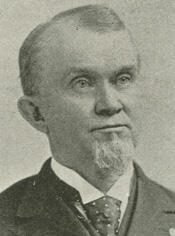
Here you will find contact information for Representative James Austin Connolly, including email address, phone number, and mailing address.
| Name | James Austin Connolly |
| Position | Representative |
| State | Illinois |
| District | 17 |
| Party | Republican |
| Status | Former Representative |
| Term Start | December 2, 1895 |
| Term End | March 3, 1899 |
| Terms Served | 2 |
| Born | March 8, 1843 |
| Gender | Male |
| Bioguide ID | C000697 |
About Representative James Austin Connolly
James Austin Connolly (March 8, 1843 – December 15, 1914) was an American lawyer, Civil War veteran, and Republican politician who served two terms as a U.S. Representative from Illinois from 1895 to 1899. Over the course of his public career he contributed to the legislative process during a significant period in American history, representing the interests of his constituents in the United States House of Representatives.
Connolly was born on March 8, 1843, in Newark, New Jersey. During his youth he moved west with his family, settling in Illinois, where he would spend most of his life and build his professional and political career. Growing up in the Midwest in the decades preceding the Civil War, he came of age in a region deeply engaged with the national debates over union, slavery, and economic development, influences that would later shape his service as a soldier and legislator.
Connolly pursued legal studies in Illinois and was admitted to the bar, beginning the practice of law in the state. Establishing himself as an attorney, he became part of the professional class that often supplied candidates for public office in the post–Civil War era. His legal training and experience provided the foundation for his later work in public service and in the legislative arena, where familiarity with statutes and constitutional issues was essential.
With the outbreak of the Civil War, Connolly entered military service in the Union Army, distinguishing himself as a Civil War veteran. Like many men of his generation in Illinois, he joined the fight to preserve the Union, and his wartime experience helped shape his identity and public reputation. His service during this defining national conflict placed him among the large cohort of veterans who would go on to play prominent roles in politics and government during the latter half of the nineteenth century.
After the war, Connolly resumed his legal career in Illinois and became active in Republican Party politics. As a member of the Republican Party, he aligned himself with the dominant political organization in Illinois during the Reconstruction and post-Reconstruction periods, a party closely associated with Union victory, veterans’ interests, and economic modernization. His standing as both a lawyer and a veteran enhanced his credibility among voters and party leaders, positioning him for higher office.
Connolly was elected as a Republican to the United States House of Representatives and served as a Representative from Illinois in the United States Congress from March 4, 1895, to March 3, 1899, encompassing the Fifty-fourth and Fifty-fifth Congresses. During his two terms in office he participated in the democratic process and contributed to the legislative work of the House at a time marked by debates over tariffs, currency, and America’s emerging role on the world stage. Representing his Illinois district, he worked to advance the interests of his constituents within the broader framework of Republican policies of the era.
Leaving Congress at the conclusion of his second term in 1899, Connolly returned to private life and the practice of law in Illinois. He remained identified with the Republican Party and with the generation of Civil War veterans who had helped shape national policy in the late nineteenth century. James Austin Connolly died on December 15, 1914, closing a life that spanned from the antebellum period through the Civil War and into the modern industrial age, and that combined military service, legal practice, and elected office in the service of his state and nation.