Representative Jim Courter
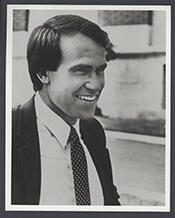
Here you will find contact information for Representative Jim Courter, including email address, phone number, and mailing address.
| Name | Jim Courter |
| Position | Representative |
| State | New Jersey |
| District | 12 |
| Party | Republican |
| Status | Former Representative |
| Term Start | January 15, 1979 |
| Term End | January 3, 1991 |
| Terms Served | 6 |
| Born | October 14, 1941 |
| Gender | Male |
| Bioguide ID | C000809 |
About Representative Jim Courter
James Andrew Courter (born October 14, 1941) is an American Republican Party politician and attorney who represented parts of northwestern New Jersey in the United States House of Representatives from 1979 to 1991. A member of the Republican Party, he served six terms in Congress, contributing to the legislative process during a significant period in American history and participating in the democratic process on behalf of his constituents. Over the course of his congressional career, he represented New Jersey’s 13th congressional district and, following redistricting, the 12th district, and he was widely described as the most conservative member of New Jersey’s congressional delegation. In 1989, he was the Republican nominee for Governor of New Jersey, running unsuccessfully against Democrat Jim Florio.
Courter was born on October 14, 1941, in Montclair, New Jersey. He attended Montclair Academy, from which he graduated in 1959. He then enrolled at Colgate University, where he received a Bachelor of Arts degree in 1963. Pursuing a legal career, he attended Duke University School of Law and earned a Juris Doctor degree in 1966, laying the foundation for his later work as an attorney and public official.
Immediately after completing law school, Courter became a Peace Corps volunteer in Venezuela, an early experience in public service that preceded his formal legal and political career. He was admitted to the bar in Washington, D.C., in 1966 and later to the New Jersey bar in 1971. These admissions enabled him to practice law in both the nation’s capital and his home state, and they framed his transition from public-interest legal work into local prosecution and, ultimately, elective office.
Courter’s early legal career included service as an assistant corporation counsel for Washington, D.C., from 1969 to 1970. After returning to New Jersey, he worked for Union County Legal Services from 1970 to 1971, reflecting a continued engagement with legal aid and public service. In 1972, he founded a law firm in Hackettstown, New Jersey, establishing his professional base in the northwestern part of the state that he would later represent in Congress. From 1973 to 1977, he served as first assistant prosecutor in Warren County, New Jersey, gaining prosecutorial experience and a public profile in local law enforcement. In 1975, he co-founded Warren County Legal Services and also served as an attorney for municipalities in Warren and Sussex counties, further deepening his ties to local government and community affairs.
A Republican, Courter was elected to the U.S. House of Representatives in 1978 and took office on January 3, 1979. He served continuously until January 3, 1991, completing six terms over twelve years. During this period, he represented New Jersey’s 13th congressional district and, after redistricting, the 12th district, both located in northwestern New Jersey. His tenure in Congress coincided with major national developments, including the late Cold War era and significant debates over defense, fiscal policy, and domestic programs. Known for his conservative positions, he was regarded as the most conservative member of New Jersey’s congressional delegation, and he consistently aligned with the Republican Party on key legislative issues. His service in Congress occurred during a significant period in American history, and he participated actively in the legislative and committee work that shaped federal policy during those years.
In 1989, Courter sought higher office as the Republican nominee for Governor of New Jersey. Running in a statewide race that drew national attention, he faced Democratic candidate Jim Florio. Courter lost the election in a landslide to Florio, and in the wake of that defeat he chose not to seek re-election to the House of Representatives in 1990, bringing his congressional career to a close at the end of his sixth term in January 1991. His gubernatorial campaign marked the peak of his electoral ambitions and underscored his prominence within New Jersey Republican politics during the late 1980s.
After leaving Congress, Courter continued his involvement in national public policy. From 1991 to 1993, he served as chairman of the Defense Base Closure and Realignment Commission (often referred to as the Base Closure and Realignment Commission), which was responsible for evaluating and recommending the closure and realignment of U.S. military installations in the post–Cold War environment. His work on the commission contributed to the restructuring of the nation’s defense infrastructure. He was also associated with publications such as “Defending Democracy” (American Studies Center, June 1, 1986) and the “Defense Base Closure & Realignment Commission: Report to the President” (Diane Publishing Co., April 1, 1994), reflecting his engagement with defense and public policy issues.
In his personal life, Courter is married to Carmen Courter. The couple made their home in Hackettstown, New Jersey, where in 1990 a 12-ton recreational vehicle collided with the front of their house; the Courters were unhurt in the incident. Their family has remained connected to New Jersey public life; in 2006, their daughter Katrina married Taylor Whitman, the son of former New Jersey Governor Christine Todd Whitman. Courter has remained a figure of interest in public affairs, with appearances on C-SPAN and continued recognition in official records such as the Biographical Directory of the United States Congress.