Representative James Way Covert
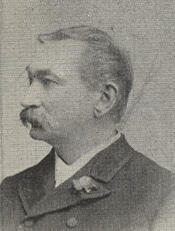
Here you will find contact information for Representative James Way Covert, including email address, phone number, and mailing address.
| Name | James Way Covert |
| Position | Representative |
| State | New York |
| District | 1 |
| Party | Democratic |
| Status | Former Representative |
| Term Start | October 15, 1877 |
| Term End | March 3, 1895 |
| Terms Served | 5 |
| Born | September 2, 1842 |
| Gender | Male |
| Bioguide ID | C000814 |
About Representative James Way Covert
James Way Covert (September 2, 1842 – May 16, 1910) was an American lawyer and Democratic politician who served five terms as a United States Representative from New York between 1877 and 1895. His congressional service, which spanned the post–Civil War and Gilded Age eras, placed him at the center of significant developments in American political and economic life, and he played a notable role in the legislative process during his years in the House of Representatives.
Covert was born on September 2, 1842, at Oyster Bay, New York. He attended the public schools and pursued further academic studies in nearby Locust Valley, receiving the education that prepared him for a professional career in the law. Remaining in his native region of Long Island during his youth, he developed the local ties that would later underpin his public service and political career.
After completing his academic education, Covert studied law and was admitted to the bar in 1863. He commenced the practice of law in Flushing, New York, establishing himself as a practicing attorney while still a young man. His early legal career quickly led to positions of public responsibility: he served as district school commissioner from 1867 to 1870, overseeing aspects of local education, and then as assistant prosecuting attorney of Queens County. From 1870 to 1874 he held the office of Surrogate of Queens County, administering matters related to estates and probate, and gaining further experience in public administration and the judicial system.
Covert’s entry into national politics came with his election as a Democrat to the United States House of Representatives. He was first elected to the Forty-fifth and Forty-sixth Congresses, serving from March 4, 1877, to March 3, 1881. During this initial period in the House, he represented his New York constituents in a time of reconstruction and rapid industrial growth. In the Forty-sixth Congress he served as chairman of the House Committee on Agriculture, a position that placed him at the forefront of legislative issues affecting the nation’s farmers and agricultural policy. His work in these years contributed to the broader legislative process and reflected the concerns of both his district and the country at large.
After leaving Congress in 1881, Covert continued his political career at the state level. He was elected to the New York State Senate from the 1st District and served there in 1882 and 1883. In the State Senate he participated in shaping state legislation during a period of expanding urbanization and economic change in New York, further solidifying his reputation as an experienced Democratic lawmaker with both state and national credentials.
Covert returned to the U.S. House of Representatives with his election to the Fifty-first, Fifty-second, and Fifty-third Congresses, serving from March 4, 1889, to March 3, 1895. This second stretch in Congress brought him back into national prominence during a time marked by debates over tariffs, industrial regulation, and intellectual property. In the Fifty-third Congress he served as chairman of the House Committee on Patents, where he played a role in overseeing legislation related to inventions and patent law, an area of growing importance in an era of rapid technological innovation. Across his five terms in Congress, from 1877 to 1881 and from 1889 to 1895, he consistently represented New York as a member of the Democratic Party and participated actively in the democratic process on behalf of his constituents.
Following the conclusion of his final term in Congress in 1895, Covert returned to private life and the practice of law. In 1896 he moved to Brooklyn, New York, where he resumed his legal career. He continued to reside and work there until his death. James Way Covert died in Brooklyn on May 16, 1910. He was interred in Mount Olivet Cemetery in Maspeth, New York, closing a life marked by long service as a lawyer, local official, state senator, and five-term United States Representative from New York.