Representative James Harry Covington
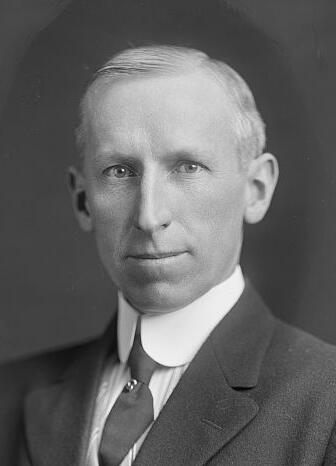
Here you will find contact information for Representative James Harry Covington, including email address, phone number, and mailing address.
| Name | James Harry Covington |
| Position | Representative |
| State | Maryland |
| District | 1 |
| Party | Democratic |
| Status | Former Representative |
| Term Start | March 15, 1909 |
| Term End | March 3, 1915 |
| Terms Served | 3 |
| Born | May 3, 1870 |
| Gender | Male |
| Bioguide ID | C000816 |
About Representative James Harry Covington
James Harry Covington (May 3, 1870 – February 4, 1942) was a United States Representative from Maryland, chief justice of the Supreme Court of the District of Columbia, and a prominent attorney who co‑founded the law firm of Covington & Burling. A member of the Democratic Party, he served three terms in the United States House of Representatives from 1909 to 1915, representing Maryland during a significant period in American political and legal history.
Covington was born on May 3, 1870, in Easton, Talbot County, Maryland. He was educated in the public schools of Talbot County and at the Maryland Military and Naval Academy in Oxford, Maryland, where he received his early academic and military training. As a young man he became active in fraternal and collegiate life, serving as Worthy Grand Master on the Supreme Executive Committee of the Kappa Sigma fraternity from 1892 to 1894, an early indication of his leadership and organizational abilities.
Covington pursued legal studies at the University of Pennsylvania Law School, where he received a Bachelor of Laws degree in 1894. Immediately upon graduation he was admitted to the bar and entered private practice in Easton, Maryland, beginning a legal career that would span nearly five decades. He quickly became involved in local Democratic politics and public service. Although he was an unsuccessful Democratic nominee for the Maryland Senate in 1901, he remained a prominent figure in Eastern Shore politics. From 1903 to 1908 he served as state’s attorney for Talbot County, Maryland, gaining extensive experience as a prosecutor and establishing a reputation as a capable and energetic lawyer.
Building on his local prominence, Covington was elected as a Democrat from Maryland’s 1st congressional district to the United States House of Representatives. He served in the 61st, 62nd, and 63rd Congresses from March 4, 1909, until his resignation on September 30, 1914, thus contributing to the legislative process during three consecutive terms in office. As a member of the House of Representatives, he participated in the democratic process and represented the interests of his Eastern Shore constituents during a period marked by Progressive Era reforms and the early years of the Woodrow Wilson administration. His congressional service occurred during a significant period in American history, as the federal government expanded its role in economic regulation and prepared for the challenges that would accompany World War I.
Covington left Congress to accept a federal judicial appointment. On June 8, 1914, President Woodrow Wilson nominated him to be Chief Justice of the Supreme Court of the District of Columbia (now the United States District Court for the District of Columbia), filling the vacancy created by the death of Chief Justice Harry M. Clabaugh. The United States Senate confirmed his nomination on June 15, 1914, and he received his commission the same day. He resigned his House seat effective September 30, 1914, to assume his judicial duties. Covington served as chief justice from 1914 until May 31, 1918, when his service on the court terminated upon his resignation. During his tenure he presided over a busy federal trial court in the nation’s capital at a time when the federal judiciary was increasingly engaged with wartime and regulatory matters.
Covington enjoyed the confidence of President Wilson beyond his judicial role. In 1917, amid domestic tensions surrounding World War I and labor unrest, Wilson entrusted him with the leadership of a federal investigation into the radical trade union known as the Industrial Workers of the World (IWW). Covington’s inquiry lasted several weeks and preceded coordinated mass raids by the United States Department of Justice against the IWW on September 5, 1917, an episode that reflected the government’s broader campaign against perceived subversion during the war. While serving on the bench, he also contributed to legal education as a Professor of Law at Georgetown University from 1914 to 1919, helping to train a new generation of lawyers in Washington, D.C.
After resigning from the court in 1918, Covington returned to private practice in Washington, D.C., where he remained active from 1918 until his death in 1942. In 1918 he served as a member of the Railway Wage Commission, which was established during federal control of the railroads in World War I to address wage and labor issues in the transportation sector. On January 1, 1919, he and Edward B. Burling founded the law firm of Covington & Burling in Washington, D.C. Under their leadership the firm grew into a major national and international law practice. Covington & Burling is recognized as the oldest law firm headquartered in Washington, D.C., and has grown to include approximately 1,000 attorneys in offices across the world, reflecting the enduring institutional legacy of Covington’s legal career.
James Harry Covington continued his legal practice and professional activities in Washington, D.C., until his death on February 4, 1942. He died in Washington and was interred in Spring Hill Cemetery in his hometown of Easton, Maryland, thus closing a career that had spanned local prosecution, congressional service, federal judicial leadership, legal education, and the creation of one of the capital’s most influential law firms.