Representative James Michael Curley
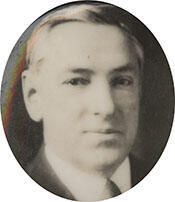
Here you will find contact information for Representative James Michael Curley, including email address, phone number, and mailing address.
| Name | James Michael Curley |
| Position | Representative |
| State | Massachusetts |
| District | 11 |
| Party | Democratic |
| Status | Former Representative |
| Term Start | April 4, 1911 |
| Term End | January 3, 1947 |
| Terms Served | 4 |
| Born | November 20, 1874 |
| Gender | Male |
| Bioguide ID | C000996 |
About Representative James Michael Curley
James Michael Curley served as a Representative from Massachusetts in the United States Congress from 1911 to 1947. A member of the Democratic Party, James Michael Curley contributed to the legislative process during 4 terms in office.
James Michael Curley’s service in Congress occurred during a significant period in American history. As a member of the House of Representatives, James Michael Curley participated in the democratic process and represented the interests of constituents.
James Michael Curley (November 20, 1874 – November 12, 1958) was an American Democratic politician from Boston, Massachusetts. He served four terms as mayor of Boston between 1914 and 1950. Curley ran for mayor in every election for which he was legally qualified. He was twice convicted of criminal behavior and notably served time in prison during his last term as mayor. He also served a single term as governor of Massachusetts. He is remembered as one of the most colorful figures in Massachusetts politics. Curley also served two terms, separated by 30 years, in the United States House of Representatives and, in his early career, served in the Boston Common Council, Boston Board of Aldermen, and Massachusetts House of Representatives. Curley was immensely popular with his fellow working class Roman Catholic Irish Americans. During the Great Depression in the United States, he raised taxes and spent freely on various improvements. He enlarged Boston City Hospital, expanded the Massachusetts Bay Transportation Authority, funded projects to improve roads and bridges, and improved the neighborhoods with beaches and bathhouses, playgrounds and parks, public schools, and libraries. In addition to their own benefits, these projects provided jobs, needed by the working class during the Depression. At the same time, he was regularly collecting bribes, kickbacks, and other graft. He was a leading and at times divisive force in the Massachusetts Democratic Party, challenging Boston’s ward bosses and the party’s white Anglo-Saxon Protestant leadership at the local and state levels. His political tactics, which tended to drive businesses and economically successful people from the city, damaging the local economy, have become an object of study for economists and political scientists. A 1993 survey of historians, political scientists and urban experts conducted by Melvin G. Holli of the University of Illinois at Chicago ranked Curley as the fourth-worst American big-city mayor to have served between the years 1820 and 1993.