Representative James Henry Davidson
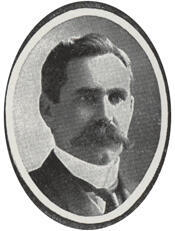
Here you will find contact information for Representative James Henry Davidson, including email address, phone number, and mailing address.
| Name | James Henry Davidson |
| Position | Representative |
| State | Wisconsin |
| District | 6 |
| Party | Republican |
| Status | Former Representative |
| Term Start | March 15, 1897 |
| Term End | March 3, 1919 |
| Terms Served | 9 |
| Born | June 18, 1858 |
| Gender | Male |
| Bioguide ID | D000084 |
About Representative James Henry Davidson
James Henry Davidson (June 18, 1858 – August 6, 1918) was an American lawyer and Republican politician from Oshkosh, Wisconsin, who represented eastern Wisconsin for nine terms in the United States House of Representatives. A member of the Republican Party, he served in Congress from March 4, 1897, to March 3, 1913, and again from March 4, 1917, until his death in 1918, thus holding office during a significant period in American political and economic transformation. Over the course of his nine terms, he participated actively in the legislative process, represented the interests of his constituents, and rose to positions of influence, including chairmanship of the House Committee on Railways and Canals from 1901 to 1911.
Davidson was born on June 18, 1858, and pursued a legal career before entering national politics. He established himself as an attorney in Wisconsin and became identified with the Republican Party at the local and county levels. Early in his public career, he served as district attorney of Green Lake County, Wisconsin, where he gained experience in public law enforcement and county administration. After moving to Oshkosh, he continued his legal practice and served as city attorney of Oshkosh, further solidifying his reputation as a capable lawyer and public official. These early legal and municipal roles provided the foundation for his later prominence in state and national Republican politics.
By the mid-1890s, Davidson had become a key figure in Republican organization in his region. He served for six years as chairman of the Republican organization in Wisconsin’s 6th congressional district, a position that placed him at the center of party strategy and candidate selection. When the incumbent representative in the 6th district, Samuel A. Cook, announced in 1896 that he would not seek re-election, Davidson emerged as the leading Republican contender. He was easily nominated at the congressional district convention in August 1896. In the general election that fall, he prevailed with approximately 57 percent of the vote over Democrat William F. Gruenewald. At that time, the 6th congressional district comprised Winnebago, Calumet, Manitowoc, Fond du Lac, Marquette, Green Lake, and Waushara counties, an area that included Davidson’s home base in Winnebago County.
Davidson took his seat in the 55th Congress on March 4, 1897. During his first term, he delivered a lengthy speech in support of the annexation of Hawaii, a speech that was subsequently printed and distributed as a pamphlet, reflecting his engagement with emerging questions of American expansion and foreign policy. He was appointed to the House Committee on Rivers and Harbors, where he played an important role in securing appropriations for navigation and infrastructure projects of particular relevance to his district and the state of Wisconsin. Contemporary newspapers in Wisconsin remarked on his diligence, attentiveness to constituent services, and focus on local concerns, and he was easily renominated for a second term. His 1898 general election proved more competitive, and he won with about 53 percent of the vote against Democrat Frank C. Stewart. In 1900 he again secured re-election by a comfortable margin over former state representative James W. Watson.
Following the 1900 United States census, Wisconsin was apportioned an additional seat in the House of Representatives, prompting a major redistricting. Under the new map, Davidson was drawn from the 6th into the 8th congressional district. The reconfigured 8th district included Winnebago, Calumet, Manitowoc, and Waushara counties from his old district and added Portage and Waupaca counties. Although he faced some opposition at the 8th district Republican convention, he was renominated on the first ballot with about 65 percent of the delegate vote and went on to win the general election with nearly 58 percent of the vote. In the 57th Congress he was appointed chairman of the House Committee on Railways and Canals, a powerful post he would hold for five consecutive terms, from 1901 to 1911. As chairman, he was positioned at the center of legislative oversight and policymaking related to the nation’s transportation infrastructure at a time of rapid industrial growth.
Davidson’s congressional career continued to be marked by electoral strength and organizational responsibility within the Republican Party. During the 1904 election season he was seriously ill with typhoid fever, yet he was renominated and re-elected without serious difficulty, underscoring his entrenched support in the district. In 1906 he was appointed to the executive committee of the National Republican Congressional Committee, reflecting his growing stature in national party affairs. That same year, Wisconsin held its first primary elections to determine party nominations. Davidson faced no opponent in the Republican primary, while the Democrats initially failed to properly nominate a candidate. An emergency ruling by the Wisconsin Supreme Court designated write-in primary candidate John E. McMullen as the official Democratic nominee and ordered his name placed on the ballot, but McMullen did not actively campaign, and Davidson easily secured his sixth term. He was re-elected again in 1908 and 1910 by similar margins, maintaining his influence in Congress and within the Republican ranks.
Until 1912, Davidson largely avoided the intense intra-party conflict between progressive and stalwart factions that divided Republicans in Wisconsin and nationally. In the 1912 presidential cycle, however, he publicly endorsed the campaign of Wisconsin’s progressive U.S. senator Robert M. La Follette for the Republican presidential nomination. After La Follette’s bid faltered and former president Theodore Roosevelt led a progressive bolt from the party to form the Progressive (Bull Moose) Party, Davidson remained a Republican but sought to define himself ideologically. He ran a series of large newspaper advertisements declaring himself a “progressive,” an effort that coincided with another redistricting in 1911 that significantly altered his political base. The new map drew him back into the 6th congressional district and nearly restored its pre-1902 boundaries. In the 1912 Republican primary he faced a serious challenge from James N. Tittemore of Omro, an avowed progressive who questioned Davidson’s progressive credentials. Davidson narrowly survived, defeating Tittemore by just 362 votes. After the primary he largely abandoned attempts to court the progressive faction and distanced himself from Roosevelt’s Progressive campaign. The Oshkosh Northwestern, which had supported his earlier campaigns, expressed disillusionment with his 1912 race and suggested that the Democratic nominee, Michael K. Reilly, was the more genuinely progressive choice. In the general election, Reilly narrowly defeated Davidson, winning about 48 percent of the vote to Davidson’s 45 percent, ending Davidson’s continuous service in Congress in March 1913.
Following his defeat, Davidson stepped back briefly from public office but soon returned to the electoral arena. In 1914 he sought to regain his seat, facing a primary rematch with James Tittemore, this time in a three-way contest that also included Philip Lehner. Davidson easily won the Republican nomination but narrowly lost the general election rematch to Michael K. Reilly. Undeterred, he ran again in 1916, once more prevailing in a three-way Republican primary. In their third general-election contest, Davidson finally defeated Reilly and reclaimed his seat in the House of Representatives, beginning his ninth term on March 4, 1917. During the 1916 campaign he had advocated a policy of strict American neutrality in World War I and maintained that position after returning to Congress. When the House voted in April 1917 on the declaration of war against Germany, Davidson was one of only fifty members to vote in opposition. After war was declared, however, he accepted the decision and supported necessary war measures, distinguishing himself from some other opponents of the declaration who continued to resist wartime legislation.
James Henry Davidson continued to serve in the House during the early years of American involvement in World War I, representing his eastern Wisconsin district and participating in wartime legislative deliberations. His final period in Congress was cut short when he died in office on August 6, 1918. Over more than two decades in national politics, he combined a substantial legal background, local and county prosecutorial experience, and long service in party leadership with a significant congressional career that included chairmanship of the House Committee on Railways and Canals and sustained engagement with both local concerns and major national issues.