Representative James J. Delaney
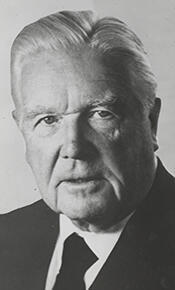
Here you will find contact information for Representative James J. Delaney, including email address, phone number, and mailing address.
| Name | James J. Delaney |
| Position | Representative |
| State | New York |
| District | 9 |
| Party | Democratic |
| Status | Former Representative |
| Term Start | January 3, 1945 |
| Term End | January 3, 1979 |
| Terms Served | 17 |
| Born | March 19, 1901 |
| Gender | Male |
| Bioguide ID | D000211 |
About Representative James J. Delaney
James Joseph Delaney (March 19, 1901 – May 24, 1987) was an American politician from New York who served as a Representative in the United States Congress from 1945 to 1947 and from 1949 to 1978. A member of the Democratic Party, he held his seat for 16 terms, contributing to the legislative process during a significant period in twentieth-century American history and representing the interests of his New York constituents over more than three decades.
Delaney was born on March 19, 1901, in New York City. Raised in an urban environment shaped by rapid industrialization and immigration, he came of age at a time when New York’s political and social institutions were expanding to meet the needs of a growing population. The experience of living in a major metropolitan center during the Progressive Era and World War I helped form his understanding of labor, commerce, and public service, themes that would later influence his work in Congress.
He was educated in the public schools of New York City, where he received the foundational training that enabled his later professional and political pursuits. Coming from a city with a strong tradition of civic engagement and party politics, Delaney was exposed early to the workings of local government and the Democratic Party organization. This environment provided both the practical knowledge and the political networks that facilitated his eventual entry into elective office.
Delaney’s early career developed against the backdrop of the interwar years and the Great Depression, when New Deal policies reshaped the relationship between the federal government and American society. As he became more active in public affairs, he aligned himself with the Democratic Party’s emphasis on economic recovery, social welfare, and labor protections. His growing involvement in party activities and community issues in New York laid the groundwork for his candidacy for Congress and helped establish his reputation as a reliable representative of working- and middle-class interests.
In 1944, Delaney was elected as a Democrat to the United States House of Representatives, beginning his first term on January 3, 1945. He served in the House from 1945 to 1947, participating in the democratic process at the close of World War II, when Congress was addressing wartime demobilization, veterans’ benefits, and the transition to a peacetime economy. Although he left office briefly after his initial term, he returned to the House in 1949 and continued to serve without interruption until 1978. Over the course of these 16 terms, he took part in deliberations on major issues including postwar reconstruction, the Cold War, civil rights, and the expansion of federal social and economic programs.
Delaney’s long tenure in Congress coincided with some of the most consequential developments in modern American history, from the Truman and Eisenhower administrations through the era of the Great Society and into the political realignments of the 1970s. As a member of the House of Representatives, he consistently represented New York’s interests, particularly those of his urban constituency, and contributed to the shaping of national policy through his votes, committee work, and participation in legislative debates. His service reflected both the priorities of the Democratic Party and the evolving needs of a diverse and changing electorate in New York City.
After choosing not to seek reelection and leaving Congress at the end of his final term in 1979, Delaney retired from public office. He remained a figure associated with the mid-century Democratic establishment in New York, remembered for the continuity and stability he provided his district over more than thirty years in Washington. James Joseph Delaney died on May 24, 1987, closing a life that had spanned from the dawn of the twentieth century through the late Cold War and had been marked by extended service in the United States House of Representatives.