Representative James Dellet
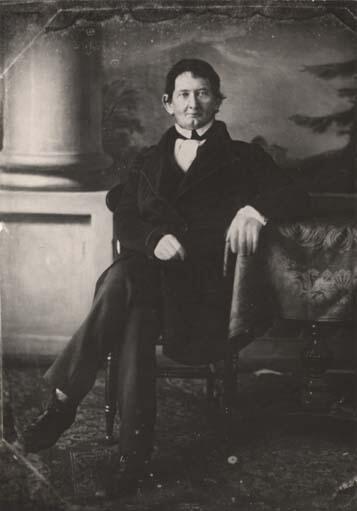
Here you will find contact information for Representative James Dellet, including email address, phone number, and mailing address.
| Name | James Dellet |
| Position | Representative |
| State | Alabama |
| District | 1 |
| Party | Whig |
| Status | Former Representative |
| Term Start | December 2, 1839 |
| Term End | March 3, 1845 |
| Terms Served | 2 |
| Born | February 18, 1788 |
| Gender | Male |
| Bioguide ID | D000221 |
About Representative James Dellet
James Dellet (February 18, 1788 – December 21, 1848) was an American lawyer, planter, and politician who served as Speaker of the Alabama House of Representatives during the state’s inaugural legislative session in 1819 and again in 1821. He later represented Alabama in the United States House of Representatives as a Whig, serving in the Twenty-sixth (1839–1841) and Twenty-eighth (1843–1845) Congresses. His public career spanned the formative years of Alabama’s transition from territory to statehood and the turbulent national politics of the antebellum era.
Dellet was born on February 18, 1788, in Camden, New Jersey. In 1800 he moved with his family to Columbia, South Carolina, where he spent his youth in a region that was emerging as an important political and educational center in the early republic. The relocation to South Carolina placed him in proximity to the institutions and legal culture that would shape his professional life and prepare him for later political service in the Deep South.
Dellet pursued higher education at South Carolina College (now the University of South Carolina) in Columbia, graduating in 1810. He then studied law, was admitted to the bar in 1813, and commenced practice. His early legal career in South Carolina provided him with experience in advocacy and jurisprudence at a time when the legal systems of the southern states were rapidly developing. Seeking new opportunities on the expanding frontier, he moved to the Alabama Territory in 1818 and settled at Claiborne, a growing river town on the Alabama River. There he continued the practice of law and briefly served as a circuit judge, gaining further prominence in territorial legal and civic affairs.
With the admission of Alabama to the Union in 1819, Dellet quickly emerged as a leading figure in the new state’s political life. Representing Monroe County in the first state legislature following Alabama statehood, he was elected the first Speaker of the Alabama House of Representatives during the inaugural legislative session in 1819. He returned to the state House in later terms and was again chosen Speaker at the November 1821 session held at Cahawba, then the state capital. Dellet also served additional legislative terms in the mid-1820s and early 1830s, helping to shape the state’s early statutory framework and political institutions while simultaneously building his reputation as a lawyer and planter.
During his legal career in Claiborne, Dellet maintained a substantial practice and took on apprentices who would themselves become notable figures. Among those who studied law in his office was William B. Travis, who read law under Dellet in 1828 before leaving for Texas, where he would gain fame as a commander at the Battle of the Alamo. Another apprentice, Benjamin F. Porter, went on to become a judge and an advocate for legal and social reforms in Alabama. In the 1830s, Dellet entered into a professional partnership with Lyman Gibbons, who later served as a justice on the Alabama Supreme Court and married Dellet’s daughter Emma, further intertwining Dellet’s legal and family connections with the state’s judicial leadership.
Dellet’s involvement in national politics developed alongside his state legislative service. A member of the Whig Party, he first sought a seat in the United States House of Representatives as the Whig candidate in 1833 but was unsuccessful. Persisting in his political ambitions, he was later elected as a Whig to the Twenty-sixth Congress from Alabama’s 5th congressional district, serving from 1839 to 1841. After a brief return to private life, he was again elected as a Whig to the Twenty-eighth Congress, this time representing Alabama’s 1st congressional district, and served from 1843 to 1845. In Congress, Dellet participated in the legislative process during a significant period in American history, representing the interests of his Alabama constituents and contributing to the broader debates of the Whig era on issues such as federal power, economic policy, and territorial expansion.
Between and after his terms in Congress, Dellet resumed the practice of law in Claiborne and engaged in agricultural pursuits as a planter. His plantation, known as Dellet Park, reflected the economic and social order of the antebellum South, in which legal practice and large-scale agriculture were often closely linked for leading public men. He continued to be a figure of local influence in Monroe County, balancing his professional, political, and agricultural responsibilities during the final years of his life.
James Dellet died on December 21, 1848, at Claiborne, Alabama. He was interred in a private cemetery at his Dellet Park plantation. His career as a lawyer, state legislator, Speaker of the Alabama House of Representatives, and two-term Whig member of the United States House of Representatives left a distinct imprint on the early political and legal development of Alabama.