Representative James William Denny
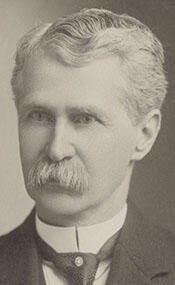
Here you will find contact information for Representative James William Denny, including email address, phone number, and mailing address.
| Name | James William Denny |
| Position | Representative |
| State | Maryland |
| District | 4 |
| Party | Democratic |
| Status | Former Representative |
| Term Start | December 4, 1899 |
| Term End | March 3, 1905 |
| Terms Served | 2 |
| Born | November 20, 1838 |
| Gender | Male |
| Bioguide ID | D000250 |
About Representative James William Denny
James William Denny (November 20, 1838 – April 12, 1923) was a Democratic member of the United States House of Representatives from Maryland who served two nonconsecutive terms in Congress between 1899 and 1905. Over the course of a long public career, he was active in municipal and state government in Maryland and participated in the legislative process at the national level during a significant period in American history.
Denny was born on November 20, 1838, in Frederick County, Virginia. He received his early education at the academy of the Reverend William Johnson in Berryville, Virginia, an institution that prepared many young men in the region for professional and academic pursuits. He later attended the University of Virginia at Charlottesville, where he completed his collegiate studies. His education laid the foundation for a career that combined teaching, military service, law, and politics.
After leaving the University of Virginia, Denny served as principal of the Osage Seminary in Osceola, Missouri, reflecting an early commitment to education and public service. With the outbreak of the Civil War, he returned to his native Virginia and enlisted in Company A of the Thirty-ninth Virginia Battalion of Cavalry in the Confederate States Army. He served in the field until 1863, when he was detailed for duty at the headquarters of General Robert E. Lee. Denny remained on Lee’s staff through the final campaigns of the war and continued in that capacity until the surrender at Appomattox Court House in April 1865.
Following the war, Denny returned to Clarke County, Virginia, to resume his civilian life and prepare for a legal career. He studied law at Judge Parker’s Law School in Winchester, Virginia, and, after completing his legal training, moved to Baltimore, Maryland, in 1867. He was admitted to the bar in Baltimore in 1868 and commenced the practice of law there. His relocation to Baltimore marked the beginning of his long association with the civic and political life of Maryland, where he established himself as a practicing attorney and community leader.
Denny entered public office in Baltimore city government, where he was elected to the first branch of the Baltimore City Council in 1881. He was reelected in 1882 and later became president of that body, gaining experience in municipal administration and local legislation. He also served on the Baltimore School Board for eight years, contributing to the oversight and development of the city’s public education system. At the state level, he was elected to the Maryland House of Delegates, serving from 1888 to 1890, and was appointed a colonel on the staff of Governor Elihu Emory Jackson, further enhancing his profile in Democratic Party politics and state affairs.
Building on his record in local and state government, Denny was elected as a Democrat to the Fifty-sixth Congress, serving as a Representative from Maryland from March 4, 1899, to March 3, 1901. During this first term in the U.S. House of Representatives, he represented the interests of his Maryland constituents and contributed to the legislative process at a time when the nation was grappling with issues arising from industrial expansion and the aftermath of the Spanish-American War. He was an unsuccessful candidate for reelection in 1900 to the Fifty-seventh Congress, but remained active in political and legal circles. He returned to Congress after winning election to the Fifty-eighth Congress, serving a second term from March 4, 1903, to March 3, 1905. Across his two terms, from 1899 to 1901 and again from 1903 to 1905, Denny participated in the democratic process and helped shape federal legislation as a member of the House of Representatives.
After leaving Congress in 1905, Denny resumed the full-time practice of law in Baltimore. He continued his legal work for the remainder of his life, maintaining his standing in the city’s professional community and in Maryland’s Democratic Party. He remained a respected figure whose career reflected the trajectory of a post–Civil War Southern-born lawyer who built a public life in a major Northern border-state city.
James William Denny died on April 12, 1923, in Baltimore, Maryland. He was interred in Loudon Park Cemetery in Baltimore. His life spanned from the antebellum era through Reconstruction and into the early twentieth century, and his service in local, state, and national office left a record of sustained engagement in public affairs.