Representative James Patrick Sinnott Devereux
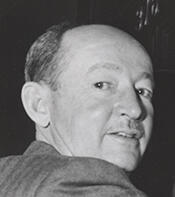
Here you will find contact information for Representative James Patrick Sinnott Devereux, including email address, phone number, and mailing address.
| Name | James Patrick Sinnott Devereux |
| Position | Representative |
| State | Maryland |
| District | 2 |
| Party | Republican |
| Status | Former Representative |
| Term Start | January 3, 1951 |
| Term End | January 3, 1959 |
| Terms Served | 4 |
| Born | February 20, 1903 |
| Gender | Male |
| Bioguide ID | D000278 |
About Representative James Patrick Sinnott Devereux
James Patrick Sinnott Devereux (February 20, 1903 – August 5, 1988) was a United States Marine Corps officer who rose to the rank of brigadier general upon retirement, a Navy Cross recipient for heroism in the defense of Wake Island, and a Republican member of the United States House of Representatives from Maryland. He later represented Maryland’s second congressional district in Congress for four terms from 1951 to 1959 and was an unsuccessful candidate for Governor of Maryland in 1958. His public career spanned front-line combat leadership in the early days of the Second World War and legislative service during a pivotal period of the Cold War.
Devereux entered the United States Marine Corps in the interwar period and developed a professional reputation that led to increasingly responsible assignments. By early 1941, as global tensions mounted, he was ordered to Pearl Harbor in the Hawaiian Islands. From there he was dispatched to Wake Island as the officer-in-charge of the 1st Defense Battalion Detachment, a Marine coastal defense and antiaircraft unit assigned to protect the atoll’s growing military and air facilities in the northwest Pacific Ocean. Devereux and the men of the 1st Defense Battalion arrived at Wake Island on October 15, 1941, aboard the USS Regulus (AF-57), joining more than a thousand civilian construction workers—1,146 in number—who were then engaged in improving the island’s infrastructure and defenses.
On the morning of Monday, December 8, 1941 (Wake Island time), Devereux received word that Pearl Harbor had been attacked by Japanese forces a few hours earlier on Sunday, December 7, 1941, bringing the United States into World War II. In the ensuing Battle of Wake Island, then-Major Devereux directed the Marine defense against repeated Japanese air and naval assaults. Under his command, the Marines of the 1st Defense Battalion, supported by Marine Fighter Squadron 211, inflicted disproportionate losses on the attacking forces: they damaged two cruisers, sank two destroyers and one escort vessel, destroyed or damaged a total of 72 aircraft, and probably sank one submarine; two additional destroyers were damaged on the final day of the battle. Despite these successes, a second, larger invasion force returned, and after fifteen days of intense and bitter fighting against overwhelming odds, the 449 Marines and other defenders on Wake Island surrendered to the Japanese on December 23, 1941. Devereux was captured on Wake Island along with his men and remained a prisoner of war until his release in September 1945.
For his leadership and valor during the siege, Devereux was awarded the Navy Cross, the United States Navy and Marine Corps’ second-highest decoration for valor in combat. The official citation commended Major James Patrick Sinnott Devereux for “distinguished and heroic conduct in the line of his profession, as Commanding Officer of the First Marine Defense Battalion, Naval Air Station, Wake Island,” noting that he was responsible for directing the defenses of the post during the Japanese siege from December 7 through December 22, 1941, “against impossible odds.” The citation emphasized that his inspiring leadership and the valiant devotion to duty of his command contributed in large measure to the success of their vital missions and reflected great credit upon the United States Naval Service. After his return from captivity at the end of World War II, Devereux continued his Marine Corps career, concluding active service as a colonel in 1948. Upon his retirement that year, he was advanced to the rank of brigadier general on the retired list in recognition of his combat service. Decades later, when the Prisoner of War Medal was authorized on November 8, 1985, he became eligible for that decoration as well.
Following his retirement from the Marine Corps, Devereux entered electoral politics as a member of the Republican Party. He was elected to the United States House of Representatives from Maryland’s second congressional district and served four consecutive terms from 1951 to 1959. His tenure in Congress coincided with the Korean War, the early stages of the Cold War, and significant domestic debates over defense policy, veterans’ affairs, and postwar economic development. As a member of the House of Representatives, James Patrick Sinnott Devereux participated actively in the legislative process and represented the interests of his Maryland constituents, bringing to his work the perspective of a career military officer and former prisoner of war. His service in Congress occurred during a significant period in American history, and he contributed to deliberations on national security and related issues that shaped U.S. policy in the 1950s.
In 1958, while still serving in the House, Devereux sought higher office as the Republican candidate for Governor of Maryland. He was unsuccessful in that campaign, and his bid for the governorship marked the culmination of his major electoral efforts at the state level. After leaving Congress in 1959, he returned to private life, remaining identified in public memory with both his wartime leadership at Wake Island and his eight years of congressional service. James Patrick Sinnott Devereux died on August 5, 1988, closing a life that had encompassed distinguished military service, notable wartime heroism, and two terms’ worth of legislative work in the United States Congress on behalf of the people of Maryland.