Representative James Patrick Bernard Duffy
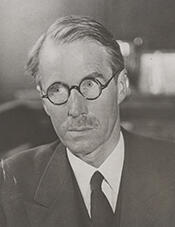
Here you will find contact information for Representative James Patrick Bernard Duffy, including email address, phone number, and mailing address.
| Name | James Patrick Bernard Duffy |
| Position | Representative |
| State | New York |
| District | 38 |
| Party | Democratic |
| Status | Former Representative |
| Term Start | January 3, 1935 |
| Term End | January 3, 1937 |
| Terms Served | 1 |
| Born | November 25, 1878 |
| Gender | Male |
| Bioguide ID | D000519 |
About Representative James Patrick Bernard Duffy
James Patrick Bernard Duffy (November 25, 1878 – January 8, 1969) was an American lawyer, jurist, businessman, and Democratic politician who served one term as a member of the United States House of Representatives from New York from 1935 to 1937. His congressional service took place during a significant period in American history, in the midst of the New Deal era, when he participated in the legislative process and represented the interests of his constituents in New York’s 38th congressional district.
Duffy was born in Rochester, New York, on November 25, 1878, one of nine children in a prominent local family. He was raised and educated in Rochester before pursuing higher education out of state. Deeply rooted in the city throughout his life, he maintained close ties to its civic, religious, and business institutions, and members of his extended family were connected to notable Catholic figures; his sister Constance Josephine married Jeremiah Griffin, the brother of Bishop Thomas Francis Hickey.
Duffy attended Georgetown University, from which he graduated in 1901, and then enrolled at Harvard Law School. He received his law degree from Harvard in 1904, was admitted to the bar the same year, and immediately began practicing law. Early in his legal career he formed a partnership with James Breck Perkins, a Republican who served as a member of Congress, giving Duffy early exposure to national politics and legislative affairs. Although he would later leave the practice of law for business, his legal training and professional experience provided the foundation for his later judicial and legislative work.
In 1914, acceding to his father’s request, Duffy abandoned the active practice of law to take over as manager of The Duffy-Powers Department Store, the family’s long-established retail enterprise in Rochester. He led the concern through the First World War and the prosperous 1920s, remaining at its head until the business went bankrupt in 1932 during the economic hardships of the Great Depression. Alongside his business responsibilities, Duffy was an avid and active member of the Democratic Party and quickly emerged as a significant local civic leader. He served on the City of Rochester School Board from 1905 to 1932, a tenure of twenty-seven years that reflected his sustained interest in public education and municipal affairs. In the early New Deal period he was appointed to the New York State Alcoholic Beverage Control Board, serving from 1933 to 1934, where he helped oversee the state’s regulatory response to the end of Prohibition.
Duffy was elected to Congress in 1934 as a Democrat, defeating incumbent Republican James L. Whitley. He represented New York’s 38th congressional district in the Seventy-fourth Congress from January 3, 1935, to January 3, 1937. During his single term in the House of Representatives, he contributed to the legislative process at a time when Congress was enacting major New Deal reforms, and he participated in the democratic process on behalf of his Rochester-area constituents. A member of the Democratic Party, he aligned with the broader legislative agenda of the period. His congressional career ended when he was defeated for renomination in 1936, and he departed the House after one term in office.
Following his service in Congress, Duffy returned to New York and continued his public career on the bench and in legal practice. On April 20, 1937, Governor Herbert H. Lehman appointed him to the New York Supreme Court. Duffy served as a justice of that court until December 31, 1937. He was defeated by Nathan Lapham in the subsequent election and thus left the bench at the end of that year. Beginning in 1938 he resumed the active practice of law in partnership and at the same time served on the New York State Probation Commission from 1938 to 1944, contributing to the administration and oversight of the state’s probation system.
Over the course of his long life, Duffy became one of the most ubiquitous and influential civic figures in the Rochester region. He was a founder and, for fifty-two years, a director of Family Services of Rochester. He served for fifty-two years as a trustee of the Rochester Chamber of Commerce, thirty-four years as counsel to the local chapter of the American Red Cross, and forty-two years as a trustee of the Community Chest. He was a commissioner of the Rochester Museum for thirty-four years and a trustee of the Rochester Savings Bank for thirty-four years. In the realm of transportation and local infrastructure, he was a director of the local Automobile Club for thirty-two years and served one year as its president. A devout Catholic, he was for fifty-two years a trustee of St. Patrick’s Church and was active in various church-related and charitable endeavors, including three years as a functionary of the United Service Organization (USO) during the World War II era. He belonged to nine different clubs and brotherhoods, reflecting his wide-ranging civic and social commitments.
Duffy received numerous honors in recognition of his public service, civic leadership, and religious devotion. Among the most notable were his designations by Pope Pius XI as a Knight of St. Gregory and a Knight of Malta, distinctions that underscored his standing within the Catholic community. Contemporary accounts noted that he attended Mass daily, carried a missal with him at all times, and kept meticulous diaries in which he recorded his activities, further illustrating the disciplined and devout character that marked both his private life and public career.
James Patrick Bernard Duffy died at St. Anne’s Home in Rochester, New York, on January 8, 1969. He was interred in Holy Sepulchre Cemetery in Rochester. His legacy in the city he served for decades is commemorated in part by the naming of “James P. B. Duffy School No. 12” in Rochester, New York, in his honor, reflecting the enduring impact of his contributions to education, civic life, and public service at the local, state, and national levels.