Representative James Whitson Dunbar
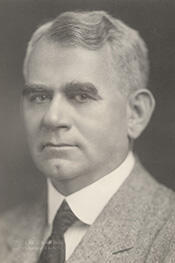
Here you will find contact information for Representative James Whitson Dunbar, including email address, phone number, and mailing address.
| Name | James Whitson Dunbar |
| Position | Representative |
| State | Indiana |
| District | 3 |
| Party | Republican |
| Status | Former Representative |
| Term Start | May 19, 1919 |
| Term End | March 3, 1931 |
| Terms Served | 3 |
| Born | October 17, 1860 |
| Gender | Male |
| Bioguide ID | D000525 |
About Representative James Whitson Dunbar
James Whitson Dunbar (October 17, 1860 – May 19, 1943) was a Republican U.S. Representative from Indiana who served three terms in the United States Congress between 1919 and 1931. Over the course of his service in the House of Representatives, he participated in the legislative process during a significant period in American history and represented the interests of his Indiana constituents.
Dunbar was born on October 17, 1860. Details of his early life and family background are not extensively documented in the surviving public record, but he came of age in the decades following the Civil War, a time of rapid industrialization and political realignment in the United States. This environment helped shape the generation of political leaders to which he belonged and provided the broader social and economic context for his later public career.
Information about Dunbar’s formal education is limited in the available sources. Like many politicians of his era, he likely combined schooling with early work experience, gaining practical knowledge of business, law, or local affairs that would later support his entry into public life. Whatever the precise course of his studies, his subsequent election to Congress suggests that he attained a level of education and public standing sufficient to earn the confidence of voters in his district.
Before entering Congress, Dunbar established himself in Indiana public and civic life, building the reputation and connections that enabled his election to national office. Although the specific positions he held prior to his congressional service are not detailed in the extant record, his later success as a legislator indicates that he was an active participant in the political and community affairs of his state and that he aligned himself with the Republican Party during a period when it was a dominant force in Indiana politics.
Dunbar was first elected as a Republican to the United States House of Representatives and served from 1919 to 1923. His initial period in Congress thus coincided with the immediate aftermath of World War I, the transition from wartime to peacetime conditions, and the beginning of the 1920s, a decade marked by economic expansion, social change, and debates over America’s role in world affairs. As a member of the House of Representatives, James Whitson Dunbar participated in the democratic process, contributed to the legislative work of the chamber, and represented the interests of his Indiana constituents during this transformative era.
After a break in service, Dunbar returned to Congress and served again from 1929 to 1931. This final term placed him in office at the onset of the Great Depression following the stock market crash of 1929, a moment of profound economic crisis and political challenge. During this period, he continued his work as a Republican member of the House, engaging in the legislative responses and debates that began to shape the federal government’s early efforts to address the nation’s economic difficulties. In total, James Whitson Dunbar served three terms in Congress, from 1919 to 1923 and from 1929 to 1931.
Following his departure from Congress in 1931, Dunbar returned to private life. While the record does not provide extensive detail about his later activities, it is likely that he remained a respected figure in his community, drawing on his experience in national office and long association with the Republican Party. He lived through the New Deal era and the early years of World War II, witnessing further transformations in the federal government and American society that built upon the foundations laid during his own years in public service.
James Whitson Dunbar died on May 19, 1943. His career as a three-term Republican representative from Indiana placed him at the center of national policymaking during two pivotal periods—the post–World War I years and the beginning of the Great Depression—and ensured his place in the congressional history of his state.