Representative Jim Dunn
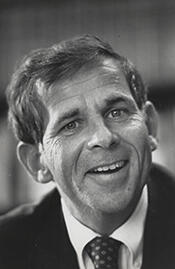
Here you will find contact information for Representative Jim Dunn, including email address, phone number, and mailing address.
| Name | Jim Dunn |
| Position | Representative |
| State | Michigan |
| District | 6 |
| Party | Republican |
| Status | Former Representative |
| Term Start | January 5, 1981 |
| Term End | January 3, 1983 |
| Terms Served | 1 |
| Born | July 21, 1943 |
| Gender | Male |
| Bioguide ID | D000548 |
About Representative Jim Dunn
James Whitney Dunn (born July 21, 1943) is an American politician and businessman from Michigan who served one term as a Republican Representative in the United States House of Representatives from 1981 to 1983. Over the course of his brief but active congressional career and subsequent campaigns for higher office, he participated in the federal legislative process during a period of significant political and economic change in the United States.
Dunn was born on July 21, 1943, and grew up in Michigan, a state whose industrial base and shifting political landscape would later shape his political outlook and career. Details of his early family life and upbringing are not extensively documented in public sources, but his later professional and political activities reflect a background rooted in the business community and in the concerns of Michigan’s manufacturing and service sectors.
Before entering national politics, Dunn established himself as a businessman in Michigan. His professional experience in the private sector informed his political identity as a pro-business Republican, attentive to issues such as economic growth, employment, and regulatory policy. This business background helped provide both the financial resources and the community connections that supported his initial bid for Congress and framed his approach to public service.
Dunn was elected to the U.S. House of Representatives as a Republican and served from 1981 to 1983, during the first term of President Ronald Reagan. Representing his Michigan constituency in the House of Representatives, he contributed to the legislative process at a time marked by debates over tax policy, federal spending, and economic recovery. As a member of Congress, he participated in the democratic process by voting on legislation, engaging in committee work, and advocating for the interests and concerns of his constituents in Michigan. His single term in office coincided with a broader national shift toward conservative economic and fiscal policies, and he aligned himself with the Republican Party’s priorities of that era.
After serving one term, Dunn unsuccessfully sought reelection to the House in 1982, bringing his initial period of congressional service to a close in January 1983. He remained active in electoral politics, however, and turned his attention to the United States Senate. In 1984, he ran for the Republican nomination for the U.S. Senate from Michigan but lost in the primary to former astronaut Jack R. Lousma. Undeterred, he again pursued a Senate seat in 1988, this time advancing to the general election, where he was defeated by the Democratic incumbent, Senator Donald W. Riegle, Jr.
Dunn made one further attempt to return to the House of Representatives. In 1990, he sought the Republican nomination for another term in the U.S. House, but he was defeated in the primary by Dave Camp, who would go on to serve multiple terms in Congress. This loss effectively ended Dunn’s electoral career at the federal level, closing a decade-long period in which he had been a recurring figure in Michigan Republican politics and a candidate for both the House and Senate.
Following the conclusion of his electoral pursuits, Dunn returned to private life and to his business interests in Michigan. While he did not again hold public office, his time in Congress from 1981 to 1983 and his subsequent campaigns for higher office left a record of engagement with the political and economic issues facing Michigan and the nation during the 1980s. As of the latest public information, he remains a living figure whose career reflects the trajectory of a businessman-turned-legislator who participated in national politics during a transformative era in American public life.