Representative James Fletcher Epes
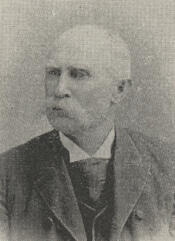
Here you will find contact information for Representative James Fletcher Epes, including email address, phone number, and mailing address.
| Name | James Fletcher Epes |
| Position | Representative |
| State | Virginia |
| District | 4 |
| Party | Democratic |
| Status | Former Representative |
| Term Start | December 7, 1891 |
| Term End | March 3, 1895 |
| Terms Served | 2 |
| Born | May 23, 1842 |
| Gender | Male |
| Bioguide ID | E000195 |
About Representative James Fletcher Epes
James Fletcher Epes (May 23, 1842 – August 24, 1910) was a U.S. Representative from Virginia and a member of the Democratic Party, serving two terms in the United States Congress from 1891 to 1895. He was a cousin of Sidney Parham Epes. His congressional service took place during a significant period in American history, as the nation continued to grapple with the political, economic, and social consequences of the Civil War and Reconstruction, and as issues of agrarian unrest, monetary policy, and industrial expansion came to the fore in national politics.
Epes was born on May 23, 1842, in Nottoway County, Virginia, into a family rooted in the agricultural and political life of the region. Growing up in antebellum Virginia, he came of age in a society dominated by plantation agriculture and the politics of states’ rights, influences that would shape his later public career. His family connections, including his kinship with Sidney Parham Epes, placed him within a broader network of Virginia public figures active in state and national affairs.
Epes received his early education in the local schools of Nottoway County before pursuing legal studies. Like many aspiring public men of his generation, he read law and prepared for admission to the bar, grounding himself in the legal and constitutional questions that were central to the political debates of the mid-nineteenth century. His education was interrupted by the outbreak of the Civil War, which transformed the course of his early adulthood and that of his native state.
During the Civil War, Epes served in the Confederate Army, aligning with Virginia’s decision to secede from the Union. His wartime experience, shared with many of his contemporaries who later entered public life, exposed him to the hardships of conflict and the profound upheaval that followed defeat. After the war, he returned to Virginia and completed his legal training, gaining admission to the bar and beginning the practice of law. He also engaged in agricultural pursuits, reflecting the continued importance of farming and landholding in the postwar Southern economy.
In the years following Reconstruction, Epes became active in Democratic Party politics in Virginia, participating in the reassertion of Democratic control in the state and the broader South. His legal practice and agricultural interests helped establish his standing among constituents, and he emerged as a representative figure of the postwar Southern Democratic leadership. By the late 1880s, as national debates intensified over tariffs, currency, and the interests of farmers and industrialists, he sought higher office as a voice for his district’s concerns.
Epes was elected as a Democrat to the Fifty-second Congress and was reelected to the Fifty-third Congress, serving from March 4, 1891, to March 3, 1895. As a member of the House of Representatives, he participated in the legislative process and represented the interests of his Virginia constituents during a period marked by economic volatility and political realignment. His service coincided with the administration of President Benjamin Harrison and the first term of President Grover Cleveland, when Congress addressed issues such as tariff reform, monetary policy, and the regulation of interstate commerce. Within this context, Epes contributed to the deliberations of the House and took part in the democratic process at the national level, reflecting the priorities of Virginia Democrats in the late nineteenth century.
After leaving Congress in 1895, Epes returned to private life in Virginia, resuming his legal practice and continuing his involvement in agricultural pursuits. He remained a figure of local and regional prominence, representative of the generation of former Confederate soldiers who had reentered national politics and helped shape the post-Reconstruction South. James Fletcher Epes died on August 24, 1910, closing a life that spanned from the antebellum era through the Civil War and into the modernizing United States of the early twentieth century.