Senator James Biddle Eustis
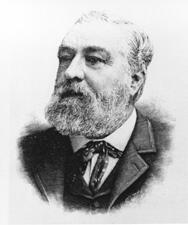
Here you will find contact information for Senator James Biddle Eustis, including email address, phone number, and mailing address.
| Name | James Biddle Eustis |
| Position | Senator |
| State | Louisiana |
| Party | Democratic |
| Status | Former Representative |
| Term Start | January 1, 1876 |
| Term End | March 3, 1891 |
| Terms Served | 2 |
| Born | August 27, 1834 |
| Gender | Male |
| Bioguide ID | E000229 |
About Senator James Biddle Eustis
James Biddle Eustis (August 27, 1834 – September 9, 1899) was a United States senator from Louisiana and a member of the Democratic Party who later served as President Grover Cleveland’s ambassador extraordinary and plenipotentiary to France. His service in Congress, from 1875 to 1891, occurred during a significant period in American history, as the nation grappled with the aftermath of the Civil War and the end of Reconstruction. Over two terms in the Senate, he participated in the legislative process and represented the interests of his Louisiana constituents while helping to shape national policy during a time of profound political and social change.
Eustis was born on August 27, 1834, in New Orleans, Louisiana, into a prominent Southern family with deep political and legal roots. He was the son of George Eustis Sr., a distinguished jurist who served as chief justice of the Louisiana Supreme Court, and Clarisse Allain Eustis. Raised in a milieu of law, politics, and public service, he was exposed early to the legal profession and to the political culture of the antebellum South. His upbringing in New Orleans, a major commercial and cultural center, helped form his outlook on regional identity, federal power, and race relations in the decades before and after the Civil War.
Eustis received a classical education and pursued legal studies in preparation for a career at the bar. He studied law in Louisiana, was admitted to the bar, and began practicing in New Orleans. His early professional life coincided with the mounting sectional tensions of the 1850s, and like many of his contemporaries in the South, he was drawn into the political and constitutional controversies of the era. During the Civil War he was associated with the Confederate cause, an experience that shaped his postwar political views and his later writings on Reconstruction and race in the South.
After the war, Eustis resumed the practice of law in New Orleans and entered public life in the turbulent Reconstruction period. He served in the Louisiana legislature and became known as an articulate spokesman for conservative Democratic positions, particularly on issues of states’ rights and the reassertion of white Democratic control in Southern politics. His legal and legislative work brought him to national attention and laid the groundwork for his election to the United States Senate. In 1875 he took his seat as a senator from Louisiana, marking the beginning of his federal legislative career.
Eustis’s service in the United States Senate extended, with interruptions, from 1875 to 1891, encompassing two terms in office. As a Democratic senator during the end of Reconstruction and the rise of the so‑called “New South,” he participated in debates over federal intervention in Southern affairs, civil rights, economic policy, and the balance of power between the states and the national government. He was identified with the conservative wing of his party and became particularly noted for his views on race relations. In a widely discussed essay, he argued that if the African American’s “lot is to continue to be one of inferiority, rather than appeal to the political favoritism of the federal government, or to the partisan sympathies of Northern philanthropists, as he has done in the past, he should rely implicitly upon the magnanimity of his white fellow-citizens of the South, to treat him with the justice and generosity due to his unfortunate condition.” This essay provoked vigorous responses from supporters of civil rights, including George Washington Cable, Albion Winegar Tourgée, Atticus Greene Haygood, and others, and it highlighted the deep national divisions over the meaning of citizenship and equality in the postwar era.
After leaving the Senate in 1891, Eustis continued his legal and political activities and remained an influential Democratic voice on national questions. His long experience in law and foreign affairs, as well as his party loyalty, led President Grover Cleveland to appoint him ambassador extraordinary and plenipotentiary to France. From 1893 to 1897, he represented the United States in Paris, where he managed diplomatic relations during a period marked by growing American economic power and increasing international engagement. His tenure in France coincided with Cleveland’s second administration and involved the routine but important work of protecting American interests abroad, fostering commercial ties, and maintaining cordial relations with a major European power.
In his personal life, Eustis married and had several children, and his family remained connected to prominent social and cultural circles on both sides of the Atlantic. Among his children were William A. Eustis (1860–1863), who died young; Marie Clarice Eustis (1866–1956), who married George Peabody Eustis Corcoran (1864–1936) in 1887, later divorcing and marrying the noted pianist Josef Hofmann in 1905; James Biddle Eustis Jr. (1872–1915), who married Nina Floyd Crosby (1881–1966); and Celestine Eustis (1877–1947), who married Charles Bohlen (1866–1936) in 1902. Through these marriages, the Eustis family became linked to influential political, diplomatic, and artistic networks in the United States and Europe. Eustis himself was a member of The Boston Club of New Orleans, one of the city’s leading social institutions, reflecting his standing in the civic and social life of Louisiana.
Following his diplomatic service, Eustis settled in New York City, where he spent his later years while maintaining ties to Louisiana and to his extended family. He died in Newport, Rhode Island, on September 9, 1899. His remains were interred at Cave Hill Cemetery in Louisville, Kentucky, a resting place for many notable figures of the nineteenth century. Remembered as a prominent Democratic senator from Louisiana and as President Cleveland’s ambassador to France, James Biddle Eustis’s career spanned the antebellum, Civil War, Reconstruction, and Gilded Age eras, and his public life reflected the conflicts and transformations that defined the United States in the nineteenth century.