Senator James Thompson Farley
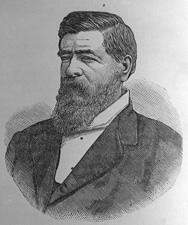
Here you will find contact information for Senator James Thompson Farley, including email address, phone number, and mailing address.
| Name | James Thompson Farley |
| Position | Senator |
| State | California |
| Party | Democratic |
| Status | Former Representative |
| Term Start | March 18, 1879 |
| Term End | March 3, 1885 |
| Terms Served | 1 |
| Born | August 6, 1829 |
| Gender | Male |
| Bioguide ID | F000020 |
About Senator James Thompson Farley
James Thompson Farley (August 6, 1829 – January 22, 1886) was a United States Senator from California who served one term in the U.S. Senate from 1879 to 1885 as a member of the Democratic Party. His congressional service occurred during a significant period in American history, and he participated actively in the legislative process while representing the interests of his California constituents.
Farley was born in Albemarle County, Virginia, on August 6, 1829. He moved with his family to Missouri at an early age, part of the broader westward movement of Americans in the antebellum period. In 1849, drawn by the discovery of gold in California and hastened by a duel in which he nearly killed a man who had been his rival for a woman’s affections, he left Missouri for the Pacific Coast. He arrived in California during the height of the Gold Rush and initially sought his fortune as a miner in Calaveras and Tuolumne counties. His efforts in mining met with little success, and this disappointment helped steer him toward a legal and political career.
While in the mining regions, Farley turned to the study of law as an alternative to mining work. He was admitted to the bar in 1854 and commenced the practice of law in Amador County, California. His legal practice in Jackson, the county seat, quickly became established and later served as a launching pad for other California politicians, including Judge Henry L. Waldo, who became district attorney of Amador County from 1867 until 1870, and Anthony Caminetti, who also served as district attorney of Amador County and later represented California in the U.S. House of Representatives from 1891 to 1895. Farley was described by contemporaries as having a “fine appearance, warmth and congeniality of feelings,” traits that aided his success at the bar and in politics.
Farley entered public life at a young age. At 25, he was elected to the California State Assembly from Amador County as a member of the Whig Party, at a time when California had been a state for only five years and assembly members were chosen annually under the original state constitution. He ran for re-election in 1855, this time as a member of the Know Nothing Party, which then held the legislative majority. Following the collapse of the Know Nothing movement, Farley again shifted his political allegiance, joining the Democratic Party and aligning himself with the strongest political contingent in the state. His influence grew rapidly, and in 1856 he was elected Speaker of the California State Assembly, marking him as one of the leading Democratic figures in the state.
After his service in the Assembly, Farley moved to the California State Senate as a Democrat, further consolidating his role in state politics. He served as president pro tempore of the State Senate for one session, from 1871 to 1872, and was known as a friend and spokesperson for the administration of Governor Henry H. Haight. Over time he became widely recognized as a leading figure in the Democratic Party in California. In 1873 he received the Democratic caucus nomination for the United States Senate to fill the vacancy created by the retirement of Senator John S. Hager, but his bid was defeated by Governor Newton Booth, an independent anti-monopolist. Despite this setback, Farley remained a central party leader, and when Senator Aaron A. Sargent retired several years later, Farley again secured the Democratic nomination.
Farley was elected to the United States Senate from California in 1877 and took his seat in March 1879. He served one full term, from 1879 to 1885, as a Democratic senator. During his tenure, he contributed to the legislative process in a period marked by post–Civil War reconstruction issues, debates over railroad regulation and land policy, and the economic and political development of the American West. As a member of the Senate, he participated in the democratic process at the national level and represented the interests of his California constituents. He chose not to be a candidate for renomination in 1884, bringing his federal legislative career to a close at the end of his term in 1885.
In his personal life, Farley married Flora Forester Phelps of Amador County in 1876. The couple had a son and a daughter. After leaving Washington, D.C., he returned to California and resumed the practice of law in Jackson. His later years were marked by declining health, and he struggled with illness for approximately three years. James Thompson Farley died in Jackson, California, on January 22, 1886. He was interred in Jackson City Cemetery in Jackson, leaving a legacy as a prominent California lawyer, state legislator, party leader, and United States Senator.