Senator James Winright Flanagan
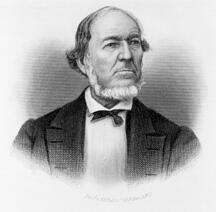
Here you will find contact information for Senator James Winright Flanagan, including email address, phone number, and mailing address.
| Name | James Winright Flanagan |
| Position | Senator |
| State | Texas |
| Party | Republican |
| Status | Former Representative |
| Term Start | January 1, 1870 |
| Term End | March 3, 1875 |
| Terms Served | 1 |
| Born | September 5, 1805 |
| Gender | Male |
| Bioguide ID | F000186 |
About Senator James Winright Flanagan
James Winright Flanagan (September 5, 1805 – September 28, 1887) was an American merchant, lawyer, farmer, and politician who represented Texas in the United States Senate from 1870 to 1875. A member of the Republican Party during his congressional career, he served one term in the Senate during the Reconstruction era and participated in the legislative process at a critical period in American history, representing the interests of his Texas constituents.
Flanagan was born to Charles and Elizabeth (Saunders) Flanagan in Albemarle County near Gordonsville, Virginia. Before he reached the age of ten, his family moved west to Boonesboro, Kentucky, where he spent his boyhood. As a young man he relocated to Cloverport, Kentucky, on the Ohio River and became a prosperous merchant. While engaged in mercantile pursuits, he read law and was admitted to the Kentucky bar in 1825. In 1826 he married Polly Moorman; the couple had several children. Seeking new opportunities on the southwestern frontier, Flanagan and his family moved to the Republic of Texas in 1844, settling in Henderson, in what would become Rusk County.
In Henderson, Flanagan quickly established himself as a leading citizen. He opened a store, bought a farm, speculated in land, and practiced law, combining commercial, agricultural, and legal activities. Initially a Whig in national politics, he was an active supporter of Sam Houston and his moderate, Unionist-oriented policies. Over time, particularly in the years surrounding the Civil War and Reconstruction, Flanagan aligned himself with the emerging Republican Party, becoming a moderate Republican in Texas. His political career in the state began in the legislature: he served in the Texas House of Representatives from 1851 to 1852 and in the Texas State Senate from 1855 to 1858.
When the Civil War came to Texas, Flanagan remained a Unionist. Opposed to secession, he withdrew from active political life and retired to his farm, living quietly throughout the conflict. With the end of the war and the advent of Reconstruction, he returned to public affairs. Flanagan served as a delegate to both of Texas’s postwar constitutional conventions. The first convention, in 1866, produced a state constitution that was ultimately rejected by Radical Republicans in the United States Congress. He again took part in the second convention of 1868–1869, which drafted a constitution acceptable to federal authorities and provided the framework for Texas’s readmission to the Union.
Under the new Reconstruction constitution, Flanagan was elected lieutenant governor of Texas in 1869. Although he was never formally inaugurated, he briefly held the office from January to February 1870 and is noted as the last Republican elected to that position until Rick Perry in 1998. His tenure as lieutenant governor was short because, upon Texas’s readmission to representation in the Union, the state legislature selected him, along with Morgan Hamilton, to serve in the United States Senate. Flanagan resigned the lieutenant governorship to take his seat in Congress.
Flanagan’s service in the United States Senate extended from 1870 to 1875, encompassing one full term during a significant period in American history. As a Republican senator from Texas, he supported the administration of President Ulysses S. Grant and participated in the broader Reconstruction program. While in Congress, he did not vote on the Ku Klux Klan Act, but he did vote in favor of the Civil Rights Act of 1875, reflecting his alignment with key elements of the Republican civil rights agenda. His term concluded in 1875, when he was succeeded by Democrat Samuel Bell Maxey.
After leaving the Senate, Flanagan returned to private life in East Texas. He took up residence on one of his farms near Longview, Texas, where he continued his agricultural pursuits. Over the course of his life he was widowed twice and married three times; his third wife was Elizabeth Lane. His three marriages produced a total of eleven children. Among them was David Webster Flanagan, who followed his father into public service and also served as lieutenant governor of Texas, extending the family’s influence in state politics.
James Winright Flanagan died on his farm near Longview, Texas, on September 28, 1887. He was buried beside his first wife, Polly Moorman Flanagan, in the family graveyard at Henderson, Texas, closing a long career that had spanned frontier commerce, state and national politics, and the tumultuous years of the Civil War and Reconstruction.