Representative James Patton Flick
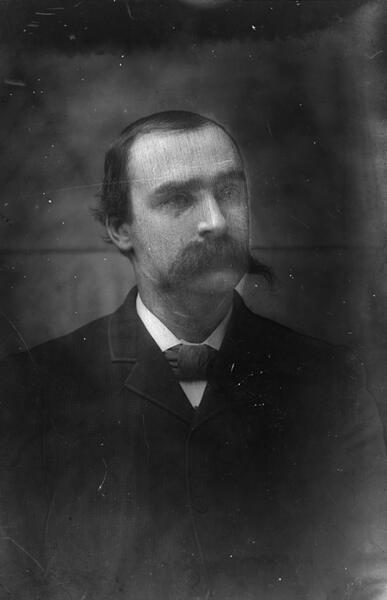
Here you will find contact information for Representative James Patton Flick, including email address, phone number, and mailing address.
| Name | James Patton Flick |
| Position | Representative |
| State | Iowa |
| District | 8 |
| Party | Republican |
| Status | Former Representative |
| Term Start | December 2, 1889 |
| Term End | March 3, 1893 |
| Terms Served | 2 |
| Born | August 28, 1845 |
| Gender | Male |
| Bioguide ID | F000206 |
About Representative James Patton Flick
James Patton Flick (August 28, 1845 – February 25, 1929) was an American lawyer, Civil War veteran, and Republican politician who served two terms as a U.S. Representative from Iowa’s 8th congressional district during the Gilded Age. Serving in the United States Congress from March 4, 1889, to March 3, 1893, he represented his largely rural Iowa constituency through a period of significant political and economic change and contributed to the legislative process as a member of the House of Representatives.
Flick was born in Bakerstown, Pennsylvania, on August 28, 1845. In 1852, when he was a young boy, he moved with his parents to Wapello County, Iowa, as part of the broader westward migration that was transforming the American Midwest. Five years later, in 1857, the family relocated again within the state to Taylor County, Iowa. He attended the common schools, receiving a basic formal education typical of rural communities of that era, and grew to adulthood on the Iowa frontier as the sectional tensions that would lead to the Civil War intensified.
With the outbreak of the American Civil War, Flick entered military service at a young age. He enlisted as a private in Company K of the 4th Iowa Volunteer Infantry Regiment and served in the Union Army from April 3, 1862, to September 4, 1864. His period of service coincided with some of the most critical campaigns of the war, and like many veterans of the conflict, his wartime experience helped shape his later public career and commitment to the Union and Republican causes.
After the war, Flick returned to Taylor County and quickly entered local public service. He was elected Recorder of Taylor County, serving in that office in 1869 and 1870. During this time he studied law, and in 1870 he was admitted to the bar. He commenced the practice of law in Bedford, Iowa, the county seat of Taylor County, establishing himself as a local attorney while continuing to build his reputation in public affairs.
Flick’s political career advanced at the state level before he entered national office. He was elected to the Iowa House of Representatives, serving as a state legislator in 1878 and 1879. He then served as district attorney of the third judicial district of Iowa from 1880 to 1886, a role in which he was responsible for prosecuting cases on behalf of the state and further solidifying his standing in the Republican Party. These positions provided him with legislative and prosecutorial experience that would inform his later work in Congress.
In 1888, Flick was elected as a Republican to the U.S. House of Representatives from Iowa’s 8th congressional district. He took his seat in the Fifty-first Congress on March 4, 1889. He was re-elected in 1890 to the Fifty-second Congress, notably retaining his seat despite the Democratic Party’s first major national landslide victory since the founding of the Iowa Republican Party. During his two terms, from 1889 to 1893, he participated in the democratic process at the federal level, representing the interests of his Iowa constituents and contributing to the legislative deliberations of the Gilded Age, a period marked by rapid industrialization, agricultural challenges, and shifting party alignments.
In 1892, Flick chose not to be a candidate for renomination, thus ending his congressional career after two terms. He returned to Bedford, Iowa, where he resumed the practice of law. For the remainder of his life he continued his professional work in the community that had been his home since youth, maintaining his role as a respected local figure and Republican elder statesman.
James Patton Flick died in Bedford, Taylor County, Iowa, on February 25, 1929. He was interred in Bedford Cemetery. His life spanned from the antebellum era through the Civil War and into the modernizing United States of the early twentieth century, and his career reflected a trajectory from frontier youth and wartime service to county official, state legislator, district attorney, and finally member of the United States Congress.