Representative James J. Florio
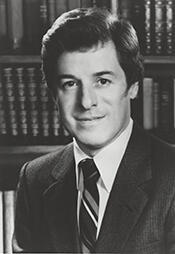
Here you will find contact information for Representative James J. Florio, including email address, phone number, and mailing address.
| Name | James J. Florio |
| Position | Representative |
| State | New Jersey |
| District | 1 |
| Party | Democratic |
| Status | Former Representative |
| Term Start | January 14, 1975 |
| Term End | January 3, 1991 |
| Terms Served | 8 |
| Born | August 29, 1937 |
| Gender | Male |
| Bioguide ID | F000215 |
About Representative James J. Florio
James Joseph Florio (August 29, 1937 – September 25, 2022) was an American lawyer and Democratic politician who served as the 49th governor of New Jersey from 1990 to 1994 and represented New Jersey’s 1st congressional district in the United States House of Representatives from 1975 to 1990. Over eight terms in Congress and a single term as governor, he played a prominent role in environmental legislation, transportation policy, and state fiscal and education reform, and earlier served in the New Jersey General Assembly from 1970 to 1975.
Florio was born in Brooklyn, New York, on August 29, 1937, one of three sons of Lillian Ellen (née Hazell) Florio (June 18, 1917 – May 2, 2000) and Vincenzo, later Vincent Joseph, Florio (May 12, 1914 – April 7, 1994), who married in 1936. Raised in Brooklyn, he grew up in a working-class family; his father, of Italian descent, worked as a shipyard painter and supplemented the family income with poker winnings, while his mother was of Scottish, Irish, and German ancestry. Florio attended Erasmus Hall High School in the Flatbush section of Brooklyn but left school after his junior year to enlist in the United States Navy. During his early naval service he trained as a weatherman and earned a high school equivalency diploma, laying the groundwork for his later academic and professional pursuits.
Following his initial period of active duty, Florio pursued higher education in New Jersey. He received a Bachelor of Arts degree in social studies from Trenton State College (now The College of New Jersey) in 1962. He then undertook graduate studies in public law and government at Columbia University on a prestigious Woodrow Wilson Fellowship before enrolling at Rutgers School of Law–Camden, where he earned a Juris Doctor in 1967. While in law school he worked as a legislative aide to Assemblyman John J. Horn, gaining early exposure to state legislative processes. Florio was admitted to the bar and began practicing law in Camden, New Jersey. He served as assistant city attorney for the City of Camden from 1967 until 1971 and as borough solicitor for the New Jersey municipalities of Runnemede, Woodlynne, and Somerdale from 1969 to 1974. A former amateur boxer, he also continued his military affiliation: after serving as an enlisted sailor in the United States Navy from 1955 to 1958, he remained in the United States Naval Reserve as a commissioned officer until 1975, ultimately attaining the rank of lieutenant commander.
Florio’s formal political career began in the New Jersey General Assembly. In 1969 and again in 1971, he was elected as a Democrat to represent the 3rd Legislative District, covering portions of Camden County, each time running with John J. Horn, his former mentor. After redistricting, he was elected in 1973, alongside Ernest F. Schuck, to represent the 5th Legislative District, which included parts of Camden and Gloucester Counties. He served in the General Assembly from 1970 until 1975, when he resigned following his election to Congress. During these years he also became active in Democratic Party politics in Camden and was mentored by Angelo Errichetti, a future mayor of Camden, further solidifying his position in South Jersey’s political landscape.
In November 1974, Florio was elected to the United States House of Representatives from New Jersey’s 1st congressional district, defeating incumbent Republican John E. Hunt. He took office on January 3, 1975, and served eight consecutive terms, remaining in the House until January 16, 1990, when he resigned to assume the governorship. As a member of the House of Representatives, Florio participated actively in the legislative process during a significant period in American history and represented the interests of his South Jersey constituents. He became particularly known for his work on environmental and transportation issues. In 1980, he authored the federal Superfund legislation, formally known as the Comprehensive Environmental Response, Compensation, and Liability Act, which created a program to identify and clean up the nation’s most polluted hazardous waste sites. He was also the principal author of the Railroad Deregulation Law, which helped stabilize and ultimately save the nation’s freight railroads, including Conrail. In addition, he co-sponsored the Exon–Florio Amendment, which established the Treasury Department’s Committee on Foreign Investment in the United States, a mechanism that later figured prominently in debates such as the Dubai Ports World controversy in 2006. Florio was a key supporter of federal funding to refurbish rail tracks and stations along what became the Atlantic City Line, contributing to the start of Amtrak service to Atlantic City in 1989 and the expansion of NJ Transit rail service across South Jersey in 1990.
While serving in Congress, Florio repeatedly sought the governorship of New Jersey. In 1977 he entered the Democratic primary but was defeated by incumbent Governor Brendan Byrne. In 1981 he again ran for governor, this time winning the Democratic nomination but losing a closely contested and controversial general election to Republican Thomas Kean. The 1981 election, the closest gubernatorial race in New Jersey history, drew scrutiny for the role of the Republican National Committee, which was accused of organizing a “Ballot Security Task Force” of off-duty police officers that critics charged with engaging in voter intimidation and suppression. Undeterred, Florio ran a third time in 1989. During that campaign he famously declared, “You can write this statement down: ‘Florio feels there is no need for new taxes.’” He defeated Republican Jim Courter with 61 percent of the vote, becoming the first American of Italian descent to be elected governor of New Jersey and the first major statewide officeholder from South Jersey in decades.
Florio assumed the governorship on January 16, 1990, at the tail end of the 1980s economic expansion and on the cusp of a recession, inheriting a projected $3 billion budget deficit. Determined both to balance the budget and to increase state aid to low-wealth urban school districts in accordance with court mandates in the Abbott line of cases, he proposed and secured enactment of a $2.8 billion tax increase in 1990, largely through raising the state sales tax and excise taxes on various goods. The package, the largest state tax increase in United States history at that time, funded expanded education spending in poor districts, enhanced property tax relief programs, and helped close the budget gap. Florio also eliminated approximately 1,500 government positions and reduced various perks for state officials. His administration advanced the Quality Education Act, which redistributed hundreds of millions of dollars in school aid away from many suburban districts to urban and rural districts. Under this plan, 151 suburban districts lost most of their state education funding and assumed responsibility for pension costs, Social Security payments, and retiree health benefits; another 71 districts saw substantial aid reductions and partial assumption of retiree costs, while roughly 350 districts received increased aid. The deepest cuts fell on suburban districts in North Jersey. To help finance these commitments while preserving aid levels, Florio and the legislature enacted the Pension Reevaluation Act, which changed the actuarial basis for calculating state pension contributions from book value to a market-related valuation of assets and raised the assumed rate of return from 7 percent to 8.75 percent, reducing New Jersey’s pension contributions by about $1.5 billion in 1992.
The sweeping tax and education changes sparked a vigorous grassroots backlash. In 1990, a citizens’ group called “Hands Across New Jersey,” founded by postal worker John Budzash of Howell Township, led protests against the tax increases. Florio became a frequent target of criticism on talk radio, including New Jersey 101.5 and New York–based programs hosted by Curtis Sliwa and Bob Grant. Radio personalities such as Sliwa, Grant, and John and Ken of New Jersey 101.5, along with conservative activist Alan Keyes, spoke at large anti-tax rallies that denounced both President George H. W. Bush and Florio. “Impeach Florio” bumper stickers appeared widely across the state. In the 1991 legislative elections, voter anger translated into sweeping Republican gains: the GOP captured veto-proof majorities in both the New Jersey General Assembly and the New Jersey Senate, the first time in 20 years that Democrats lost control of both chambers. Republicans quickly moved to roll back the one-percentage-point increase in the state sales tax enacted under Florio; although the governor vetoed the rollback, the Republican majorities overrode his veto. Florio’s approval ratings fell as low as 18 percent in the early 1990s, though they later recovered to roughly 50 percent by 1993.
Despite the political turbulence, Florio pursued a broad policy agenda as governor. He signed legislation mandating a 20 percent reduction in automobile insurance premiums, seeking to address long-standing concerns about high insurance costs in New Jersey. In May 1990, he enacted what were then the strictest state laws in the nation governing the ownership and sale of semi-automatic firearms, banning certain assault-style weapons. When the Republican-led legislature passed a bill in 1993 to repeal the ban, Florio vetoed it. The National Rifle Association mounted an intensive lobbying effort to override his veto, and the General Assembly voted to overturn it, but the State Senate unanimously sustained Florio’s veto after New Jersey residents inundated lawmakers’ offices with calls supporting the ban, following the governor’s statewide campaign urging citizens to speak out on the issue. His stance on gun control later earned him national recognition. Seeking to broaden his appeal after the 1991 backlash, Florio also supported tighter restrictions on welfare payments to mothers and cultivated ties with national Democratic leaders, including President Bill Clinton. Clinton advisers James Carville and Paul Begala worked on Florio’s 1993 re-election campaign. Nonetheless, in the 1993 gubernatorial election he was narrowly defeated by Republican Christine Todd Whitman, a Somerset County freeholder, losing by 26,093 votes out of 2,505,964 cast. Florio thus became the first Democratic governor under New Jersey’s 1947 constitution to lose a re-election bid; earlier, Republican William T. Cahill had lost his party’s primary in 1973. After Florio’s defeat, no politician from South Jersey would win statewide office again until Andy Kim was elected to the U.S. Senate in 2024.
After leaving the governorship in January 1994, Florio remained active in public affairs and Democratic politics. In 1993 he received the John F. Kennedy Profile in Courage Award for his politically costly but steadfast support of gun control measures as governor. In 2000 he sought the Democratic nomination for the United States Senate seat being vacated by Senator Frank Lautenberg. Running against businessman and former Goldman Sachs chairman and CEO Jon Corzine in what was then the most expensive Senate primary in American history, Florio received 179,059 votes (42 percent) to Corzine’s 246,472 votes (58 percent). He continued to play a role in environmental and land-use policy, serving as chairman of the New Jersey Pinelands Commission from November 2002 to June 2005. His leadership there built on his earlier work in Congress in the late 1970s, when he had been instrumental in crafting the federal legislation that created the New Jersey Pinelands National Reserve. Florio was also an outspoken critic of the administration of President George W. Bush and the Iraq War; in a letter to the editor of The New York Times, he linked the war to the administration’s energy policies and emphasized that “the nation’s right to know has never been more important.” He endorsed Hillary Clinton during the 2008 Democratic presidential primaries.
In addition to his public service roles, Florio pursued a legal and business career in the private sector and contributed to higher education. He was a founding partner and of counsel to the law firm Florio, Perrucci, Steinhardt, Cappelli, Tipton & Taylor, where he focused on governmental, regulatory, and public policy matters. He served on the board of directors of Trump Entertainment Resorts until he and other board members resigned following the company’s third bankruptcy filing. He also sat on the board of Plymouth Financial Company, Inc. Florio remained connected to academia as a faculty member at Rutgers University’s Edward J. Bloustein School of Planning and Public Policy, where he taught courses related to public policy and governance. In recognition of his long career in public life, he was inducted into the New Jersey Hall of Fame in 2014, and in 2017 the Camden County Board of Chosen Freeholders named a primary county administrative building the Governor James J. Florio Center for Public Service in his honor.
Florio’s personal life included two marriages and four children. His first marriage, to Maryanne Spaeth, ended in divorce; they had three children together: Chris, Gregory, and Catherine. In 1984 he met schoolteacher Lucinda Coleman while both were living in the same apartment complex in Pine Hill, New Jersey. The couple married on February 14, 1988, and remained together until his death. Lucinda had one son from her first marriage, Mark Rowe, who became part of their blended family. James Joseph Florio died of heart failure on September 25, 2022, at a hospital in Voorhees, New Jersey, at the age of 85. He was interred at Arlington National Cemetery in Arlington County, Virginia, in recognition of his military service. His wife, former New Jersey First Lady Lucinda Florio, died on November 16, 2022, just 52 days after his death.