Senator James Beriah Frazier
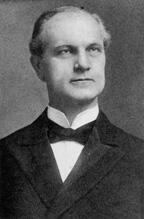
Here you will find contact information for Senator James Beriah Frazier, including email address, phone number, and mailing address.
| Name | James Beriah Frazier |
| Position | Senator |
| State | Tennessee |
| Party | Democratic |
| Status | Former Representative |
| Term Start | December 4, 1905 |
| Term End | March 3, 1911 |
| Terms Served | 1 |
| Born | October 18, 1856 |
| Gender | Male |
| Bioguide ID | F000352 |
About Senator James Beriah Frazier
James Beriah Frazier (October 18, 1856 – March 28, 1937) was an American politician and attorney who served as the 28th governor of Tennessee from 1903 to 1905 and as a United States senator from Tennessee from 1905 to 1911. A member of the Democratic Party, he was a prominent figure in early twentieth‑century Tennessee politics, noted for his oratorical skill, his efforts to reduce the state’s debt, his enactment of mine safety regulations, and his attempts to curb whitecapping. His election to the U.S. Senate by the state legislature in 1905 was highly controversial and created a lasting rift within the Tennessee Democratic Party that persisted into the 1910s.
Frazier was born in Pikeville, Bledsoe County, Tennessee, the son of Thomas Frazier and Margaret (McReynolds) Frazier. In 1867, when he was still a boy, his family moved to Davidson County after his father was appointed to a criminal court judgeship, bringing the family into closer contact with the legal and political life of the state. Frazier came from a family with deep roots in Tennessee and the American Revolution. His great‑grandfather, Samuel Frazier, and his grandfather, Abner Frazier, both fought at the Battle of Kings Mountain in 1780. Samuel Frazier was of Scottish descent, while his wife, Rebecca Julian, was of French Huguenot descent. An uncle, Dr. Beriah Frazier (1812–1886), served as mayor of Chattanooga in 1841 and represented Knox County at the pro‑Union East Tennessee Convention of 1861, further embedding the family in the region’s civic and political traditions.
Frazier was educated at Franklin College, a seminary near Nashville, and later enrolled at the University of Tennessee, from which he received a Bachelor of Arts degree in 1878. After graduation he read law, was admitted to the bar in 1881, and moved to Chattanooga to begin his legal career. In Chattanooga he quickly established himself as a capable attorney and an exceptional public speaker. Historian Zella Armstrong later described him as “one of the greatest orators who ever lived in the Volunteer State,” a reputation that helped propel him into local and then statewide political prominence. In 1883 he married Louise Douglas Keith; the couple had four children: Anne, James Beriah Jr., Thomas, and Louise. His son, James B. Frazier Jr. (1890–1978), would later represent Tennessee’s 3rd congressional district in the U.S. House of Representatives from 1949 to 1963, extending the family’s political legacy into the mid‑twentieth century.
By the 1890s Frazier was active in Democratic Party politics. In 1894 he sought the Democratic nomination for the U.S. House of Representatives from Tennessee’s 3rd congressional district, challenging incumbent Henry Snodgrass. Although Frazier enjoyed broad popular support, Snodgrass controlled more delegates at the party convention and secured the nomination. The contentious contest left lingering resentment among Frazier’s supporters, and Snodgrass was defeated in the general election by Republican Foster V. Brown, a loss attributed in part to the refusal of many Frazier backers to support the incumbent. Frazier continued to build his statewide profile, and during the 1900 presidential campaign he served as Tennessee’s at‑large elector for Democratic nominee William Jennings Bryan. He canvassed the state on Bryan’s behalf, gaining valuable exposure and strengthening his position within the party.
In 1902 Frazier emerged as the Democratic nominee for governor, seeking to succeed Benton McMillin, who was not running for reelection. His Republican opponent was Judge H. Tyler Campbell, who had secured his party’s nomination with the backing of Representative Walter P. Brownlow, a leading Republican organizer. The 1902 gubernatorial race is remembered as the last in Tennessee in which the candidates canvassed the state by horse‑drawn carriage. In an election marked by low turnout, Frazier won decisively, receiving 98,902 votes to Campbell’s 59,007, with Prohibition Party candidate R. S. Cheves drawing 2,193 votes. Democrats, then the dominant party in Tennessee, benefitted from the depressed turnout and Frazier entered office with a strong mandate.
As governor, Frazier sought to bring a business‑like approach to state government, insisting on frugality and efficiency in all departments. He vetoed any bill that did not meet his standards of economy, including one that would have increased his own salary. Under his administration the state carried no floating debt and retired more than $600,000 in bonded indebtedness, a significant fiscal achievement for the period. Public education was a central priority in his first term. Early in his administration he signed the Romine Bill, which directed that any unappropriated funds in the state treasury be added to the public school fund; in 1904 alone this measure generated more than $270,000 for Tennessee’s public schools. Frazier also aligned himself with the growing temperance movement. In 1903 he approved the Adams Law, a measure promoted by the Anti‑Saloon League that extended the state’s “Four Mile Law”—barring the sale of liquor within four miles of a school—from strictly rural areas to all towns with populations of 5,000 or fewer. This effectively prohibited liquor sales in all but Tennessee’s largest cities.
Frazier’s administration confronted several pressing social and labor issues. By the early 1900s whitecapping—secret vigilante violence often directed at merchants, workers, and African Americans—had become a serious problem in Tennessee and across the South. In August 1903, after two African American men were lynched in the Needmore community of Marshall County in an incident attributed to Whitecaps, Frazier offered a reward for information, signaling his determination to suppress such extralegal violence. Labor unrest also demanded his attention. In February 1904 a coal miners’ strike in the Coal Creek Valley threatened to escalate into a major uprising and raised fears of a renewal of the Coal Creek War of the 1890s. Frazier personally traveled to the valley, met with miners, and helped defuse the crisis. In response to a series of mining disasters, notably the Fraterville Mine explosion of 1902, he signed into law new mine safety regulations designed to improve working conditions and reduce the risk of future tragedies. In the 1904 gubernatorial campaign he faced Republican Jesse Littleton, the mayor of Winchester. The two engaged in a series of sharp debates, particularly over the Four Mile Law; Littleton argued for extending the law statewide, while Frazier maintained that large cities should remain exempt to avoid further antagonizing liquor interests. Frazier was reelected easily, winning 131,503 votes to Littleton’s 103,409.
Frazier’s transition from the governorship to the U.S. Senate in 1905 became one of the most contentious episodes in Tennessee’s political history. On March 9, 1905, less than a week into Frazier’s second gubernatorial term, U.S. Senator William B. Bate died, creating a vacancy. Former governor Robert Love Taylor, who had long aspired to a Senate seat and believed himself next in line, was out of state on a speaking tour when the vacancy occurred. Frazier also coveted the position and moved quickly. He convened the Tennessee General Assembly and secured his own election to the Senate by the legislature, then resigned the governorship. John I. Cox, the speaker of the Tennessee Senate and a key ally in arranging Frazier’s election, succeeded him as governor. Taylor denounced the maneuver, suggesting that Frazier, Cox, and U.S. Senator Edward W. Carmack were conspiring to dominate the state Democratic Party. The controversy split Tennessee Democrats. To placate Taylor’s supporters, the party allowed him to challenge Carmack in a 1906 primary—the first Senate primary in Tennessee history—which Taylor won. That same year, the Democratic Party refused to nominate Cox for a full term as governor, underscoring the depth of the intra‑party rift that Frazier’s elevation had helped to create.
As a United States senator from Tennessee from 1905 to 1911, Frazier served during a significant period in American political and economic development and participated actively in the legislative process. He was identified with the states’ rights wing of the Democratic Party and opposed most protective tariffs, reflecting the traditional Southern Democratic skepticism of high tariff policies. He supported a federal income tax amendment to the Constitution, aligning himself with progressive‑era efforts to reform the national tax structure, and he backed federal funding for highway construction, recognizing the growing importance of improved transportation infrastructure. Although he sought a second Senate term in 1911, lingering resentment within the Tennessee Democratic Party over the circumstances of his 1905 election led party leaders to deny him renomination, and his Senate service concluded after a single term.
After leaving Congress, Frazier returned to Chattanooga and resumed the practice of law. He formed the firm of Frazier and Frazier with his son, James B. Frazier Jr., and remained an influential figure in the city’s legal and civic life. He continued to be associated with the Democratic Party and maintained a respected public presence, even as his son rose to prominence and eventually entered Congress. James Beriah Frazier died in Chattanooga on March 28, 1937. He was interred in Forest Hills Cemetery in that city, closing a career that had spanned local, state, and national office and left a lasting imprint on Tennessee’s political history.