Representative James Fulton
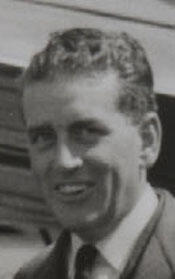
Here you will find contact information for Representative James Fulton, including email address, phone number, and mailing address.
| Name | James Fulton |
| Position | Representative |
| State | Pennsylvania |
| District | 27 |
| Party | Republican |
| Status | Former Representative |
| Term Start | January 3, 1945 |
| Term End | January 3, 1971 |
| Terms Served | 14 |
| Born | March 1, 1903 |
| Gender | Male |
| Bioguide ID | F000422 |
About Representative James Fulton
James Grove (Jim) Fulton (March 1, 1903 – October 6, 1971) was an American politician and attorney who served as a Republican member of the United States House of Representatives from Pennsylvania from January 3, 1945, until his death in 1971. Over the course of 14 consecutive terms in Congress, he represented his constituents during a significant period in American history and played an active role in the legislative process, including on issues of civil rights, international affairs, and the emerging U.S. space program.
Fulton was born on March 1, 1903, in Dormont, Allegheny County, Pennsylvania. He attended the Fine Arts Department of the Carnegie Institute of Technology in Pittsburgh, Pennsylvania, before pursuing higher education at Pennsylvania State College in State College, Pennsylvania, from which he graduated in 1924. He then studied law at Harvard Law School, receiving a Doctor of Laws degree in 1927. Following his legal training, Fulton was admitted to the bar and began practicing law in the Pittsburgh area, establishing himself in both the legal profession and local civic life.
In addition to his legal practice, Fulton became involved in public service and local affairs in Allegheny County. He served as a member of the Allegheny County Board of Law Examiners from 1934 to 1942, helping oversee admission to the practice of law in the county. He entered elective office as a member of the Pennsylvania State Senate, serving in 1939 and 1940. In 1942 he was appointed solicitor for Dormont Borough. Fulton also worked as publisher of the Mount Lebanon News and several other newspapers, reflecting his interest in public communication and local issues. He was active in a number of organizations, including the American Judicature Society, the United World Federalists, the American Legion, and the Veterans of Foreign Wars.
During the Second World War, Fulton enlisted in the United States Naval Reserve in 1942. He served as a lieutenant in the South Pacific theater until his discharge in 1945. While still in military service, he successfully ran for Congress in 1944. Elected as a Republican to the 79th Congress and reelected to the 13 succeeding Congresses, he served continuously in the U.S. House of Representatives from January 3, 1945, until his death on October 6, 1971. Throughout his tenure, he participated actively in the democratic process, representing the interests of his Pennsylvania constituents during the postwar era, the Cold War, and the civil rights movement.
Fulton’s congressional career included significant work in international and multilateral affairs. He was a delegate to the United Nations Conference on Trade and Employment at Havana in 1947 and 1948, contributing to early postwar efforts to shape global economic policy. In 1959 he served as a delegate to the 14th General Assembly of the United Nations. He was also a delegate to the 1956 Republican National Convention, reflecting his standing within his party at the national level. From 1960 to 1969, Fulton served as an adviser on space to the United States Mission at the United Nations, a role that linked his legislative work to the broader international dimensions of the space race.
Domestically, Fulton is noted for his support of major civil rights legislation during a transformative period in American history. He voted in favor of the Civil Rights Acts of 1957, 1960, 1964, and 1968, as well as the 24th Amendment to the United States Constitution, which abolished the poll tax in federal elections, and the Voting Rights Act of 1965, which sought to secure voting rights for African Americans. These votes placed him among those members of Congress who backed the federal government’s expanding role in protecting civil and voting rights in the mid-twentieth century.
Fulton also became closely associated with the development of the United States space program. He is widely credited with helping to save the Space Shuttle program at a critical moment. After suffering a heart attack in 1970, Fulton reportedly emerged from an ambulance to present a compromise proposal on funding that ultimately preserved congressional support for the program. This episode underscored both his commitment to American leadership in space and his influence in shaping federal space policy.
James Grove Fulton died of a heart attack on October 6, 1971, in Washington, D.C., while still serving in Congress. He was later interred in Mt. Lebanon Cemetery in Pittsburgh, Pennsylvania. His long tenure in the House of Representatives, spanning from 1945 to 1971, marked him as a significant Pennsylvania legislator during a period of profound national and international change. In recognition of his public service, the Pittsburgh Foundation established The James G. Fulton Legislative Internship Program in his honor, and the Congressman James Grove Fulton Memorial Post Office Building in Pittsburgh was named for him.