Representative James Ambrose Gallivan
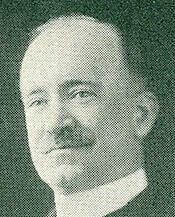
Here you will find contact information for Representative James Ambrose Gallivan, including email address, phone number, and mailing address.
| Name | James Ambrose Gallivan |
| Position | Representative |
| State | Massachusetts |
| District | 12 |
| Party | Democratic |
| Status | Former Representative |
| Term Start | April 7, 1913 |
| Term End | March 3, 1929 |
| Terms Served | 8 |
| Born | October 22, 1866 |
| Gender | Male |
| Bioguide ID | G000024 |
About Representative James Ambrose Gallivan
James Ambrose Gallivan (October 22, 1866 – April 3, 1928) was a United States Representative from Massachusetts and a member of the Democratic Party who served in Congress from 1913 to 1929, contributing to the legislative process during eight terms in office. His long tenure in the House of Representatives spanned a significant period in American history, during which he participated in the democratic process and represented the interests of his constituents in Massachusetts.
Gallivan was born in Boston, Massachusetts, on October 22, 1866. He was educated in the Boston public schools and went on to attend the Boston Latin School, from which he graduated in 1884. He then entered Harvard College, receiving his degree in 1888. Following his graduation from Harvard, Gallivan engaged in newspaper work, an early career that helped develop his skills in communication and public affairs and provided him with insight into the political and social issues of his time.
Gallivan’s formal political career began in state government. He was elected to the Massachusetts House of Representatives, serving as a member in 1895 and 1896. He then advanced to the Massachusetts State Senate, where he served from 1897 to 1898. In these roles, he gained experience in legislative procedure and public policy, building a reputation within the Democratic Party and among Boston’s electorate. After his service in the state legislature, Gallivan continued his involvement in municipal affairs and served as street commissioner of Boston, a position that placed him at the center of the city’s infrastructure and public works administration during a period of urban growth and modernization.
Gallivan entered national politics when he was elected as a Democrat to the Sixty-third Congress to fill the vacancy caused by the resignation of Representative James Michael Curley. He took his seat in the U.S. House of Representatives on April 7, 1914. Although his initial election was to complete an unexpired term, he secured the confidence of his constituents and was reelected to the Sixty-fourth and to the six succeeding Congresses. In total, he served eight terms in the House of Representatives, remaining in office from April 7, 1914, until his death in 1928. During these years, he represented a Massachusetts district through World War I and the early years of the 1920s, participating in debates and votes on domestic and international issues that shaped the nation in the early twentieth century.
While serving in Congress, Gallivan also remained a notable figure in Boston politics. In December 1917, he was a candidate in the election for Mayor of Boston. In that contest, Andrew Peters defeated Gallivan and two other candidates, and Peters was elected mayor. Although unsuccessful in this mayoral race, Gallivan continued his service in the U.S. House of Representatives, where he maintained his role as a Democratic voice for his district and continued to engage in the legislative work of Congress.
James Ambrose Gallivan died in office on April 3, 1928, in Arlington, Massachusetts, while still serving as a member of the House of Representatives. His death placed him among the members of the United States Congress who died in office during the first half of the twentieth century. He was interred in St. Joseph Cemetery in West Roxbury, Massachusetts. His long service from 1913 to 1929, his earlier roles in the Massachusetts House and Senate, and his work in Boston municipal government marked him as a significant Massachusetts Democrat and a longstanding participant in both state and national public life.