Representative James Vincent Ganly
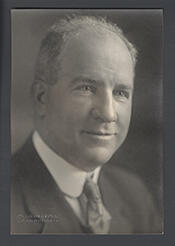
Here you will find contact information for Representative James Vincent Ganly, including email address, phone number, and mailing address.
| Name | James Vincent Ganly |
| Position | Representative |
| State | New York |
| District | 24 |
| Party | Democratic |
| Status | Former Representative |
| Term Start | May 19, 1919 |
| Term End | March 3, 1925 |
| Terms Served | 2 |
| Born | September 13, 1878 |
| Gender | Male |
| Bioguide ID | G000038 |
About Representative James Vincent Ganly
James Vincent Ganly (September 13, 1878 – September 7, 1923) was a Democratic U.S. Representative from New York who served in the United States Congress during the early twentieth century. Born in Manhattan, New York City, he was raised in the urban environment that would later shape his political constituency and public career. He attended the public schools of New York City and continued his education at Packard Business College, an institution that prepared students for commercial and clerical careers. This training provided him with practical business skills that he later applied in both private enterprise and public office.
After completing his education, Ganly entered private business and became engaged in the oil, real estate, and automobile industries. His work in these sectors reflected the rapid economic and technological changes of the early 1900s, particularly the growth of the automobile industry and expanding urban real estate markets in New York City. Through these pursuits he developed experience in commerce and local affairs, which helped establish his standing in the community and laid the groundwork for his entry into politics.
Ganly’s political career began at the state level. He served as a member of the New York State Assembly, representing New York County’s 24th District, in 1907. His service in the Assembly provided him with legislative experience and exposure to the workings of state government at a time when New York was one of the most influential states in the nation. He later played a significant role in the organization of local government in New York City’s northern borough, becoming the first county clerk of Bronx County, a position he held from 1914 to 1918. In that capacity he was involved in the administration of court and land records and other official documents during the formative years of the newly established county.
Building on his state and local service, Ganly was elected as a Democrat to the Sixty-sixth Congress, representing New York in the U.S. House of Representatives. He defeated Republican Benjamin L. Fairchild and served his first term in Congress from March 4, 1919, to March 3, 1921. His tenure in the House occurred during a significant period in American history, immediately following World War I, when the nation was grappling with postwar economic adjustments, veterans’ issues, and debates over international engagement and domestic reform. As a member of the House of Representatives, James Vincent Ganly participated in the democratic process, contributed to the legislative work of the chamber, and represented the interests of his New York constituents. He was an unsuccessful candidate for reelection in 1920 to the Sixty-seventh Congress, losing his seat to his former opponent, Benjamin L. Fairchild.
Ganly returned to national politics in the 1922 election. He was again elected as a Democrat, this time to the Sixty-eighth Congress, reclaiming the seat from Fairchild. His second period of congressional service began on March 4, 1923. However, his renewed tenure in the House was cut short. On September 7, 1923, before the Sixty-eighth Congress convened for its regular session, James Vincent Ganly died in an automobile accident in New York City. His death placed him among the members of the United States Congress who died in office in the first half of the twentieth century. Following his death, he was again succeeded in Congress by Benjamin L. Fairchild, underscoring the recurring electoral contest between the two men.
Ganly was interred in St. Raymond’s Cemetery in the Bronx, New York, reflecting his close association with that borough through both his residence and his earlier service as its first county clerk. His career, spanning business, state and local office, and two nonconsecutive terms in the U.S. House of Representatives from 1919 to 1921 and in 1923, illustrates the trajectory of an early twentieth-century urban Democrat who rose from local administration to national legislative service during a transformative era in American political and social life.