Representative James Norris Gillett
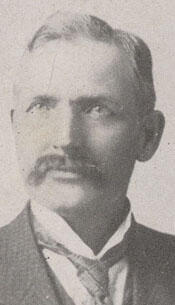
Here you will find contact information for Representative James Norris Gillett, including email address, phone number, and mailing address.
| Name | James Norris Gillett |
| Position | Representative |
| State | California |
| District | 1 |
| Party | Republican |
| Status | Former Representative |
| Term Start | November 9, 1903 |
| Term End | March 3, 1907 |
| Terms Served | 2 |
| Born | September 20, 1860 |
| Gender | Male |
| Bioguide ID | G000202 |
About Representative James Norris Gillett
James Norris Gillett (September 20, 1860 – April 20, 1937) was an American lawyer and Republican politician who served in both the federal and state governments of California. He represented California in the United States House of Representatives from March 4, 1903, to November 4, 1906, completing two terms in Congress, and subsequently served as the 22nd governor of California from January 9, 1907, to January 3, 1911. Over the course of his career, he was a prominent figure in an era marked by intense conflict between corporate interests and the emerging Progressive movement.
Gillett was born on September 20, 1860, and came of age during the post–Civil War period, although detailed records of his early childhood and family background are sparse. He trained for the law and entered the legal profession as a young man, beginning a career that would provide the foundation for his later political life. Like many lawyers of his generation, he combined private practice with growing involvement in local civic affairs, which gradually drew him into public service and partisan politics.
By the mid-1880s, Gillett had settled in Eureka, in Humboldt County, California, where he quickly became active in both legal and military affairs. In 1885 he joined the state militia as a private in the Eureka Guard Company. Based primarily in Santa Cruz, his unit was called into active service only once, when it assisted Humboldt County sheriffs in protecting a local town jail during the height of Sinophobic riots in Eureka. At the same time, Gillett himself was active in the city’s anti-Chinese movement, reflecting the widespread nativist and exclusionary sentiments of the period. After his brief state military service, he returned to his legal career and, in 1890, became Eureka City Attorney, a position he held until 1895.
Gillett’s success as a municipal attorney led him into state politics. Running as a Republican, he was elected to the California State Senate in 1896. His single term in the State Senate helped establish his reputation within the party and introduced him to the broader issues of state governance at a time when California was rapidly industrializing and railroads were consolidating economic power. Building on this experience, Gillett ran for the U.S. House of Representatives in 1902. He was elected as a Republican Representative from California and took his seat on March 4, 1903. He successfully defended his seat in the 1904 election, serving in Congress until November 4, 1906. During these two terms, he participated in the legislative process during a significant period in American history, representing the interests of his California constituents in the House of Representatives and contributing to national debates characteristic of the early twentieth-century Republican Party.
Gillett’s performance in Washington attracted the attention of California Republican leaders and lobbyists for the Southern Pacific Railroad, who regarded his views as sympathetic to their corporate interests. At the state Republican convention in Santa Cruz in 1906, party machine boss Abraham Ruef, working closely with Southern Pacific political bureau chief William Herrin, orchestrated a successful effort to deny renomination to the incumbent governor, George C. Pardee, a physician and Progressive conservationist who opposed the railroad’s dominance over transportation and commerce in the state. In backroom negotiations, Ruef and other Southern Pacific operatives persuaded delegates to shift their support from Pardee to Gillett, whom they viewed as a more reliable ally. In return for this backing, Gillett promised the Southern Pacific waterfront patronage. The move provoked immediate controversy, as Pardee remained widely admired, particularly for his leadership in the state’s response to the 1906 San Francisco earthquake. The San Francisco Call famously published a photograph of Gillett standing among party bosses under the caption “the Shame of California,” and the episode intensified public demands for direct primary laws to curb machine control of nominations. Confident of victory in the ensuing gubernatorial race, Gillett resigned his U.S. House seat two days before the 1906 general election.
Despite the uproar surrounding his nomination, Gillett won the governorship in the 1906 general election. He defeated Democrat Theodore A. Bell, Socialist candidate Austin Lewis, Prohibitionist James H. Blanchard, and William Langdon of the Independence League. Langdon’s strong third-place showing, with 14.4 percent of the vote, drew support away from both Gillett and Bell but ultimately helped tip the balance in Gillett’s favor. As governor, he presided over a period of rapid social and economic change in California. He encouraged and signed legislation reforming state parole guidelines, with the stated aim of helping prisoners rehabilitate more quickly and return as productive members of society. In 1907 he approved significant amendments to California’s Poison Act, prohibiting the sale of opium and cocaine except by a physician’s prescription. This measure enabled the state Board of Pharmacy to launch an aggressive campaign against narcotics and Chinese smoking opium, anticipating federal regulation by seven years, prior to the Harrison Narcotics Tax Act of 1914.
Gillett’s administration also left a lasting, and controversial, mark on public health and civil liberties. In 1909 he signed California’s first eugenics law, authorizing state officials to sterilize certain categories of individuals in state institutions, including mental patients deemed clinically insane, prisoners considered sexually or morally deviant, and persons with more than three criminal convictions. The measure passed unanimously in the Assembly and with only one dissenting vote in the Senate. Over the following decades, approximately 19,000 people were sterilized in California under this and related statutes, a program that would later be widely condemned, particularly after the association of eugenics with Nazi Germany discredited such policies in the medical and scientific communities. In the realm of infrastructure, Gillett worked with the legislature to address the growing impact of the automobile. In 1909 he supported and approved the State Highway Bond Act, which authorized $18 million in bonds and effectively established the California state highway system, organizing and numbering state roads and providing a dedicated funding mechanism for their construction and maintenance.
Throughout his term, Gillett’s close association with the Southern Pacific Railroad and the circumstances of his nomination continued to shadow his governorship. Cartoonist George Herriman, writing in the Los Angeles Examiner, repeatedly portrayed him as a mule in the service of railroad interests. Although Gillett occasionally urged the railroads not to impose excessive charges on shippers and municipalities, he consistently welcomed their economic and political presence in California. His alignment with corporate power contributed to rising discontent among Progressive Republicans, helping to fuel the movement that culminated in the election of Hiram Johnson and a wave of Progressive legislators in 1910. By that year, Gillett was also experiencing serious financial difficulties, and he chose not to seek re-election. Privately, it was believed that his wife, Isabella, opposed his continuing in the governorship, reinforcing his decision to retire from state office.
After leaving the governorship in January 1911, Gillett returned to private life and resumed his legal and business pursuits, withdrawing from the front ranks of public office as California politics shifted decisively toward Progressive reforms. He lived out his later years away from the intense controversies that had marked his tenure as governor. James Norris Gillett died on April 20, 1937, closing the career of a figure whose rise and service reflected both the power of corporate-aligned Republicanism and the growing backlash that would reshape California’s political landscape in the early twentieth century.