Representative James Lisle Gillis
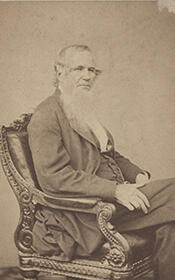
Here you will find contact information for Representative James Lisle Gillis, including email address, phone number, and mailing address.
| Name | James Lisle Gillis |
| Position | Representative |
| State | Pennsylvania |
| District | 24 |
| Party | Democratic |
| Status | Former Representative |
| Term Start | December 7, 1857 |
| Term End | March 3, 1859 |
| Terms Served | 1 |
| Born | October 2, 1792 |
| Gender | Male |
| Bioguide ID | G000209 |
About Representative James Lisle Gillis
James Lisle Gillis (October 2, 1792 – July 8, 1881) was a Democratic member of the U.S. House of Representatives from Pennsylvania who served one term in Congress from 1857 to 1859. Over the course of a long life that spanned from the early years of the republic through the post–Civil War era, he was active in public affairs and contributed to the legislative process as a representative of his constituents in Pennsylvania.
Gillis was born on October 2, 1792, in the closing years of the eighteenth century, a period in which the institutions of the United States were still taking shape. Details of his early life and family background are sparse in the surviving record, but his later public career indicates that he received sufficient education and training to participate effectively in lawmaking and public administration. Coming of age in the early national period, he would have been shaped by the political and social currents of the first decades of the nineteenth century, including the rise of organized political parties and the expansion of the electorate.
As a young man, Gillis entered public life in Pennsylvania, aligning himself with the Democratic Party, which became his political home throughout his career. His work in local and state affairs helped establish his reputation and prepared him for national office. By the mid-nineteenth century he had become identified with Democratic principles as they were understood in his era, including a focus on states’ rights and a limited federal government, positions that were widely debated in the years leading up to the Civil War.
Gillis’s most prominent public role came with his election as a Representative from Pennsylvania to the United States Congress. A member of the Democratic Party, he served one term in the U.S. House of Representatives from 1857 to 1859. His tenure placed him in the Thirty-fifth Congress, a body that convened during a significant and turbulent period in American history marked by intensifying sectional conflict over slavery, debates over the admission of new states and territories, and growing tensions between North and South. As a member of the House of Representatives, James Lisle Gillis participated in the democratic process, contributed to the legislative work of the chamber, and represented the interests of his Pennsylvania constituents in national deliberations.
During his time in Congress, Gillis took part in the routine and extraordinary business of the House, including consideration of appropriations, internal improvements, and the complex issues that foreshadowed the coming of the Civil War. Although the detailed record of his committee assignments and floor speeches is limited in surviving summaries, his service coincided with major national debates over the Dred Scott decision, the status of Kansas, and the broader question of the expansion of slavery into the western territories. Within this context, his single term reflected both the opportunities and constraints facing Democratic representatives from a northern state during a period of deepening national division.
After leaving Congress in 1859, Gillis returned to private life and to the civic and political circles in Pennsylvania in which he had long been active. His post-congressional years unfolded against the backdrop of the Civil War and Reconstruction, eras in which former members of Congress often remained influential in local affairs, party organization, and public discussion even without holding federal office. Living into his late eighties, he witnessed the transformation of the United States from a young, fractious republic into a reunified nation grappling with industrialization and social change.
James Lisle Gillis died on July 8, 1881, closing a life that had extended from the presidency of George Washington’s immediate successors to that of James A. Garfield. Remembered primarily for his service as a Democratic Representative from Pennsylvania in the Thirty-fifth Congress, his career illustrates the role of mid-nineteenth-century legislators who, even in a single term, participated in shaping federal policy during one of the most consequential periods in American political history.