Representative James William Good
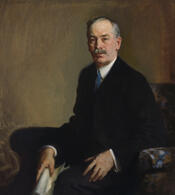
Here you will find contact information for Representative James William Good, including email address, phone number, and mailing address.
| Name | James William Good |
| Position | Representative |
| State | Iowa |
| District | 5 |
| Party | Republican |
| Status | Former Representative |
| Term Start | March 15, 1909 |
| Term End | March 3, 1923 |
| Terms Served | 7 |
| Born | September 24, 1866 |
| Gender | Male |
| Bioguide ID | G000275 |
About Representative James William Good
James William Good (September 24, 1866 – November 18, 1929) was an American politician and lawyer from the state of Iowa who served as a Representative in the United States Congress from 1909 to 1923 and later in the Cabinet of President Herbert Hoover as Secretary of War. A member of the Republican Party, he contributed to the legislative process during seven terms in office and played a prominent role in federal appropriations and budget reform during a significant period in American history.
Good was born on September 24, 1866, near Cedar Rapids, Iowa, to Henry and Margaret Combs Good. Raised in the rural environs of eastern Iowa, he was educated in local schools before pursuing higher education at Coe College in Cedar Rapids. He graduated from Coe College in 1892, an achievement that laid the foundation for his professional and political career. Seeking legal training, he enrolled at the University of Michigan Law School, from which he graduated in 1893.
In 1893, Good was admitted to the bar and began the practice of law in Indianapolis, Indiana, the same year. On October 4, 1894, he married Lucy Deacon; the couple had two sons, James William Jr. and Robert Edmund Good. In 1896, Good returned to Cedar Rapids, Iowa, where he continued to practice law and became increasingly involved in local public affairs. His legal acumen and growing reputation led to his appointment as Cedar Rapids City Attorney, a position he held from 1906 to 1908, providing him with valuable experience in municipal governance and public administration.
Good entered national politics as a Republican and was elected to the United States House of Representatives from Iowa’s 5th congressional district in 1908, taking office in March 1909. The district then comprised Linn, Grundy, Benton, Marshall, Tama, Jones, and Cedar counties. He served continuously in the House from 1909 to 1921 and was re-elected six times, never suffering defeat at the polls. During these seven terms, he represented the interests of his constituents while participating actively in the broader democratic process at a time marked by Progressive Era reforms, World War I, and the postwar transition.
Within the House of Representatives, Good rose to a position of considerable influence. In 1919 he became chairman of the powerful House Appropriations Committee, a post he held until the end of his congressional service. In that capacity he was central to shaping federal spending and was closely associated with efforts to reorganize and rationalize the federal budgetary process. His work on appropriations and budget reform reflected a broader Republican emphasis on fiscal responsibility in the years following World War I.
Following the election of fellow Republican Warren G. Harding as president in November 1920, Good announced that he would likely resign his seat in Congress and enter private law practice in Chicago, Illinois, once his plan to reorganize the budgetary process had been adopted. He formally resigned from the House on June 10, 1921. His departure created a vacancy in Iowa’s 5th district, which was filled when Republican Cyrenus Cole of Cedar Rapids won a special election and was sworn into Congress on August 1, 1921. After leaving Congress, Good practiced law in Chicago, applying his legislative and financial expertise in the private sector.
Good remained an active figure in Republican national politics during the 1920s. In 1928 he worked to elect Herbert Hoover, a fellow Iowa Republican, as President of the United States. When Hoover assumed office in March 1929, he selected Good to serve in his Cabinet as United States Secretary of War. Good was promptly confirmed by the United States Senate and took office, overseeing the War Department during the early months of the Hoover administration. His tenure, though brief, placed him at the center of national defense policy during a period of relative peace but growing economic uncertainty.
James William Good’s service as Secretary of War lasted approximately eight months. He died suddenly in Washington, D.C., on November 18, 1929, from peritonitis caused by a ruptured appendix. His death occurred shortly after the Wall Street Crash of 1929, at the beginning of the Great Depression, cutting short the career of a prominent Republican legislator and Cabinet officer. He was succeeded as Secretary of War by the Under Secretary of War, Patrick J. Hurley.