Representative James Sedgwick Gorman
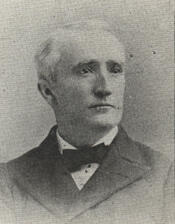
Here you will find contact information for Representative James Sedgwick Gorman, including email address, phone number, and mailing address.
| Name | James Sedgwick Gorman |
| Position | Representative |
| State | Michigan |
| District | 2 |
| Party | Democratic |
| Status | Former Representative |
| Term Start | December 7, 1891 |
| Term End | March 3, 1895 |
| Terms Served | 2 |
| Born | December 28, 1850 |
| Gender | Male |
| Bioguide ID | G000328 |
About Representative James Sedgwick Gorman
James Sedgwick Gorman (December 28, 1850 – May 27, 1923) was an American lawyer and Democratic politician from the state of Michigan who served two terms in the United States House of Representatives. He was born in Lyndon Township, near Chelsea, Washtenaw County, Michigan, where he was raised in a rural community during the mid-nineteenth century. He attended the local common schools and later the Union School of Chelsea, receiving the foundational education that prepared him for professional study at a time when formal schooling beyond the primary level was still relatively uncommon in rural Michigan.
Gorman pursued higher education in law at the University of Michigan in Ann Arbor, enrolling in the law department and graduating in 1876. Shortly thereafter, he was admitted to the bar and commenced the practice of law in Jackson, Michigan. Early in his legal career, he entered public service as assistant prosecuting attorney of Jackson County, a position he held for two years. In 1879, he moved to Dexter, Michigan, where he continued his legal practice and became increasingly active in local and state Democratic politics.
Gorman’s formal political career began in the Michigan Legislature. He was elected to the Michigan House of Representatives and served from 1881 to 1882, representing his district during a period of growing industrialization and agricultural change in the state. After several years devoted to law and party affairs, he advanced to the upper chamber of the state legislature, serving in the Michigan Senate from 1887 to 1890. His legislative service at the state level helped establish his reputation as a capable Democratic leader in a region that often leaned Republican in national contests.
In 1890, Gorman successfully sought election to the United States House of Representatives from Michigan’s 2nd congressional district. Running as a Democrat, he defeated the incumbent Republican, Edward P. Allen, and took his seat in the 52nd Congress. He was subsequently re-elected to the 53rd Congress, serving from March 4, 1891, to March 3, 1895. His tenure in Congress coincided with the administration of President Grover Cleveland and with national debates over tariffs, monetary policy, and economic regulation during the early 1890s. Although positioned to continue his service, Gorman chose not to be a candidate for renomination in 1894 and thus concluded his congressional career at the end of his second term.
After leaving Congress, James S. Gorman returned to private life in Michigan. He engaged in farming near Chelsea, reflecting both his personal ties to the region and the agrarian character of much of his constituency, and he also resumed the practice of law. Dividing his time between agricultural pursuits and legal work, he remained a figure of local prominence, drawing on his legislative and congressional experience while no longer holding elective office.
Gorman died in Detroit, Michigan, on May 27, 1923. His remains were brought back to his home area for burial, and he was interred in Mount Olivet Cemetery in Chelsea, Michigan. His career traced the path of a nineteenth-century Midwestern lawyer who rose from local practice and state legislative service to the national legislature, and then returned to the professional and agricultural life of his home community.