Senator James Black Groome
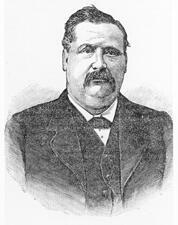
Here you will find contact information for Senator James Black Groome, including email address, phone number, and mailing address.
| Name | James Black Groome |
| Position | Senator |
| State | Maryland |
| Party | Democratic |
| Status | Former Representative |
| Term Start | March 18, 1879 |
| Term End | March 3, 1885 |
| Terms Served | 1 |
| Born | April 4, 1838 |
| Gender | Male |
| Bioguide ID | G000492 |
About Senator James Black Groome
James Black Groome (April 4, 1838 – October 5, 1893) was an American lawyer, legislator, governor, and United States senator from Maryland. A member of the Democratic Party, he served as the 36th Governor of Maryland from 1874 to 1876 and represented Maryland in the United States Senate from March 4, 1879, to March 3, 1885. His single term in the Senate coincided with a significant period in American history during the post–Reconstruction era, and he participated in the legislative process as one of Maryland’s leading Democratic figures.
Groome was born in Elkton, Cecil County, Maryland, on April 4, 1838, to Elizabeth Riddle (née Black) and John Charles Groome. He came from a politically prominent family. His father was a candidate for governor of Maryland and served as Maryland secretary of state, while his paternal grandfather, John Groome, was a member of the Maryland House of Delegates. On his mother’s side, his grandfather James R. Black of New Castle, Delaware, served as a judge on the Delaware Supreme Court. Raised in this environment of public service and law, Groome attended Elkton Academy and later pursued preparatory studies at the Tennent School in Hartsville, Pennsylvania, with the intention of entering Princeton University. An injury to his eye forced him to abandon his formal education, however, and he returned to Elkton to read law under the supervision of his father.
Groome was admitted to the bar in Elkton in 1861 and commenced the practice of law. Owing to chronic ill health, he did not serve in the Union or Confederate forces during the American Civil War, instead building his legal career in his native Cecil County. His early prominence in state affairs emerged in 1867, when he was elected as a representative from Cecil County to the Maryland constitutional convention. There he became a strong advocate for the adoption of a new state constitution, aligning with Democratic efforts to reshape Maryland’s postwar political structure.
Following his work at the convention, Groome continued his ascent in state politics. He was elected to the Maryland House of Delegates, serving from 1872 to 1876. During this period he gained a reputation as an able legislator and, in 1872, was at one point considered by the House of Delegates as a possible candidate for the United States Senate. In 1874 he served as chairman of the House judiciary committee, a position that further enhanced his standing within the Democratic Party and positioned him for higher office.
Groome’s elevation to the governorship came in 1874 under unusual circumstances. When Governor William Pinkney Whyte was elected by the General Assembly to the United States Senate, the governorship became vacant and the House of Delegates was required to choose his successor. In the special election held within the House, Groome emerged as by far the most popular candidate and, at the age of 35, was elected governor, receiving 62 of the 70 votes cast. His administration, which lasted from 1874 to 1876, was relatively uneventful in terms of major policy shifts, in part because many key appointments and initiatives had already been undertaken by his predecessor. Groome himself remarked that he sometimes felt his principal duties consisted of attending banquets and awarding prizes and diplomas. Nonetheless, he used his office to recommend reforms to the General Assembly, including the adoption of glass ballot boxes to reduce electoral fraud and a comprehensive reassessment of property values throughout the state to improve the fairness of taxation.
As the time approached for renomination, Groome recognized that his chances for re-election as governor were slim, largely due to a serious political dispute in which he had been involved prior to the Democratic nominating convention. Assessing the political realities, he withdrew his candidacy and threw his support behind John Lee Carroll, who subsequently won the governorship. After leaving office in 1876, Groome briefly resumed the practice of law. On February 29, 1876, he married Alice L. Edmondson, daughter of Horace Edmondson of Talbot County, Maryland; the couple had one daughter, Maria. In 1877, during a political canvass, Groome was involved in a carriage accident that resulted in a ruptured heart valve, an injury that would contribute to his declining health. He was later diagnosed with diabetes and developed an abdominal tumor, conditions that further limited his physical vigor though not his continued public service.
Groome returned to national politics when he was elected by the Maryland legislature as a Democrat to the United States Senate, serving from March 4, 1879, to March 3, 1885. During his single term, he represented Maryland’s interests in Washington at a time when the nation grappled with the aftermath of Reconstruction, economic adjustment, and debates over civil service reform and federal authority. He served alongside fellow Maryland senators Arthur P. Gorman and his former gubernatorial predecessor William Pinkney Whyte. As a senator, Groome contributed to the legislative process and participated in the broader democratic governance of the period, maintaining his reputation as a courteous and conciliatory public figure.
After leaving the Senate in 1885, Groome remained in public life. President Grover Cleveland appointed him collector of customs for the port of Baltimore, a significant federal post in a major Atlantic seaport. He held this office from February 17, 1886, until around 1890, overseeing the administration of customs duties and federal revenue collection at the port. His tenure in this role capped a long career in which he moved between state and national responsibilities, consistently aligned with the Democratic Party.
James Black Groome died at his home at 2 East Preston Street in Baltimore on October 5, 1893, following an attack of kidney colic, after years of deteriorating health. He was interred in Elkton Presbyterian Cemetery in his hometown of Elkton, Maryland. Contemporary tributes emphasized both his accomplishments and his personal character. An editorial in The Baltimore Sun observed that “few men have compassed so much in so short a time and without arousing animosities,” while his local Elkton paper remarked that he “was everybody’s friend … The humblest could approach him without a sense of restraint, but none were so mighty as to feel disposed to trifle with him.”