Senator James Guthrie
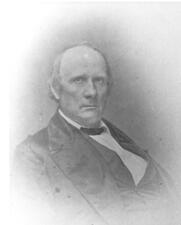
Here you will find contact information for Senator James Guthrie, including email address, phone number, and mailing address.
| Name | James Guthrie |
| Position | Senator |
| State | Kentucky |
| Party | Democratic |
| Status | Former Representative |
| Term Start | December 4, 1865 |
| Term End | March 3, 1869 |
| Terms Served | 1 |
| Born | December 5, 1792 |
| Gender | Male |
| Bioguide ID | G000534 |
About Senator James Guthrie
James Guthrie was born on December 5, 1792, near Bardstown in Nelson County, Kentucky. Raised on the early American frontier, he grew up in a region that was rapidly developing both economically and politically in the early years of the Republic. His family background and surroundings exposed him to the practical concerns of a growing western state, including land development, transportation, and commerce. These formative experiences helped shape his later interests in infrastructure, finance, and public service, which would define much of his professional and political life.
Guthrie’s formal education was limited by the standards of later generations, but he received the type of schooling typical for a young man in Kentucky in the early nineteenth century, combining basic formal instruction with extensive self-education. He studied law in Kentucky, reading under established practitioners rather than attending a formal law school, which was the common path to the legal profession at the time. Through disciplined study and apprenticeship, he qualified for the bar and began practicing law, building a reputation as a capable attorney and an able manager of complex business and financial matters.
By the 1820s and 1830s, Guthrie had become an influential figure in Kentucky’s economic and political life. He served in the Kentucky House of Representatives and later in the Kentucky Senate, where he emerged as a strong advocate for internal improvements and economic development. Guthrie was deeply involved in the promotion and management of railroads, most notably as a railroad president, reflecting his conviction that modern transportation infrastructure was essential to Kentucky’s prosperity. His business acumen and public roles reinforced one another, positioning him as a leading voice on financial and commercial issues in the state and beyond.
Guthrie’s prominence in financial and political circles led to his appointment as Secretary of the Treasury of the United States under President Franklin Pierce. He served in that cabinet post from March 7, 1853, to March 3, 1857. As Secretary of the Treasury, Guthrie oversaw federal fiscal policy during a period of economic expansion and sectional tension, working to maintain the stability of the government’s finances and to administer the nation’s revenue and expenditures. His tenure coincided with debates over tariffs, public lands, and the management of federal funds, and he brought to the office the same emphasis on order, efficiency, and infrastructure that had characterized his work in Kentucky.
After his service in the Pierce administration, Guthrie remained an important Democratic Party figure in Kentucky and continued his involvement in business and public affairs. His long experience in state politics, national finance, and railroad management made him a respected elder statesman as the United States moved toward the crisis of the Civil War. Although Kentucky was a border state with divided loyalties, Guthrie’s standing as a seasoned Democrat and national figure ensured that his views carried weight among his contemporaries, both within the state and in the broader party.
In the aftermath of the Civil War, Guthrie returned to national office as a United States Senator from Kentucky. A member of the Democratic Party, he served one term in the Senate from March 4, 1865, to March 3, 1869. His service in Congress occurred during a significant period in American history, as the nation undertook the complex work of Reconstruction following the Confederacy’s defeat. As a member of the Senate, Guthrie participated in the legislative process at a time when issues of readmission of Southern states, civil rights, federal authority, and economic recovery were at the forefront. He represented the interests of his Kentucky constituents while contributing to debates that would shape the postwar constitutional and political order.
Guthrie’s senatorial term marked the culmination of a long public career that had spanned state government, national executive office, and the upper chamber of Congress. After leaving the Senate in 1869, his health and advanced age limited further public activity. He died on March 13, 1869, in Louisville, Kentucky. James Guthrie’s life reflected the trajectory of a nineteenth-century American statesman who rose from the Kentucky frontier to positions of national influence, serving as a railroad president, Secretary of the Treasury under President Franklin Pierce, and, finally, as a United States Senator from Kentucky during one of the most consequential eras in the nation’s history.