Representative James Tracy Hale
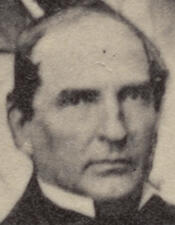
Here you will find contact information for Representative James Tracy Hale, including email address, phone number, and mailing address.
| Name | James Tracy Hale |
| Position | Representative |
| State | Pennsylvania |
| District | 18 |
| Party | Independent |
| Status | Former Representative |
| Term Start | December 5, 1859 |
| Term End | March 3, 1865 |
| Terms Served | 3 |
| Born | October 14, 1810 |
| Gender | Male |
| Bioguide ID | H000032 |
About Representative James Tracy Hale
James Tracy Hale (October 14, 1810 – April 6, 1865) was a Republican member of the U.S. House of Representatives from Pennsylvania who served in Congress from 1859 to 1865. Identified in some contemporary accounts as an Independent and later as an Independent Republican, he served three consecutive terms in the House of Representatives during a critical period in American history, contributing to the legislative process and representing the interests of his Pennsylvania constituents through the years immediately preceding and encompassing much of the Civil War.
Hale was born on October 14, 1810, in Towanda, Pennsylvania, the son of Reuben Hale and Wealthy Ann (Tracy) Hale. He was part of a family with notable public connections; he was a first cousin of Gideon Welles, who later served as Secretary of the Navy in President Abraham Lincoln’s cabinet. Raised in Pennsylvania, Hale pursued legal studies under the guidance of close relatives. He read law partly with his brother-in-law, General William Patton (1799–1877), and partly with his uncle, Elias White Hale (1775–1832), both of whom were established legal figures and helped shape his early professional development.
Hale was admitted to the bar in 1832 at Lewistown, Pennsylvania, where he commenced the practice of law and worked for several years. His marriage further connected him to prominent legal and judicial circles in the state. He married Jane Walker Huston (1815–1883), the daughter of Justice Charles Huston of the Pennsylvania Supreme Court and Mary Winter. Following their marriage, Hale and his wife moved to Bellefonte, Pennsylvania, where his father-in-law resided. In Bellefonte, Hale continued his legal practice and became an influential figure in the local bar and community. He and Jane Walker Huston had three children: Charles H. Hale (1837–1872), James Tracy Hale (1848–1877), and George N. Hale (1850–1885).
Hale’s professional reputation led to his elevation to the judiciary. In 1851 he was appointed president judge of the Twentieth Judicial District of Pennsylvania, a position of considerable responsibility in the state’s court system. He served as president judge from 1851 until 1858, presiding over a range of civil and criminal matters and gaining further public recognition for his legal acumen and conservative temperament. During this period he also engaged in business and infrastructure development, serving as president of the Tyrone and Clearfield Railroad from 1856 to 1858, reflecting his interest in the economic growth and transportation needs of central Pennsylvania.
In 1858 Hale was elected as a Republican to the Thirty-sixth Congress, marking the beginning of his national legislative career. He took his seat in the U.S. House of Representatives in 1859 as a Representative from Pennsylvania and was reelected in 1860 to the Thirty-seventh Congress. In 1862 he was elected as an Independent Republican to the Thirty-eighth Congress, reflecting both his alignment with Republican principles and a measure of political independence in a time of intense partisan and sectional conflict. Across his three terms, from 1859 to 1865, Hale participated actively in the democratic process, representing his district during the secession crisis and the Civil War and contributing to debates on the Union war effort and related national issues.
During his final term in Congress, Hale held a significant leadership role as chairman of the United States House Committee on Claims. In this capacity he oversaw the consideration of financial claims against the federal government, a particularly important responsibility during the Civil War, when military expenditures and wartime losses generated a large volume of petitions and demands for compensation. Known for his conservative political views, Hale urged Congress to adopt compromise resolutions soon after the outbreak of the Civil War, reflecting his desire to preserve the Union and avert further bloodshed through negotiated settlement where possible, even as the conflict deepened.
Outside his public duties, Hale was known as a Christian and a member of the Episcopal Church, and he was regarded as a respected figure in Bellefonte’s civic and religious life. His career was cut short when he died after a brief illness. James Tracy Hale succumbed to typhoid fever on April 6, 1865, in Bellefonte, Pennsylvania, just days before the end of the Civil War. He was interred in Union Cemetery in Bellefonte. His death closed the career of a Pennsylvania lawyer, judge, and legislator who had served his state and nation during one of the most turbulent eras in American history.