Senator James Henry Hammond
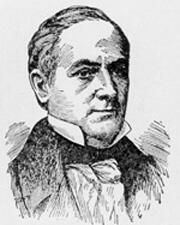
Here you will find contact information for Senator James Henry Hammond, including email address, phone number, and mailing address.
| Name | James Henry Hammond |
| Position | Senator |
| State | South Carolina |
| Party | Democratic |
| Status | Former Representative |
| Term Start | December 7, 1835 |
| Term End | March 3, 1861 |
| Terms Served | 2 |
| Born | November 15, 1807 |
| Gender | Male |
| Bioguide ID | H000128 |
About Senator James Henry Hammond
James Henry Hammond (November 15, 1807 – November 13, 1864) was an American attorney, politician, and planter who became one of the most forceful and influential public defenders of slavery in the antebellum United States. A member of the Democratic Party, he served as a United States representative from South Carolina from 1835 to 1836, as the 60th governor of South Carolina from 1842 to 1844, and as a United States senator from 1857 to 1860. In addition to these documented terms, he is recorded as having served in the United States Congress from 1835 to 1861. An enslaver on a large scale, Hammond was among the most ardent and outspoken supporters of slavery in the years leading up to the American Civil War.
Hammond was born near Newberry Court House, South Carolina, on November 15, 1807, into a modest family background that contrasted sharply with the wealth he later acquired. He was educated in local schools and then at South Carolina College (now the University of South Carolina) in Columbia, from which he graduated in 1825. After reading law, he was admitted to the bar and began practicing as an attorney. His early legal and journalistic work, including editing a newspaper in Columbia, helped him build connections within South Carolina’s political elite and laid the foundation for his entry into public life.
Through a strategically advantageous marriage, Hammond acquired substantial property and social standing. He married Catherine Fitzsimons, heiress to a large fortune derived from rice and cotton plantations, and through this union he ultimately came to own approximately 22 square miles of land, several plantations and houses, and more than 300 enslaved people. This marriage also linked him to one of the most powerful planter families in the state: through his wife’s family he became a brother-in-law of Wade Hampton II and an uncle to Hampton’s children, including future Confederate general and South Carolina governor Wade Hampton III. Hammond’s personal conduct within this extended family became the source of a major scandal when Wade Hampton II learned that Hammond had raped his four Hampton nieces as teenagers. Hampton made the scandal public, and the exposure of Hammond’s crimes nearly derailed his political career, though he later returned to high office and was ultimately elected to the United States Senate.
Hammond’s formal political career began in the mid-1830s. A Democrat, he was elected to the Twenty-fourth Congress and served as a United States representative from South Carolina from March 4, 1835, to February 26, 1836. During this period he participated in the legislative process at a time of intense national debate over issues such as states’ rights, slavery, and economic policy. He resigned his House seat in 1836, citing ill health, and returned to his plantations, where he continued to build his wealth and influence as a leading member of the planter class. In 1842 he reentered public office when he was elected the 60th governor of South Carolina, serving from 1842 to 1844. As governor he advanced a staunchly pro-slavery, states’ rights agenda and helped shape South Carolina’s increasingly militant posture within the Union.
After leaving the governorship, Hammond spent more than a decade largely out of formal office but remained deeply engaged in the intellectual and political defense of slavery. He wrote extensively for Southern periodicals and became a central figure in a circle of pro-slavery theorists. Going beyond articles in local newspapers, he co-authored The Pro-Slavery Argument with William Harper, Thomas Roderick Dew, and William Gilmore Simms, a major compendium that sought to justify slavery on historical, economic, religious, and racial grounds. Hammond and Simms were part of a “sacred circle” of Southern intellectuals, including Edmund Ruffin, Nathaniel Beverley Tucker, and George Frederick Holmes, who promoted various forms of Southern “reformation” and argued that slavery was not merely a necessary evil but a positive good. In his writings, Hammond consistently compared the South’s enslaved labor to the free labor of the North, describing Northern workers as “scantily compensated” hired operatives, while portraying enslaved people as “well compensated” under what he claimed was paternalistic stewardship.
Hammond returned to national office when he was elected to the United States Senate, serving as a senator from South Carolina from March 4, 1857, to November 11, 1860, within the broader span of service in Congress recorded from 1835 to 1861. In the Senate he became nationally prominent for his unapologetic and aggressive defense of slavery and the Southern social order. On March 4, 1858, in a speech that came to be known as the “Cotton is King” speech, he articulated his famous “mudsill theory” of society, declaring, “In all social systems, there must be a class to do the menial duties, to perform the drudgery of life… It constitutes the very mudsill of society.” In the same address he warned the industrial powers of the world, “You dare not make war on cotton — no power on earth dares make war upon it. Cotton is king.” These remarks crystallized the Southern belief that the global economy’s dependence on slave-produced cotton would shield the South from external pressure and underlined his conviction that slavery was the indispensable foundation of civilization.
Hammond’s plantation operations reflected both his economic ambitions and his ideological commitments. He promoted Redcliffe, his plantation at Beech Island, South Carolina, as his model of a perfectly run estate. In his Plantation Manual of 1857–1858, he set out detailed rules for the management of crops, livestock, and enslaved labor. The manual prescribed regulations for the treatment of pregnant and nursing enslaved women—whom he allowed to nurse their infants for twelve months—as well as for elderly enslaved people no longer fit for heavy field work, and it specified standards for clothing, quarters, and food. While Hammond presented these rules as evidence of benevolent stewardship, they operated within and reinforced a system of chattel slavery that denied basic freedom and bodily autonomy to the hundreds of people he enslaved.
During the secession crisis and the early years of the Civil War, Hammond remained a committed defender of slavery and Southern independence, but he also jealously guarded his prerogatives as a large enslaver. He rejected any government regulation of slavery, even in wartime. When the South Carolina government requisitioned sixteen of the people he enslaved to work on fortifications for Charleston, he refused, calling the demand “wrong every way and odious.” On another occasion, when a Confederate army officer arrived to requisition grain from his plantation, Hammond tore up the requisition order and threw it out a window, later writing that the compensation offered was too little and that compliance would be like “branding on my forehead: ‘Slave’.” These episodes illustrated his insistence that the authority of the slaveholding class should remain paramount, even over a government fighting to preserve the slave system.
Hammond withdrew from public life as the Confederacy’s fortunes waned and spent his final years on his plantations in South Carolina. He died at Redcliffe, near Beech Island, on November 13, 1864, two days before his fifty-seventh birthday. His life and career left a significant imprint on the political and intellectual history of the antebellum South, both through his service as a United States representative, governor of South Carolina, and United States senator, and through his prominent role in formulating and publicizing the pro-slavery ideology that helped drive the nation toward civil war.