Representative James Joseph Heffernan
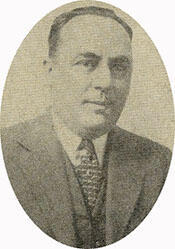
Here you will find contact information for Representative James Joseph Heffernan, including email address, phone number, and mailing address.
| Name | James Joseph Heffernan |
| Position | Representative |
| State | New York |
| District | 11 |
| Party | Democratic |
| Status | Former Representative |
| Term Start | January 3, 1941 |
| Term End | January 3, 1953 |
| Terms Served | 6 |
| Born | November 8, 1888 |
| Gender | Male |
| Bioguide ID | H000443 |
About Representative James Joseph Heffernan
James Joseph Heffernan (November 8, 1879 – January 27, 1967) was an American architect and politician who served six terms as a U.S. Representative from New York from 1941 to 1953. A member of the Democratic Party, he represented his constituents in the House of Representatives during a period marked by World War II, the immediate postwar era, and the early years of the Cold War, contributing to the legislative process over more than a decade in national office.
Born on November 8, 1879, Heffernan came of age in the late nineteenth century, a time of rapid urbanization and industrial growth in the United States. Details of his early family life are sparse in the public record, but his later professional pursuits suggest an early interest in the built environment and civic affairs. Growing up as American cities expanded and modernized, he was part of a generation for whom architecture and public service were closely intertwined with the nation’s broader economic and social development.
Heffernan trained and worked as an architect before entering national politics, a professional background that informed his understanding of urban issues, infrastructure, and public works. As an architect, he would have been engaged with the practical challenges of city planning, construction standards, and the needs of growing communities, experience that later shaped his approach to legislative questions involving housing, transportation, and public facilities. His dual identity as both architect and politician reflected a broader Progressive Era and New Deal–era belief in expert-informed public policy.
By the time Heffernan was elected to Congress, he had established himself within the Democratic Party in New York, a state whose political life was dominated by powerful urban constituencies and complex party organizations. Running as a Democrat, he secured election as a Representative from New York in 1940 and took his seat in the Seventy-seventh Congress in January 1941. His election placed him in Washington at the threshold of U.S. involvement in World War II, as debates over national defense, foreign policy, and economic mobilization intensified.
Heffernan served continuously in the House of Representatives from 1941 to 1953, completing six consecutive terms. During these twelve years, he participated in the democratic process at the federal level, representing the interests of his New York constituents while Congress addressed wartime legislation, postwar reconversion, veterans’ benefits, and the emerging framework of Cold War policy. As a member of the Democratic Party majority for much of this period, he contributed to deliberations on domestic programs and international commitments that reshaped the role of the federal government in American life. His service coincided with major legislative initiatives affecting labor, housing, transportation, and economic stabilization, areas in which his architectural and urban background would have been particularly relevant.
Throughout his congressional tenure, Heffernan’s role as a Representative from New York required close attention to the needs of a heavily urban, industrial, and immigrant-rich state. He worked within the committee system and party caucus structure that defined mid-twentieth-century congressional practice, helping to translate national policy debates into concrete benefits and protections for his district. His repeated reelection over six terms testified to sustained support among his constituents during a time of rapid social and economic change.
After leaving Congress in 1953, Heffernan concluded his formal role in national elective office. The later years of his life unfolded against the backdrop of the Eisenhower and early Johnson administrations, as many of the policies and institutions shaped during his congressional service continued to evolve. He lived to see the further expansion of federal programs, the deepening of Cold War tensions, and the early stirrings of the modern civil rights movement, developments that built upon the legislative foundations laid in the 1940s and early 1950s.
James Joseph Heffernan died on January 27, 1967, closing a long life that bridged the Gilded Age, two world wars, and the mid-twentieth-century transformation of the United States. Remembered as both an architect and a Democratic Representative from New York, he left a record of six terms in the U.S. House of Representatives during one of the most consequential periods in American political and legislative history.