Senator James Thomas Heflin
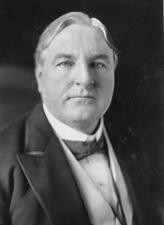
Here you will find contact information for Senator James Thomas Heflin, including email address, phone number, and mailing address.
| Name | James Thomas Heflin |
| Position | Senator |
| State | Alabama |
| Party | Democratic |
| Status | Former Representative |
| Term Start | May 19, 1904 |
| Term End | March 3, 1931 |
| Terms Served | 11 |
| Born | April 9, 1869 |
| Gender | Male |
| Bioguide ID | H000446 |
About Senator James Thomas Heflin
James Thomas Heflin (April 9, 1869 – April 22, 1951), nicknamed “Cotton Tom,” was an American politician who served as both a United States representative and United States senator from Alabama. A member of the Democratic Party, he held federal office during a significant period in American history, serving in Congress from 1904 to 1931 and contributing to the legislative process over many years in both chambers.
Heflin was born in Louina, Randolph County, Alabama, on April 9, 1869. He was part of a politically active family; he was the nephew of Robert Stell Heflin, who had served as a congressman from Alabama, and his own nephew, Howell Heflin, would later be elected U.S. senator from Alabama and serve from 1979 to 1997. James Heflin attended the Agriculture and Mechanical College of Alabama (now Auburn University), but he did not complete a degree. Instead, he read law independently and was admitted to the bar in 1893, beginning the practice of law in LaFayette, Alabama, where he established himself as a local attorney.
Heflin’s early political prominence came through his role in Alabama state politics at the turn of the twentieth century. He was a delegate to the Alabama constitutional convention of 1901, where he helped draft the 1901 Constitution of Alabama. At the convention, he argued vigorously and successfully for provisions that effectively excluded Black Alabamians from voting, openly declaring that “God Almighty intended the negro to be the servant of the white man.” His advocacy for disfranchisement and segregationist policies was central to his political identity. In 1903, he served as Alabama’s Secretary of State. In that role, he became an outspoken defender of men put on trial for enslaving Black laborers through fraudulent convict-leasing practices, a brutal post-emancipation system in which African Americans were often falsely convicted and then sold to farmers or industrialists. Heflin used explicitly white supremacist rhetoric to mobilize support for the defendants, telling a group of Confederate veterans that forcing Black people to labor was a means of holding them in what he regarded as their proper social position. He also argued more broadly for the repeal of the Fourteenth and Fifteenth Amendments to the U.S. Constitution, which had guaranteed citizenship and voting rights to formerly enslaved people.
In 1904, Heflin was elected to the United States House of Representatives as a Democrat in a special election to fill the vacancy caused by the death of Representative Charles Winston Thompson. In that contest he defeated five other candidates, including Sidney Johnston Catts, who would later become governor of Florida. Heflin took his seat in the House that year and continued to serve there until 1920. His tenure in the House was marked by both legislative activity and controversy. In 1908, while serving as a member of the House, he shot and seriously wounded a Black man, Lewis Lundy, during an altercation on a Washington, D.C., streetcar. Heflin threw Lundy from the streetcar and then fired at him through a window. Lundy suffered a head wound, with contemporary reports differing as to whether it resulted from pistol-whipping, the fall, or a bullet. A white bystander, Thomas McCreery, was also wounded by a stray bullet fired by Heflin. Although Heflin was indicted, the charges were ultimately dismissed, and in later political campaigns he boasted of the shooting as one of his major career accomplishments.
Despite his record of racial extremism, Heflin also became associated with the establishment of a national observance of Mother’s Day. On May 10, 1913, he introduced House Resolution 103, requesting that President Woodrow Wilson, members of his Cabinet, the U.S. Senate, the U.S. House of Representatives, and other federal officials wear white carnations, “or some other white flower,” to honor mothers as “the greatest source of our country’s strength and inspiration.” The custom of wearing white carnations, and later red carnations, spread rapidly, with the Willard Hotel in Washington, D.C., and many restaurants in the capital displaying vases of white carnations in response. Building on this favorable reception, Heflin introduced formal legislation in 1914 designating the second Sunday in May as Mother’s Day. This resolution, which requested that the U.S. flag be displayed at government offices, homes, and businesses across the country “as a public expression of our love and reverence for the mothers of our country,” passed quickly through the House and was guided through the Senate by former Representative Morris Sheppard of Texas. The bill reached the President’s desk on May 8, 1914, and became law that same day.
In 1920, Heflin advanced to the United States Senate, winning election to fill the vacancy caused by the death of Senator John H. Bankhead. As a senator from Alabama, he served in the United States Congress from 1904 to 1931 when his House and Senate service are taken together, participating in the democratic process and representing the interests of his constituents during a period that encompassed World War I, the postwar era, and the onset of the Great Depression. In the Senate, Heflin continued to espouse nativist and racist views. During the 1920s he expressed strong hostility toward the Knights of Columbus, a Catholic fraternal organization, and became a vocal opponent of Catholic influence in American politics. In the 1928 presidential election, he vehemently opposed the Democratic nominee, New York Governor Al Smith, in part because Smith was Catholic. Heflin attacked Smith and the pope on the Senate floor and embarked on a nationwide speaking tour, partially funded by the Ku Klux Klan, denouncing Catholicism and urging support for the Republican nominee, Herbert Hoover. He broke with his party to back Hoover and is sometimes credited with popularizing the term “yellow dog” in reference to staunch Democrats who would supposedly vote for a “yellow dog” before voting for a Republican.
Heflin’s open defiance of the national Democratic ticket and his inflammatory rhetoric contributed to his political downfall. The Democratic Party in Alabama declined to renominate him for the Senate in 1930. He ran for reelection as an independent candidate but was decisively defeated by John H. Bankhead II, son of the late Senator John H. Bankhead. Returning to Washington to serve out the remainder of his term, Heflin initiated a Senate investigation into alleged voting fraud in an effort to overturn Bankhead’s election. The inquiry lasted approximately 15 months and cost about $100,000, but it did not produce the result Heflin sought. During this same period, he continued to use the Senate as a platform for his racial views. In 1930 he formally protested on the Senate floor against New York’s legalization of an interracial marriage between a Black man and a white woman. When New York Senator Royal S. Copeland responded angrily, Heflin retorted that if Copeland ever came to the South on a presidential campaign, he would be lynched and hanged by the local population.
By April 1932, with Heflin’s term expired and Bankhead seated, the Senate prepared to vote on a committee recommendation rejecting Heflin’s challenge to the election results. Before the vote, Heflin delivered a five-hour oration in the Senate chamber, punctuated by vehement gestures and racist jokes. As he concluded, the gallery—filled with his supporters—rose with a loud demonstration of approval and was ordered cleared from the chamber. Two days later, the Senate voted by a wide margin to dismiss Heflin’s claim and uphold Bankhead’s election. During and after this period, Heflin was widely suspected of being a member of the Ku Klux Klan; in 1937, the Klan’s Imperial Wizard, Hiram Wesley Evans, told the press that Heflin had joined the secret order in the late 1920s.
After leaving the Senate, Heflin remained active in politics but was unable to regain elective office. He was an unsuccessful candidate for election to both the House and the Senate on several occasions in the 1930s. Later, during the administration of President Franklin D. Roosevelt, he was appointed a special representative of the Federal Housing Administration, returning to Washington in a more limited administrative capacity. In his later years he resided again in Alabama. James Thomas Heflin died on April 22, 1951, in LaFayette, Alabama, closing a long and controversial career in public life that had spanned from the era of Jim Crow entrenchment through the early New Deal.