Senator James Alexander Hemenway
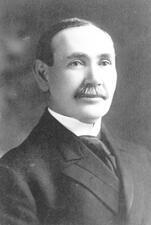
Here you will find contact information for Senator James Alexander Hemenway, including email address, phone number, and mailing address.
| Name | James Alexander Hemenway |
| Position | Senator |
| State | Indiana |
| Party | Republican |
| Status | Former Representative |
| Term Start | December 2, 1895 |
| Term End | March 3, 1909 |
| Terms Served | 6 |
| Born | March 8, 1860 |
| Gender | Male |
| Bioguide ID | H000467 |
About Senator James Alexander Hemenway
James Alexander Hemenway (March 8, 1860 – February 10, 1923) was an American lawyer and Republican politician who served as a United States Representative from Indiana from 1895 to 1905 and as a United States Senator from Indiana from 1905 to 1909. Over the course of six consecutive terms in Congress, he contributed to the legislative process during a significant period in American history, representing the interests of his constituents and participating actively in the democratic process.
Hemenway was born in Boonville, Warrick County, Indiana, on March 8, 1860. He attended the common schools of his hometown, receiving a basic formal education typical of the era. After completing his early schooling, he pursued the study of law, preparing for a professional career in the legal field. He was admitted to the bar in 1885 and commenced the practice of law in Boonville that same year, establishing himself as a local attorney.
Hemenway quickly entered public service through the legal system. From 1886 to 1890 he served as prosecuting attorney for the second judicial circuit of Indiana. In this role he gained experience in public law, courtroom practice, and the administration of justice, building a reputation that would support his later transition into national politics. His work as a prosecutor helped position him as a prominent Republican figure in his region.
In 1894 Hemenway was elected as a Republican to the Fifty-fourth Congress and subsequently reelected to the five succeeding Congresses. He served in the United States House of Representatives from March 4, 1895, until his resignation effective March 3, 1905, at the close of the Fifty-eighth Congress, having been elected to the Senate. During his decade in the House, a time marked by rapid industrial growth and significant national policy debates, he played an important role in fiscal and appropriations matters. In the Fifty-eighth Congress he served as chairman of the powerful Committee on Appropriations, overseeing legislation related to federal spending and budgetary priorities.
Hemenway’s service in Congress occurred during a transformative era in American history, encompassing the aftermath of the Gilded Age, the Spanish–American War, and the early stirrings of the Progressive Era. As a member of the national legislature, he participated in the formulation of federal policy and represented Indiana’s interests in matters of commerce, infrastructure, and governance. His tenure reflected the Republican Party’s dominance in national politics at the turn of the twentieth century and its emphasis on economic development and strong national institutions.
In 1905 Hemenway advanced to the upper chamber of Congress. He was elected to the United States Senate to fill the vacancy caused by the resignation of Charles W. Fairbanks, who had become Vice President of the United States. Hemenway served as Senator from Indiana from March 4, 1905, to March 3, 1909. While in the Senate, he chaired the Committee on University of the United States during the Fifty-ninth and Sixtieth Congresses, a committee concerned with proposals to establish a national university in the federal capital. Despite his efforts, he was an unsuccessful candidate for reelection in 1908, and his senatorial service concluded at the end of his term.
After leaving the Senate, Hemenway returned to private life and resumed the practice of law in Boonville, continuing his long association with his hometown. He remained engaged in local civic and religious life, donating generously to the Old Presbyterian Church in Boonville, which his family had attended for generations. His philanthropy reflected a sustained commitment to the community in which he had been born, educated, and professionally rooted.
James Alexander Hemenway died in Miami, Florida, on February 10, 1923. His body was returned to Indiana, and he was interred in Maple Grove Cemetery in Boonville. His legacy is reflected not only in his decade of service in the House of Representatives and single term in the Senate, but also in the recognition he received beyond his home state; the community of Hemenway, Missouri, was named in his honor, commemorating his role in American public life.