Senator James Hillhouse
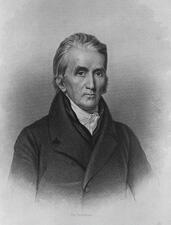
Here you will find contact information for Senator James Hillhouse, including email address, phone number, and mailing address.
| Name | James Hillhouse |
| Position | Senator |
| State | Connecticut |
| Party | Federalist |
| Status | Former Representative |
| Term Start | October 24, 1791 |
| Term End | June 10, 1810 |
| Terms Served | 7 |
| Born | October 20, 1754 |
| Gender | Male |
| Bioguide ID | H000618 |
About Senator James Hillhouse
James Hillhouse (October 20, 1754 – December 29, 1832) was an American lawyer, real estate developer, and Federalist politician from New Haven, Connecticut, who represented his state in both chambers of the United States Congress. Born in Montville, in the Colony of Connecticut, he was the son of William Hillhouse, a prominent local figure of Scotch-Irish descent. Orphaned at an early age, he was adopted by his uncle, the Reverend James Hillhouse of New Haven, and was thereafter closely associated with that city, which became the center of his professional and political life.
Hillhouse pursued a classical education and graduated from Yale College in 1773. He studied law in New Haven and was admitted to the bar, beginning a legal practice in the city. During the American Revolutionary War, he served in the militia and took part in the defense of New Haven when British forces attacked in July 1779. Alongside his legal work, he became active in land and real estate development, eventually playing a notable role in shaping the physical and civic landscape of New Haven.
Hillhouse’s political career began in the Connecticut General Assembly, where he served as a member of the state legislature. He was elected as a Federalist to the United States House of Representatives and served there from March 4, 1791, to June 10, 1796, representing Connecticut at-large in the Second through part of the Fourth Congresses. In this capacity he participated in the early legislative work of the new federal government and was identified with the Federalist program of strong national institutions and support for commercial and financial interests.
In 1796 Hillhouse was elected by the Connecticut legislature to the United States Senate to fill a vacancy, and he entered that body on June 10, 1796. He served as a Senator from Connecticut in the United States Congress from 1791 to 1810 when his continuous service in the national legislature is considered, and he remained in the Senate itself until June 10, 1810. A member of the Federalist Party, Hillhouse contributed to the legislative process during seven terms in office across both chambers. His Senate service occurred during a significant period in American history, encompassing the administrations of George Washington, John Adams, Thomas Jefferson, and the early years of James Madison. From February to March 1801, during the closing phase of the Adams administration and the contentious election of 1800, Hillhouse briefly served as President pro tempore of the United States Senate, presiding over the chamber in the absence of the vice president. As a senator, he participated in the democratic process and represented the interests of his Connecticut constituents on issues ranging from foreign policy and maritime rights to fiscal and constitutional questions.
After resigning from the Senate in 1810, Hillhouse continued to be a leading figure in Connecticut public life. He served for many years as treasurer of Yale College, overseeing aspects of the institution’s finances and contributing to its stability and growth. As a real estate developer and civic leader in New Haven, he was instrumental in the planning and improvement of the city’s streets and public spaces, including the development of the elm-lined avenues that gave New Haven its reputation as the “Elm City.” His combined roles as lawyer, developer, and public official made him a central participant in the city’s transition from a colonial town to a more modern urban center.
James Hillhouse died in New Haven, Connecticut, on December 29, 1832. He was buried in the Grove Street Cemetery in New Haven, a resting place for many of the city’s and Yale’s notable figures. His long career in law, real estate development, and Federalist politics, together with his service in both the House of Representatives and the Senate and his brief tenure as President pro tempore of the Senate, left a durable imprint on the civic and political life of Connecticut and the early United States.