Representative James Herron Hopkins
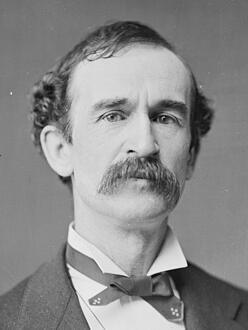
Here you will find contact information for Representative James Herron Hopkins, including email address, phone number, and mailing address.
| Name | James Herron Hopkins |
| Position | Representative |
| State | Pennsylvania |
| District | 22 |
| Party | Democratic |
| Status | Former Representative |
| Term Start | December 6, 1875 |
| Term End | March 3, 1885 |
| Terms Served | 2 |
| Born | November 3, 1832 |
| Gender | Male |
| Bioguide ID | H000775 |
About Representative James Herron Hopkins
James Herron Hopkins (November 3, 1831 – June 17, 1904) was an American lawyer, businessman, and Democratic member of the U.S. House of Representatives who represented the Pittsburgh area of Pennsylvania during the late nineteenth century. His service in Congress, which extended over parts of the decade from 1875 to 1885, took place during a significant period in American political and economic development, and he participated actively in the legislative process on behalf of his constituents.
Hopkins was born in Washington, Washington County, Pennsylvania, on November 3, 1831. He attended the common schools of the area and pursued higher education at Washington College in Washington, Pennsylvania (now Washington & Jefferson College). He was graduated from Washington College in 1850. Soon after completing his studies, he chose the law as his profession, beginning a career that would combine legal practice with substantial involvement in business and public affairs.
After college, Hopkins studied law and was admitted to the bar in 1852. He established his practice in Pittsburgh, Pennsylvania, where he worked as an attorney for approximately twenty years. In addition to his legal work, he became engaged in banking, manufacturing, and mining, reflecting the rapid industrial growth of western Pennsylvania in the mid-nineteenth century. His prominence in the city’s commercial life was further underscored by his service for several years as vice president of the Pittsburgh Chamber of Commerce, a position that placed him at the center of regional economic and civic activity.
Hopkins’s political career developed out of this legal and business background. A member of the Democratic Party, he first sought national office as a candidate for the U.S. House of Representatives in 1872 but was unsuccessful in that attempt. He nevertheless remained active in politics and public affairs, and his early legislative interests included federal regulation of interstate commerce. In 1872 he introduced what has been described as the first successful bill implementing federal regulations on interstate commerce. Originally a supporter of such centralized power, he encountered opposition from the oil lobby led by Standard Oil, which unsuccessfully fought the measure. His role in these early regulatory efforts was later noted by muckraking journalist Ida Tarbell, who cited Hopkins in many of her works and speeches on the oil industry and corporate power.
Hopkins was elected as a Democrat to the Forty-fourth Congress, beginning his first term in the U.S. House of Representatives in 1875 and serving until 1877. During this period he represented the Pittsburgh area and contributed to the legislative process during a time of post–Civil War reconstruction and industrial expansion. He was an unsuccessful candidate for reelection in 1876, temporarily interrupting his congressional service. He returned to private pursuits but remained an influential figure in Democratic politics in Pennsylvania.
He was again elected to Congress as a Democrat to the Forty-eighth Congress, serving from 1883 to 1885. Over the course of these nonconsecutive terms, Hopkins’s service in Congress thus extended across much of the decade from 1875 to 1885. During the Forty-eighth Congress he held a significant leadership role as chairman of the United States House Committee on Labor, at a time when labor issues, industrial relations, and the conditions of working men and women were becoming central questions in national politics. He was an unsuccessful candidate for reelection in 1884, which brought his congressional career to a close.
After his final term in Congress, Hopkins resumed the practice of law, this time in Washington, D.C. From the nation’s capital he continued his professional work, drawing on his long experience in law, business, and public service. He maintained this practice until the final years of his life. Hopkins died on June 17, 1904, at his summer home at North Hatley, Quebec, Canada. He was interred at Oak Hill Cemetery in Washington, D.C., closing a career that had spanned local commerce, national politics, and early federal efforts to regulate interstate commerce in the United States.