Representative James J. Howard
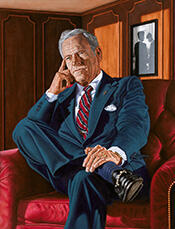
Here you will find contact information for Representative James J. Howard, including email address, phone number, and mailing address.
| Name | James J. Howard |
| Position | Representative |
| State | New Jersey |
| District | 3 |
| Party | Democratic |
| Status | Former Representative |
| Term Start | January 4, 1965 |
| Term End | January 3, 1989 |
| Terms Served | 12 |
| Born | July 24, 1927 |
| Gender | Male |
| Bioguide ID | H000840 |
About Representative James J. Howard
James John Howard (July 24, 1927 – March 25, 1988) was an American educator and Democratic Party politician who represented New Jersey’s 3rd congressional district in the United States House of Representatives from January 3, 1965, until his death in office in 1988. Over twelve consecutive terms in Congress, he became a leading national figure in transportation and highway safety policy, while also maintaining close ties to his coastal New Jersey constituency.
Howard was born on July 24, 1927, in Irvington, New Jersey. He grew up in Monmouth County and was educated in Catholic and public schools along the Jersey Shore. He graduated from St. Rose School in Belmar in 1941 and from Asbury Park High School in 1947. Pursuing higher education after military service, he attended St. Bonaventure University in New York, where he received his degree in 1952. He later earned a Master of Education degree from Rutgers University–New Brunswick in 1958, reflecting a sustained commitment to education that would shape his early professional life.
During World War II, Howard served in the United States Navy in the South Pacific from December 30, 1944, to July 19, 1946. His wartime service, begun while he was still a teenager, exposed him to the demands placed on young Americans in global conflict and informed his later interest in veterans’ affairs and national defense. After returning home, he completed his education and entered the teaching profession, bringing his experience and discipline from the Navy into the classroom.
From 1952 to 1964, Howard worked as a teacher and acting principal in the Wall Township Public Schools in New Jersey. In this role he was directly involved in local education administration and community life, gaining firsthand experience with the needs of families and young people in a rapidly developing region of the state. His work as an educator, combined with his military background, helped establish his reputation as a civic-minded leader and provided a foundation for his entry into electoral politics.
Howard was elected as a Democrat to the Eighty-ninth Congress and to the eleven succeeding Congresses, serving from January 3, 1965, until his death on March 25, 1988. Representing New Jersey’s 3rd congressional district, he participated in the legislative process during a significant period in American history that encompassed the Vietnam War, the civil rights era, the energy crises of the 1970s, and the restructuring of federal regulatory policy in the 1980s. As a member of the House of Representatives, he consistently represented the interests of his constituents along the central New Jersey coast, including issues related to transportation, defense installations such as Fort Monmouth, and marine and coastal resources.
Howard became particularly prominent in matters of transportation, infrastructure, and highway safety. He served as chairman of the House Committee on Public Works and Transportation during the Ninety-seventh through One Hundredth Congresses, a position that gave him substantial influence over national policy on highways, mass transit, aviation, and water resources. In 1974, amid concerns over fuel consumption during the energy crisis, he introduced the idea of a 55-mile-per-hour national speed limit. Congress soon imposed the nationwide 55 mph (90 km/h) limit by threatening to withhold federal highway funds from states that did not adopt it. It was estimated that driving at 55 mph (89 km/h) used approximately 17 percent less fuel per mile than driving at 75 mph (120 km/h). The new limit was also associated with a noticeable drop in highway deaths in its first year, although later studies produced more mixed conclusions about its long-term safety impact. In addition to the speed limit initiative, Howard authored an innovative, coordinated surface transportation policy and program that sought to integrate various modes of transportation and improve safety and efficiency across the national network.
Howard’s legislative record included a wide array of measures aimed at improving highway and transportation safety. He sponsored the Howard-Barnes anti-drunk driving legislation in 1982 and played a central role in the passage of the Child Restraint Law in 1984, which increased federal funding for state child passenger safety programs. He was instrumental in legislation establishing a uniform minimum drinking age of 21 in 1984, a major national policy shift intended to reduce alcohol-related traffic fatalities. He also sponsored the creation of the National Driver’s Register in 1982, which helped states identify problem drivers, and the National Infrastructure Act of 1983, which addressed broader infrastructure needs. His work on the Motor Carrier Act of 1980 marked the first major regulatory reform of the trucking industry in half a century and, among other provisions, increased federal aid for truck safety programs. At the time of his death, he was actively opposing efforts by transportation-related businesses to “complete” truck deregulation, a move proponents argued would save billions in distribution costs but which Howard viewed with concern for its potential safety and regulatory implications.
Howard also engaged in oversight of military procurement and equipment during the Vietnam War. On May 23, 1967, he created a public controversy over the M16 rifle, the basic combat weapon used by American forces in Vietnam, when he read a letter on the House floor from a Marine in Vietnam who claimed that almost all Americans killed in the Battle of Hill 881 had died as a result of their new M16 rifles jamming. The disclosure contributed to intense scrutiny of the weapon’s reliability and the Army’s procurement and maintenance practices. By the end of 1967, the technical and logistical problems associated with the M16 had been largely resolved, but Howard’s intervention underscored his willingness to challenge defense practices in the interest of servicemembers’ safety.
A resident of Spring Lake Heights, New Jersey, Howard remained closely identified with his home region throughout his career. He supported marine and coastal research, and his advocacy was recognized after his death through the naming of the James J. Howard Marine Sciences Laboratory at Sandy Hook, New Jersey. Following the destruction by fire of the Northeast Fisheries Science Center on September 21, 1985, a new 36,000-square-foot (3,300 m²) marine research facility was planned. Ground was broken on October 11, 1989, and the laboratory, completed in the early 1990s, was named in his honor to recognize his strong support for marine research. Operated by the National Oceanic and Atmospheric Administration’s National Marine Fisheries Service in cooperation with state agencies and New Jersey academic institutions through the New Jersey Marine Sciences Consortium, the laboratory’s primary mission is to conduct ecological research on coastal and estuarine organisms and to study the effects of human activities on nearshore marine populations.
Howard’s legacy in transportation and veterans’ services is reflected in numerous facilities and honors bearing his name. The Asbury Park main train station and bus terminal were torn down and rebuilt as the James J. Howard Transportation Center, underscoring his role in improving regional transit. On April 6, 1988, President Ronald Reagan signed H.R. 4263 naming Interstate 195 in New Jersey the James J. Howard Interstate Highway, an east–west freeway linking Trenton to the Jersey Shore and running through the region he represented. The Department of Veterans Affairs’ Veterans Health Administration established the James J. Howard Veterans Outpatient Clinic in Brick Township, New Jersey, to provide primary care and specialty services to local veterans, reflecting his long-standing concern for those who served in the armed forces. At Fort Monmouth, Eatontown Gardens—600 family housing units in fifty-two buildings constructed between 1953 and 1954—was renamed in his honor in recognition of his sustained support for the installation and his contributions in Congress to the welfare of soldiers and the Army.
National organizations have also commemorated Howard’s contributions, particularly in highway safety. The Governors Highway Safety Association named its highest honor the James J. Howard Highway Safety Trailblazer Award. This award recognizes individuals for sustained, outstanding leadership in efforts that significantly improve highway safety. Recipients must have undertaken a concerted, long-term effort to make the nation’s highways safer and must have established and implemented programs, or been responsible for notable advancements in technology or research, that have produced a demonstrable safety impact. The award reflects Howard’s enduring influence on the field of traffic safety and his reputation as a pioneer in this area of public policy.
James John Howard died of a heart attack in Washington, D.C., on March 25, 1988, while still serving in the House of Representatives. His death placed him among the members of the United States Congress who died in office between 1950 and 1999. He was interred in St. Catharine’s Cemetery in Sea Girt, New Jersey. Following his death, his chairmanship of the Committee on Public Works and Transportation passed to Representative Glenn M. Anderson of California, and his seat in New Jersey’s 3rd congressional district was filled by Democrat Frank Pallone, who won the special election later in 1988. Howard’s long tenure in Congress, his leadership in transportation and safety policy, and the numerous institutions that bear his name attest to his lasting impact on both his district and national public policy.