Senator James Bruen Howell
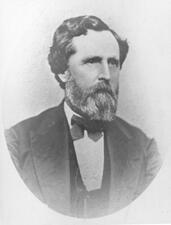
Here you will find contact information for Senator James Bruen Howell, including email address, phone number, and mailing address.
| Name | James Bruen Howell |
| Position | Senator |
| State | Iowa |
| Party | Republican |
| Status | Former Representative |
| Term Start | January 1, 1870 |
| Term End | March 3, 1871 |
| Terms Served | 1 |
| Born | July 4, 1816 |
| Gender | Male |
| Bioguide ID | H000864 |
About Senator James Bruen Howell
James Bruen Howell (July 4, 1816 – June 17, 1880) was an American lawyer, newspaper editor, and politician who served as a United States senator from Iowa from 1869 to 1871. A member of the Republican Party, he was appointed to fill a vacancy and served slightly over one year in the Senate, contributing to the legislative process during a significant period in American history and representing the interests of his Iowa constituents.
Howell was born on July 4, 1816, near Morristown, New Jersey, the son of Elias and Eliza Howell. In 1819 his family moved west to Newark, Ohio, where he attended the public schools and graduated from high school. His father, Elias Howell, was prominent in Ohio politics, serving in the Ohio State Senate beginning in 1830 and later being elected to the U.S. House of Representatives in 1836 as a member of the anti-Jacksonian National Republican Party. Growing up in this politically active household exposed James Howell early to public affairs and national political debates.
For his higher education, Howell attended Miami University in Oxford, Ohio, from which he graduated in 1837. After college he read law for two years under Judge Hoeking H. Hunter in Lancaster, Ohio, and was admitted to the Ohio bar in 1839. He then returned to his hometown of Newark to open a law practice. Troubled by ill health, however, he sought a change of climate and opportunity, and in 1841 he moved to the Iowa Territory, settling in the small town of Keosauqua in Van Buren County, where he opened a new legal office and began rebuilding his practice.
Soon after his arrival in Iowa, Howell became active in the Whig Party, one of the two major political parties of the era. His political engagement led him into journalism when he purchased a struggling newspaper, the Des Moines Valley Whig. The demands and possibilities of the press quickly absorbed his energies, and he eventually abandoned the practice of law to devote himself full time to editing and publishing this partisan paper. When Iowa was admitted to the Union at the end of 1846 and the state entered a period of rapid growth, Howell followed the shifting centers of population and commerce. In 1849 he moved his newspaper to the expanding river town of Keokuk, at the southeastern tip of the state, and renamed it the Gate City Daily. As editor, he was a consistent and outspoken opponent of slavery and of the nativist Know-Nothing movement, using his paper to advocate antislavery and anti–Know-Nothing positions at a time of intense national division.
Like many former Whigs, Howell aligned himself with the emerging Republican Party in the 1850s. He was a signer of the convention call to establish the Republican Party in Iowa and served as a delegate from Iowa to the 1856 Republican National Convention in Philadelphia. Over the ensuing years he was a frequent, though unsuccessful, Republican candidate for state and national office, reflecting both his prominence within the party and his ambition for public service. Following the Republican victory in the presidential election of 1860, Howell was appointed postmaster of Keokuk, a position then closely tied to party patronage. He served as Keokuk’s postmaster from 1861 to 1866. An accident that left him crippled for life rendered him unfit for military service during the American Civil War, but he remained a staunch supporter of the Union and a bitter opponent of the Southern rebellion, continuing to influence public opinion through his editorial work and political activities.
Howell’s long involvement in Republican politics culminated in his selection for national office. In 1870, the Iowa General Assembly elected him to the United States Senate to fill the vacancy created by the resignation of Senator James W. Grimes. He entered the Senate on January 18, 1870, and served until March 4, 1871, completing the remainder of Grimes’s term. During this single term in office, he served as a Republican senator from Iowa in the closing years of Reconstruction, participating in the legislative and deliberative work of the Senate at a time when the nation was grappling with the aftermath of the Civil War and the integration of formerly enslaved people into American civic life. He did not stand as a candidate for reelection at the end of the term.
After leaving the Senate, Howell continued in federal service. In 1871 President Ulysses S. Grant appointed him one of three commissioners of the Court of Southern Claims, a body established to adjust claims for stores and supplies taken by or furnished to Union forces in the former Confederate states. In this capacity he helped adjudicate complex financial claims arising from the war, serving on the commission from 1871 until 1880. His work on the Court of Southern Claims extended his public career beyond elective office and kept him engaged with the legal and political consequences of the Civil War until the end of his life.
James Bruen Howell died in Keokuk, Iowa, on June 17, 1880, at the age of 63. He was buried in Oakland Cemetery, leaving a record as an influential Iowa editor, an early Republican leader, and a United States senator who served his state and party during a pivotal era in American history.