Representative Jim Jontz
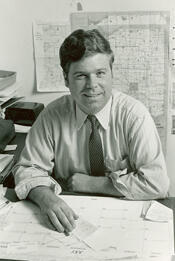
Here you will find contact information for Representative Jim Jontz, including email address, phone number, and mailing address.
| Name | Jim Jontz |
| Position | Representative |
| State | Indiana |
| District | 5 |
| Party | Democratic |
| Status | Former Representative |
| Term Start | January 6, 1987 |
| Term End | January 3, 1993 |
| Terms Served | 3 |
| Born | December 18, 1951 |
| Gender | Male |
| Bioguide ID | J000265 |
About Representative Jim Jontz
James Prather Jontz (December 18, 1951 – April 14, 2007) was an American politician and environmental advocate who represented Indiana’s 5th congressional district in the United States House of Representatives from 1987 to 1993. A member of the Democratic Party, he served three terms in Congress during a significant period in American history, representing a largely rural north central Indiana district centered on Kokomo and Logansport. To date, he was the last Democrat to represent that district in Congress, and he contributed actively to the legislative process and the interests of his constituents throughout his tenure.
Jontz was born in Indianapolis, Indiana, on December 18, 1951. He graduated at the age of 17 from North Central High School in Washington Township in Indianapolis. He began his collegiate studies at Williams College before transferring to Indiana University Bloomington, where he graduated with honors in less than three years with a degree in geology and was elected to Phi Beta Kappa. As a student at Indiana University, he was active in environmental and public-interest causes, including work in crisis biology and lobbying on behalf of a variety of environmental issues. Despite a heavy academic load and involvement in student government and extracurricular activities, he co‑founded the Indiana Public Interest Research Group as a senior working project. Jontz went on to obtain a master’s degree in history from Butler University and later graduated from Valparaiso University School of Law during his third term as a state representative. He also undertook graduate coursework at Purdue University in West Lafayette, Indiana.
Jontz’s political career began in 1974 and was sparked by his opposition to a dam-building project in central Indiana. Motivated by environmental concerns, he ran for a seat in the Indiana House of Representatives against the project’s sponsor, House Majority Leader John Guy. At age 22 he was elected by a margin of only two votes, becoming at that time the second youngest person ever to serve in the Indiana House of Representatives. He was reelected five more times from what was considered a heavily Republican district, retaining his seat even after the Republican-controlled legislature redrew the district following the 1980 census to make it more strongly Republican on paper. In 1984 he was elected to the Indiana Senate, where he served for two years before seeking federal office.
Jontz’s campaigns for Congress drew national attention and were notable for their grassroots character and the breadth of their support. He was elected to the U.S. House of Representatives in 1986 following the retirement of 16‑year incumbent Republican Representative Bud Hillis. In that race, the Republican nominee, State Senator James Butcher, emerged weakened from a fractious primary, enabling Jontz to win narrowly in a district that was not naturally favorable to a progressive Democrat. He was handily reelected in 1988 but faced much stiffer competition in 1990. His congressional campaigns attracted celebrity supporters, including singers Carole King, Bob Weir, and Don Henley, designer Liz Claiborne, and actors Bonnie Franklin and Woody Harrelson, much of this support stemming from his work on environmental issues. In 1990 he appeared in the press room at Farm Aid IV, where he informally served as a straight man while Arlo Guthrie entertained the press with jokes.
During his six-year tenure in the House of Representatives, from January 3, 1987, to January 3, 1993, Jontz served on the House Agriculture Committee, the Education and Labor Committee, the Veterans’ Affairs Committee, and the Select Committee on Aging. A progressive Democrat representing a mostly rural district, he relied on a highly personal, populist style of politics, making frequent appearances in communities throughout his district and maintaining close contact with constituents. He also assembled a talented and dedicated staff, several of whom—among them Tom Sugar, Mike Busch, and Kathy Altman—later went on to hold prominent positions in government. In Congress, he championed environmental protection, including the preservation of ancient forests in the Pacific Northwest, and worked to foster collaboration between organized labor and environmentalists. In 1992 he was narrowly defeated for reelection by Republican Steve Buyer, a young Army officer, Persian Gulf War veteran, and lawyer making his first bid for public office.
After leaving the House, Jontz attempted to return to Washington by challenging three-term Republican Senator Richard G. Lugar in the 1994 United States Senate election in Indiana. Running as a Democrat in a strongly Republican year, he lost to Lugar by more than 600,000 votes and did not carry his former congressional district. Following this defeat, he shifted his focus to national environmental advocacy and progressive organizing. He became executive director of the Western Ancient Forest Campaign (WAFC), where he worked against the Timber Salvage Rider and led a nationwide grassroots effort to protect forests, remove federal subsidies that supported clearcutting, and preserve millions of acres of previously unprotected roadless areas in the National Forest System. He traveled extensively, building relationships with state and local forest protection groups and earning a reputation among forest activists throughout North America as a leading figure in the modern environmental movement.
In 1998 Jontz helped organize the Alliance for Sustainable Jobs and the Environment, an effort to bridge the interests of labor and environmental groups, and that same year he was elected president of Americans for Democratic Action (ADA), a prominent liberal advocacy organization. He later served as ADA president emeritus and worked as a project coordinator for ADA’s Working Families Win project, which focused on economic justice and public policy issues affecting working families. In the spirit of Martin Luther King Jr., he occasionally engaged in civil disobedience to draw attention to environmental causes, including participating in a blockade of a logging road in the Siskiyou National Forest in Oregon to highlight the plight of ancient forests. These actions were hailed by forest advocates as further evidence of his commitment to environmental protection and social justice.
James Prather Jontz died on April 14, 2007, in Portland, Oregon, following a lengthy battle with colon cancer. His life and career, including his service in the Indiana General Assembly and the U.S. House of Representatives, as well as his later leadership in environmental and progressive organizations, have been chronicled in works such as Ray E. Boomhower’s biography, “The People’s Choice: Congressman Jim Jontz of Indiana,” and in tributes from colleagues, activists, and constituents who remembered his dedication to public service and grassroots democracy.