Representative James Kerr
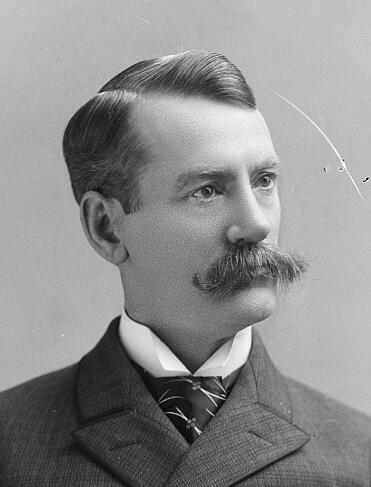
Here you will find contact information for Representative James Kerr, including email address, phone number, and mailing address.
| Name | James Kerr |
| Position | Representative |
| State | Pennsylvania |
| District | 28 |
| Party | Democratic |
| Status | Former Representative |
| Term Start | December 2, 1889 |
| Term End | March 3, 1891 |
| Terms Served | 1 |
| Born | October 2, 1851 |
| Gender | Male |
| Bioguide ID | K000135 |
About Representative James Kerr
James Kerr Proudfit (July 24, 1831 – May 30, 1917) was an American military officer, politician, and pioneer associated with Wisconsin, New Mexico, and Kansas. Over the course of his public life he served in the Union Army throughout the American Civil War, rising to the rank of colonel and receiving an honorary brevet to brigadier general after the war. He later became a member of the Wisconsin Senate, adjutant general of Wisconsin, and surveyor general of the New Mexico Territory. A founder of the Grand Army of the Republic in Wisconsin, he served as the organization’s first department commander in that state. Through family connections, he was also linked to national politics: his daughter Isabelle married Orrin L. Miller, who went on to become a U.S. Representative and judge in Kansas. Separately, a contemporary namesake, James Kerr, served as a Democratic Representative from Pennsylvania in the United States Congress from 1889 to 1891, completing one term in the House of Representatives during a significant period in American political history.
Proudfit was born on July 24, 1831, in Argyle, Washington County, New York, the youngest of four children of James Proudfit and Maria (née Kerr). The Proudfit family were descendants of Andrew Proudfit (or Proudfoot), who emigrated from Scotland to the Province of Pennsylvania around 1750. Proudfit received his early education in the Argyle area. His father died in 1839, and his elder brother, Andrew Proudfit, assumed responsibility for the family. In 1842 Andrew moved the family west to the Wisconsin Territory, settling on a small farm in the town of Brookfield. Four years later, in 1846, the family relocated to Delafield, Wisconsin, where Andrew built and operated a flour mill. These early years on the frontier helped shape James Kerr Proudfit’s experience as a pioneer in the developing Upper Midwest.
As a young man, Proudfit entered commercial pursuits. In 1850 he began work as a store clerk in Milwaukee, Wisconsin, and over the next several years he held similar positions in Manitowoc, Appleton, and Waupun before returning to Delafield. On September 20, 1855, he married Emelie Teresa Kreuz, a Bohemian immigrant, in Delafield. The couple had ten children, although four died in infancy, including triplets born on March 1, 1866, and another daughter, Julia, died of influenza at age twenty-one. In the spring of 1855 Proudfit moved to Madison, Wisconsin, following his brother Andrew, who had settled there the previous year. In Madison he entered the newspaper business, partnering with Elias A. Calkins to purchase the Argus and Democrat from Beriah Brown. Proudfit remained with the paper for about two years, selling his interest to George Webb in May 1857. That same year his brother Andrew was elected to the Wisconsin Senate, and in the spring of 1858 James Kerr Proudfit won his first public office as city treasurer of Madison.
In the years immediately preceding the Civil War, Proudfit became active in the local militia. He joined the “Governor’s Guard,” a Madison-based militia company composed of prominent local citizens, including Lucius and Cassius Fairchild. When the Civil War began in 1861, the Governor’s Guard volunteered for federal service and was enrolled as Company K of the 1st Wisconsin Infantry Regiment. Proudfit was mustered as the company’s third-ranking officer, then referred to as an “ensign” and later as a second lieutenant. The regiment was sent east to Pennsylvania and then deployed near Hagerstown, Maryland, where it engaged Confederate forces under Stonewall Jackson at the Battle of Hoke’s Run, an early and largely indecisive skirmish with light casualties. Because the 1st Wisconsin had been mustered for only three months’ service, it returned to Wisconsin and was mustered out on August 22, 1861.
Soon after, Proudfit re-enlisted for a three-year term and was commissioned adjutant of the 12th Wisconsin Infantry Regiment, which entered federal service in October 1861. The regiment was sent to Kansas, where it performed guard duty at various points throughout 1862. From February to June 1863, the regiment’s commander, Colonel George E. Bryant, served as acting brigade commander and appointed Proudfit acting assistant adjutant general. During this period the brigade was ordered south to participate in the Siege of Vicksburg. Shortly after the fall of Vicksburg, the regiment’s lieutenant colonel retired, and Proudfit was promoted to that rank, an unusually rapid advancement that saw him elevated over the regiment’s major and all of its company captains. In early 1864 the 12th Wisconsin took part in General William T. Sherman’s Meridian campaign. After that expedition, Proudfit was among the veterans sent home to Wisconsin on furlough. At the end of the furlough, Sherman ordered the returning veterans to Tennessee, where they joined his Atlanta campaign. The 12th Wisconsin fought at Kennesaw Mountain and in subsequent actions along the Chattahoochee River, engaging in trench warfare on the approaches to Atlanta. During periods when Colonel Bryant again assumed brigade command, Proudfit led the regiment and received praise for his decisive leadership. Following the fall of Atlanta, the brigade was immediately committed to further combat at the Battle of Jonesborough.
After Jonesborough, the regiment encamped at Little River, Alabama. When Colonel Bryant’s three-year enlistment expired, he resigned, and Proudfit assumed command of the regiment. He was formally promoted to colonel on November 21, 1864. The 12th Wisconsin took part in Sherman’s March to the Sea, which began on November 15, 1864, serving in the right wing of the advancing army. After reaching Savannah, the regiment turned north through the Carolinas, participating in the capture of several major cities as the war drew to a close. The 12th Wisconsin later took part in the Grand Review of the Armies in Washington, D.C., and was mustered out of service on July 20, 1865. In recognition of his meritorious service, Proudfit received an honorary brevet promotion to brigadier general, retroactive to March 13, 1865.
Almost immediately upon his return to Wisconsin, Governor Lucius Fairchild appointed Proudfit assistant adjutant general of the state. In the fall of 1865 he was nominated by the National Union Party as its candidate for the Wisconsin Senate from the 26th Senate district, which then encompassed Madison and the western half of Dane County. In a notable contest against his own brother Andrew, Proudfit won the election and served in the 1866 and 1867 legislative sessions. While in the Senate, he was also appointed adjutant general of Wisconsin by Governor Fairchild. During this period he played a leading role in veterans’ affairs, helping to organize the Grand Army of the Republic and becoming the first department commander for Wisconsin. He declined to seek re-election in 1867 and resigned as adjutant general in the summer of 1868. In the following years he entered the insurance business with the Madison Mutual Insurance Company, maintaining his prominence in state civic and business life.
Proudfit returned to federal service in 1872 when President Ulysses S. Grant appointed him surveyor general of the New Mexico Territory. In that capacity he oversaw federal land surveys during a period of expanding settlement and development in the Southwest. He served four years in the post before retiring from that office and moving to Kansas City, Kansas. There he established his permanent residence and remained active in community and veterans’ circles. His family life, however, was marked by personal tragedy. There was apparent family history of mental illness; his wife Emelie left their home late at night on April 28, 1884, and was never seen again, leading to speculation that she had taken her own life. Their eldest son, James D. Proudfit, later died by suicide at age thirty-five. Another daughter, Isabelle (“Belle”), married Orrin L. Miller in Kansas City in 1883; Miller subsequently served one term in the U.S. House of Representatives from Kansas and later became a judge in Wyandotte County, Kansas.
In his later years, Proudfit lived with family members in Kansas City. He remained a respected figure among Civil War veterans and former colleagues from his years in Wisconsin politics and territorial administration. James Kerr Proudfit died on May 30, 1917, at the home of his son Herbert in Kansas City, Kansas. His life spanned the era from the antebellum frontier through the Civil War and Reconstruction to the early twentieth century, and his career reflected service at the local, state, territorial, and national levels.