Representative Jim Kolbe
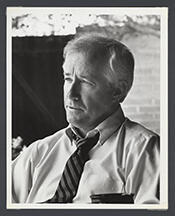
Here you will find contact information for Representative Jim Kolbe, including email address, phone number, and mailing address.
| Name | Jim Kolbe |
| Position | Representative |
| State | Arizona |
| District | 8 |
| Party | Republican |
| Status | Former Representative |
| Term Start | January 3, 1985 |
| Term End | January 3, 2007 |
| Terms Served | 11 |
| Born | June 28, 1942 |
| Gender | Male |
| Bioguide ID | K000306 |
About Representative Jim Kolbe
James Thomas Kolbe (June 28, 1942 – December 3, 2022) was an American politician who served as a Republican member of the United States House of Representatives from Arizona from 1985 to 2007. He was born in Evanston, Illinois, and raised in the Chicago area before his family relocated to Arizona. Kolbe became an Eagle Scout in his youth and later received an appointment to the United States Naval Academy at Annapolis, Maryland. He entered the Naval Academy in 1961 and studied there for three years before leaving in 1964 after acknowledging that he was gay, at a time when homosexuals were barred from military service. He subsequently completed his undergraduate education at Northwestern University, earning a bachelor’s degree in political science in 1965.
After college, Kolbe served in the United States Navy during the Vietnam War. He was commissioned as a Navy officer and served from 1965 to 1969, including a tour of duty in Vietnam. Following his military service, he pursued graduate studies at Stanford University, where he received a Master of Business Administration degree in 1970. Kolbe then settled in Arizona, working in both the private and public sectors. He served as a special assistant to Arizona Governor Jack Williams and later worked in real estate and business consulting. His early involvement in Arizona politics included service in the Arizona State Senate, where he represented a Tucson-area district from 1977 to 1982, building a reputation as a fiscally conservative, pro-business Republican.
Kolbe was first elected to the United States House of Representatives in 1984 and took office on January 3, 1985. A member of the Republican Party throughout his congressional tenure, he represented Arizona’s 5th congressional district from 1985 to 2003 and, following redistricting, Arizona’s 8th congressional district from 2003 to 2007. He served 11 consecutive terms in Congress, participating actively in the legislative process during a period of significant political and economic change in the United States. Known as a moderate, pro–abortion rights Republican, Kolbe focused much of his work on trade, budgetary issues, and immigration. He served on the House Appropriations Committee, where he chaired the Subcommittee on Treasury, Postal Service and General Government and later the Subcommittee on Foreign Operations, Export Financing, and Related Programs, giving him substantial influence over foreign aid and international economic policy.
In 1996, Kolbe publicly came out as gay after it became known that he had voted in support of the Defense of Marriage Act. His decision to acknowledge his sexual orientation while remaining in office drew national attention, particularly within the Republican Party. He subsequently won re-election, making him the second openly gay Republican ever elected to Congress. Throughout the remainder of his congressional career, he continued to identify as a moderate Republican, maintaining his support for abortion rights and free trade while often emphasizing pragmatic, market-oriented solutions to policy challenges. His tenure coincided with major debates over federal spending, trade liberalization, and immigration reform, and he was regarded as an advocate for expanded trade agreements and closer economic integration in the Western Hemisphere.
Kolbe’s congressional service also intersected with controversies related to the House page program. In 2000, when he learned of then-Representative Mark Foley’s “Internet communications with teenagers” who were subordinate to Foley in the page program, Kolbe reported the matter to the office that oversaw the program and believed it had been appropriately handled. The issue resurfaced publicly on September 29, 2006, when it was revealed that Foley had sent sexually explicit and solicitous e-mails and instant messages to young adult male pages. Republican leaders initially claimed they had only recently become aware of Foley’s actions, despite Kolbe’s earlier report. In October 2006, federal prosecutors in Arizona opened a preliminary investigation into a July 1996 camping trip to the Grand Canyon that Kolbe had taken with two teenage former congressional pages, National Park Service officials, staff members, and his sister, following allegations that he had acted “inappropriately.” Accounts from those on the trip varied, and on June 5, 2007, the Department of Justice announced that investigators had completed their work and saw no reason to pursue the matter further, effectively absolving Kolbe of wrongdoing. In January 2007, the Federal Election Commission ruled that Kolbe could use campaign funds to cover legal expenses associated with the Foley-related inquiries, a precedent later cited by former Senator Larry Craig in a 2012 dispute with the FEC over his own use of campaign funds for legal defense.
Kolbe chose not to seek re-election in 2006 and left Congress at the conclusion of his term on January 3, 2007. After leaving elected office, he remained active in public policy and international affairs. He became a senior transatlantic fellow at the German Marshall Fund and a consultant with Kissinger McLarty Associates, focusing on trade, foreign aid, and migration—issues that had been central to his work in Congress. During the fall semesters from 2007 to 2009, he taught a course on trade and globalization at the University of Arizona James E. Rogers College of Law in Tucson. He served on the board of directors of the International Republican Institute and was a member of the Inter-American Dialogue, a Washington, D.C.–based think tank devoted to Western Hemisphere affairs. He also served on the Board of Advisors for International Relief and Development Inc., was a co-chairman of the Dollar Coin Alliance, and sat on the board of directors of the Committee for a Responsible Federal Budget.
In September 2010, President Barack Obama appointed Kolbe to the Advisory Committee for Trade Policy and Negotiations, reflecting his longstanding expertise in trade policy and his willingness to work across party lines. He continued to engage in political debates in Arizona and nationally. During the 2010 election cycle, he broke with many in his party by endorsing Democrat Andrei Cherny for Arizona state treasurer. In subsequent years, Kolbe increasingly distanced himself from the Republican Party’s direction. In 2018, after the election and presidency of Donald Trump, he left the Republican Party and became an independent. In 2020, he joined more than 130 former Republican national security officials in signing a public statement declaring that President Trump was unfit to serve another term and asserting that it was in the nation’s best interest for Democrat Joe Biden to be elected president. Kolbe endorsed Biden in the 2020 presidential election and stated that he would vote for him.
In his later years, Kolbe continued to contribute to policy discussions and private-sector initiatives. He served on the Executive Advisory Board of TuSimple, an autonomous trucking company, and joined nine other former members of Congress in 2021 to co-author an opinion editorial advocating reforms to strengthen the functioning of Congress. He also remained associated with organizations concerned with fiscal responsibility, democratic governance, and international engagement. James Thomas Kolbe died on December 3, 2022, in Tucson, Arizona, closing a public life that spanned military service, state and national elective office, and continued engagement in national and international policy debates.