Senator James Henderson Kyle
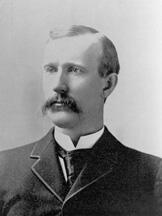
Here you will find contact information for Senator James Henderson Kyle, including email address, phone number, and mailing address.
| Name | James Henderson Kyle |
| Position | Senator |
| State | South Dakota |
| Party | Republican |
| Status | Former Representative |
| Term Start | December 7, 1891 |
| Term End | July 1, 1901 |
| Terms Served | 2 |
| Born | February 24, 1854 |
| Gender | Male |
| Bioguide ID | K000353 |
About Senator James Henderson Kyle
James Henderson Kyle (February 24, 1854 – July 1, 1901) was an American politician who represented South Dakota in the United States Senate from 1891 until his death in 1901. One of the most successful members of the Populist Party, and later a member of the Republican Party, he served two terms in the Senate during a significant period in American history, participating actively in the legislative process and representing the interests of his constituents. The town of Kyle, South Dakota, was named in his honor.
Kyle was born on his family’s farm in Cedarville, Greene County, Ohio. He was the son of Capt. Thomas Beveridge Kyle and Margaret Jane Henderson Kyle and grew up in a large family with at least five siblings. His great-grandparents were Scottish and Irish immigrants, and this heritage formed part of the rural, Protestant milieu in which he was raised. In 1865, when he was about eleven years old, he moved with his family to Urbana, Illinois, where he continued his upbringing and early education.
As a young man, Kyle had difficulty settling on a career, but he pursued substantial education while supporting himself through farming and teaching. He studied civil engineering at the University of Illinois, reflecting an early interest in technical and practical fields. He later shifted his academic focus and graduated from Oberlin College in Ohio in 1878. Although he considered entering the legal profession, he ultimately chose the ministry. He enrolled at Western Theological Seminary in Pennsylvania, where he prepared for the Congregational ministry and graduated in 1881.
Following his theological training, Kyle moved west to pursue his clerical vocation. In 1882 he settled in Salt Lake City, Utah, where he became pastor of a Congregational church and served as director of a seminary, combining religious leadership with educational work. In 1885 he moved to what would become South Dakota, in part because the climate was believed to be better for his wife’s health. He continued to serve as a Congregational minister there and became a respected community leader. He lived in Aberdeen, South Dakota, from the late 1880s until 1891, and he remained in the ministry until his entry into national politics in 1891.
Kyle’s political career began in the context of South Dakota’s early years as a state. In 1890, shortly after statehood, he entered politics at the urging of many who had heard a passionate political address he delivered. He was first elected to the South Dakota state senate, where his independence and reform-minded views quickly attracted attention. Soon afterward, he was elected to the United States Senate. At the outset of his Senate career he refused to affiliate formally with any political party and was one of the few individuals to enter the Senate as an independent, although he was supported at that time by the state Democratic Party. During his first term he aligned himself with the emerging Populist Party, becoming one of its most prominent and successful officeholders.
In the United States Senate, Kyle served from March 4, 1891, until his death on July 1, 1901, representing South Dakota for a full decade. He was re-elected by the state legislature in 1897. As the Populist Party began to disintegrate in the late 1890s, Kyle gradually moved toward the Republican Party and ultimately joined it, reflecting the broader realignment of many Populist reformers into the Republican fold. Over the course of his two terms, he contributed to the legislative process during a transformative era marked by industrial expansion, labor unrest, and the nation’s emergence as an international power.
Kyle held several important committee assignments in the Senate and developed a reputation as a hard-working and articulate legislator who defended the rights of workers. From 1893 to 1895 and again from 1897 to 1901, he served as chairman of the Committee on Education and Labor, where he dealt with issues at the intersection of schooling, employment, and industrial relations. From 1895 to 1897 he chaired a special committee to consider the establishment of a national university of the United States, reflecting his long-standing interest in education. He was one of the principal sponsors of legislation to create Labor Day as a national holiday, underscoring his concern for labor issues and recognition of the contributions of American workers. During the Spanish–American War in 1898, Kyle strongly supported the war effort, aligning himself with those who favored an assertive American role abroad. From 1898 to 1901 he also served as a member of the National Industrial Commission, a federal body charged with investigating industrial conditions and labor relations in the United States.
Kyle’s later years in office were marked by declining health. He began to suffer from serious health problems in 1898 but continued to serve in the Senate and on national commissions despite increasing physical strain. He died in office on July 1, 1901, in Aberdeen, South Dakota, at the age of 47, bringing to a close a career that had spanned the pulpit, state politics, and national legislative leadership during a formative decade in South Dakota’s and the nation’s history.
In his personal life, Kyle was married to Anna Eliza Dugot Kyle. The couple had two children and shared the moves that his ministerial and political careers required, including their relocation to South Dakota for the sake of Anna’s health. His death while still in office placed him among the members of Congress who died during their terms, and his memory was honored in memorial addresses delivered in the House of Representatives and the Senate in 1902.